product

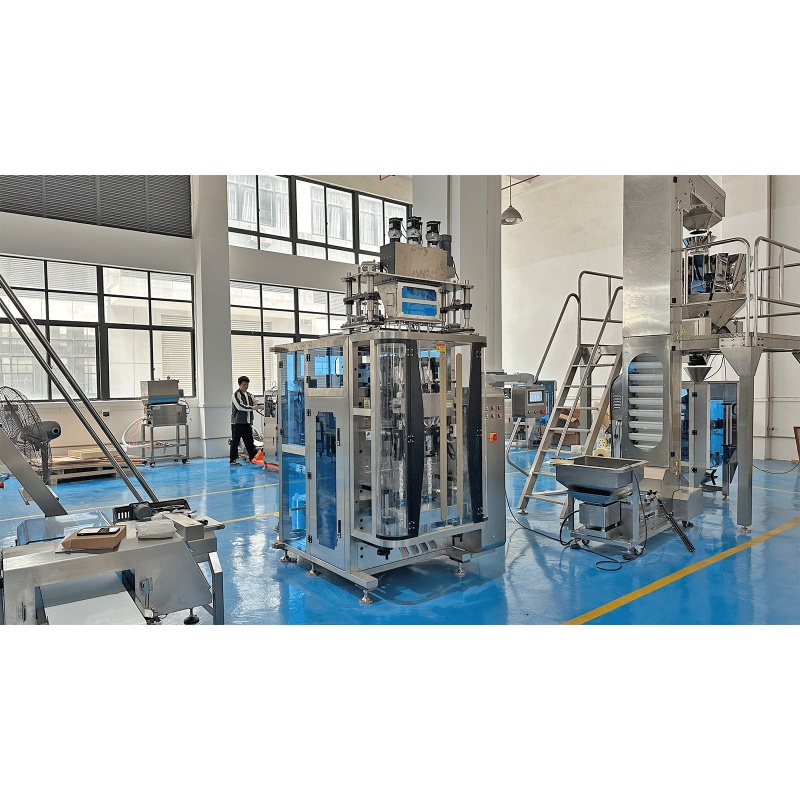
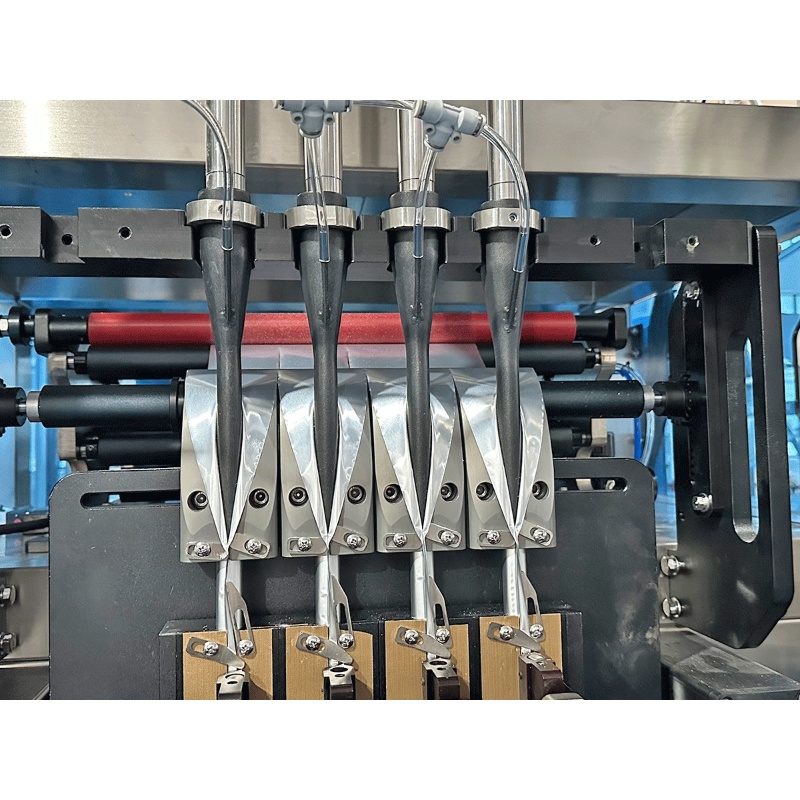
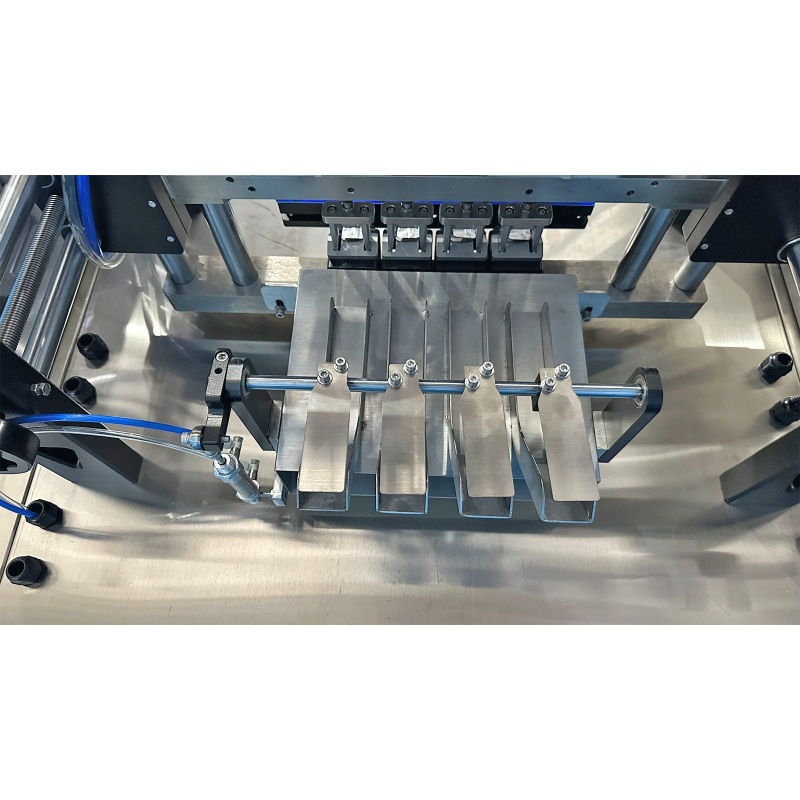
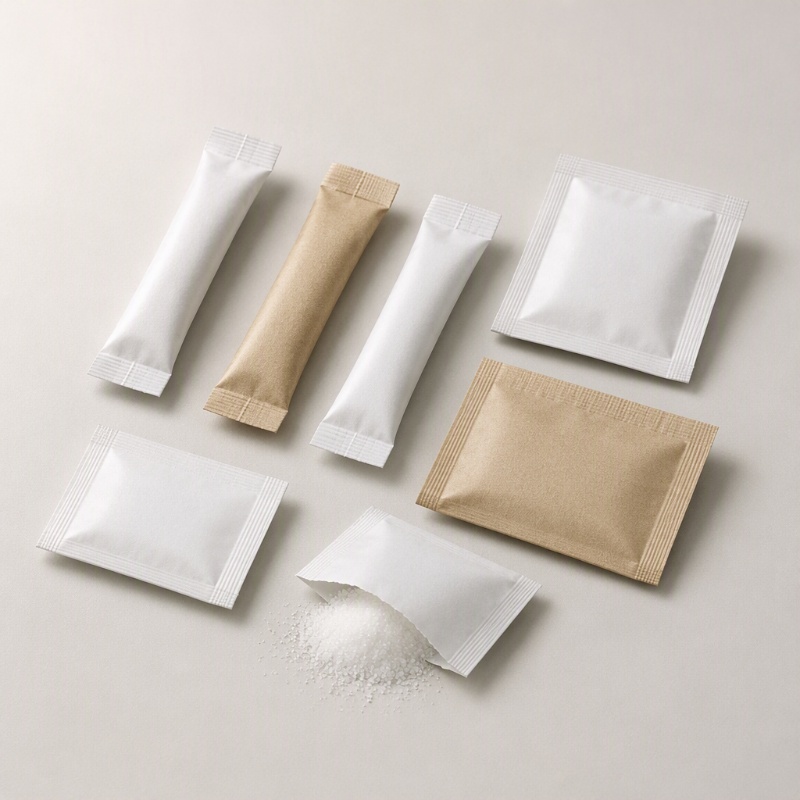
SUK multi-lane salt sachet packaging machines form, dose, fill, seal and cut free-flowing fine granular salt from roll film to produce small three-side seal sachets or stick packs. Crystal size, flow, dust, static, moisture pick-up and corrosion exposure are reviewed from your salt sample before the configuration is confirmed. Lane layout, dose, film and output are finalised from your salt sample and packaging requirements.
The SUK salt sachet packaging machine is a multi-lane salt sachet / stick-pack configuration that works from roll film. Each lane is formed from the roll, dosed with salt, filled, sealed and cut into a finished sachet or stick pack in one continuous in-line sequence. It is intended for B2B salt packing operations that need large numbers of small single-serve salt portions produced in parallel.
This page covers free-flowing fine granular salt, including refined table salt and fine free-flowing salt grades. Salt is not a uniform material: crystal size, flow behaviour, dust, static, moisture pick-up and corrosion exposure all change the way a machine feeds, doses and seals it. The dosing method and the final configuration must therefore be confirmed from your salt sample, target weight, pack format, film and required output.
Send your salt sample, target pack weight, pack dimensions, preferred format and daily production plan for a configuration review. Request a configuration review
This page describes one equipment route: a multi-lane configuration that produces small three-side seal salt sachets or narrow salt stick packs from roll film.
The scope is deliberately narrow. Large bags and premade zipper pouches are a different route and are filled on premade-pouch equipment. Coarse salt, salt blocks, rock salt and other large or irregular materials are assessed separately and are not covered by this standard sachet configuration.
The intended product family is free-flowing fine granular salt, packed as single-serve sachets or stick packs. Refined table salt and fine free-flowing salt grades within a tight crystal-size band are the typical starting point.
Other salt materials sit outside this route. Coarse salt, salt blocks, rock salt and other large, irregular or damp materials need a separate assessment before any route can be proposed. In every case suitability is confirmed from a sample rather than from a product name, because salt crystal size, flow, dust and moisture behaviour vary by source and by grade.
Because every pack is built inside the machine from flat film, the stages are interdependent rather than independent options.
Salt places a specific set of demands on a sachet machine, and these are the factors that drive the configuration. They are treated as engineering review and selection factors rather than fixed claims, because the right answer depends on your material and your plant.
These items are reviewed together with your sample. No numeric machine parameters, material grades or performance levels are published on this page, because they cannot be stated honestly without your salt sample and packaging requirements.
A three-side seal sachet is formed from two film layers sealed along three edges, producing a flat, roughly rectangular pack. It is the familiar format for a standard single-serve salt portion and is comparatively tolerant of variation. A stick pack is a long, narrow tube sealed at both ends, designed for slim single-dose sticks; it uses film efficiently, but the narrow lane and long fill path place more emphasis on film tracking and on dust control around the sealing area.
Both formats come from the same family of multi-lane roll-film machines, but the choice is a configuration decision rather than a setting. Pack geometry determines film width, lane layout and dosing arrangement, so the format has to be fixed before the configuration can be confirmed. The companion guide below compares the two formats in detail.
The equipment images on this page show real SUK machines. They are shown to explain the machine layout, not to describe a customer's product or production results.
The final image is an unbranded packaging-format illustration used only to show the general shape of salt stick packs and sachets. It is not a customer case, not a customer product and not a trademark, formulation or performance claim.
Dosing and the final configuration are confirmed from your salt sample and packaging requirements. Send the sample together with the target weight, dimensions, format, film, daily production plan and factory information, and SUK will review the configuration with you. Request a configuration review
It is a roll-film machine that forms, doses, fills, seals and cuts several small salt packs in parallel from a single roll of film. It produces single-serve three-side seal sachets or narrow stick packs in an in-line sequence.
Free-flowing fine granular salt, such as refined table salt and fine free-flowing salt grades within a confirmed crystal-size band, is the intended application. Coarse salt, salt blocks, rock salt and other large, irregular or damp materials must be assessed separately. Suitability is always confirmed from a sample.
No. Those figures depend on the salt, the dose, the pack format and the film, so they are confirmed from your sample and packaging requirements rather than quoted in advance on this page.
Dust, static and moisture behaviour are reviewed from your salt sample and treated as engineering selection factors. The feeding and dosing arrangement, control of the filling zone and attention to the sealing area are all part of the configuration review; no specific control solution is promised before the sample is assessed.
Salt is aggressive to many metals, so the materials and finishes of product-contact and nearby surfaces are part of an engineering review. No specific material or corrosion grade is published here, because the correct choice depends on your product, your plant and your operating conditions.
A sachet is sealed on three sides and is comparatively flat and wide. A stick pack is a narrow tube sealed at both ends for slim single-dose portions. Both are made from roll film, but each changes the lane layout, film width and dosing arrangement.
No. Large bags and premade zipper pouches are filled on premade-pouch equipment, which is a different route with different selection criteria. This page covers multi-lane roll-film sachets and stick packs only.
Send a representative salt sample, the target pack weight and tolerance, pack dimensions and format, the intended film, the daily production plan, factory space, electrical and air supply details, and your collection or cartoning requirements.
No. The equipment images are real SUK machines. The stick pack and sachet image is an unbranded packaging-format illustration, not a customer case, product, trademark or formulation.
For a detailed comparison of three-side seal sachets and stick packs, including how salt flow, corrosion exposure, pack size, film and factory planning affect the choice, read the companion guide: Salt Sachet Packaging Machine: Handling Corrosion and Free-Flow Dosing.