
Salt is one of the least forgiving products to pack in small doses. It flows readily, it dusts heavily, it holds static, it draws moisture from the air, and it is aggressive to many metals. A salt sachet packaging machine therefore has to be chosen around the salt itself, not around a catalogue name. This guide explains how a multi-lane roll-film machine works, why free-flow dosing and corrosion exposure are the two questions that shape the project, and how to decide between a three-side seal salt sachet and a narrow stick pack before you request a quotation.
Start with the salt, not the machine name
Two factories can both describe their product as salt and still need different machinery. Refined table salt with a narrow crystal-size band behaves very differently from a damp, wide-band salt or a fine free-flowing grade carrying a high proportion of fines.
Crystal size and crystal-size distribution decide how freely the product flows through a hopper and a dosing device. Surface moisture and ambient humidity decide whether the salt cakes in the feed path or bridges above the dosing point. Static decides whether fine particles cling to film and to machine surfaces. None of these can be judged from a photograph. They have to be judged from a sample.
The practical rule is simple: a representative salt sample, a target pack weight and a pack format come first. The machine configuration follows from those three inputs, together with the film, the plant conditions and the required production rhythm.
What a multi-lane salt sachet machine actually does
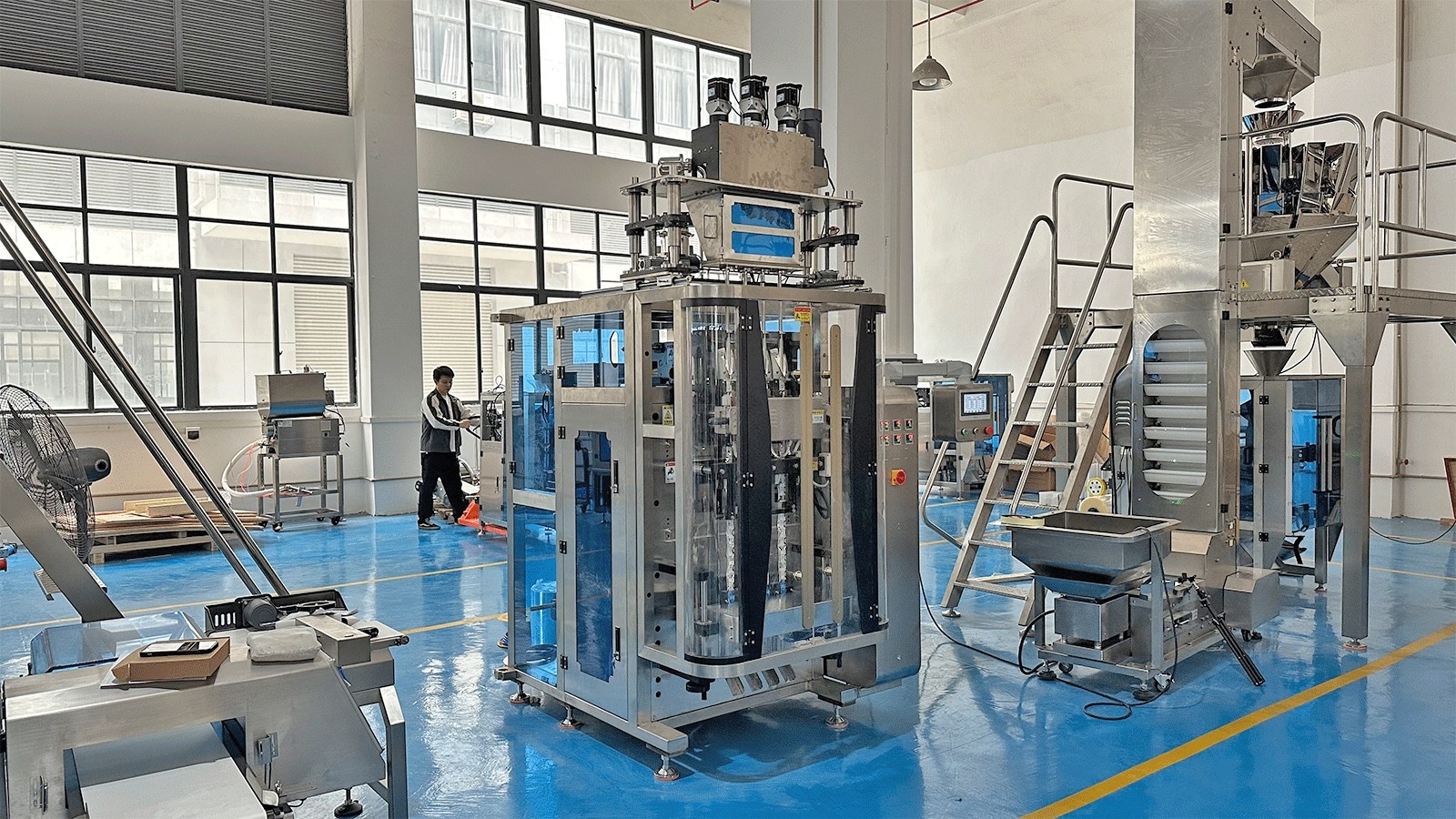
A multi-lane salt sachet packaging machine is a roll-film machine. Instead of filling ready-made bags, it builds every pack from a flat roll of film travelling through the machine. Several lanes run in parallel, so the machine produces a row of small packs per machine cycle rather than one pack at a time.
Forming, dosing, filling, sealing and cutting
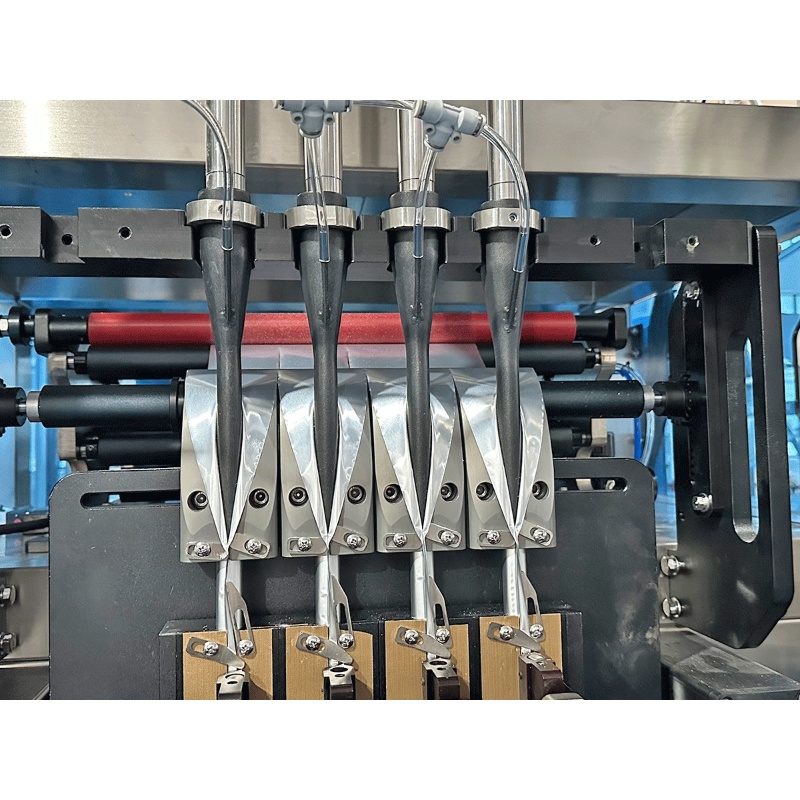
- Film forming. Roll film is unwound, tensioned and formed into the pack shape for each lane. Film tracking and print registration are set at this stage, because every later step depends on the film being in the right position.
- Dosing. Salt is metered for each lane according to the confirmed target weight. The dosing method is matched to the salt's flow behaviour and to the target dose, and is proven on the actual salt sample.
- Filling. The dose is released into the formed pack. Dust generation and static build-up in the filling zone are the two factors that most often disturb a stable cycle when packing fine granular salt.
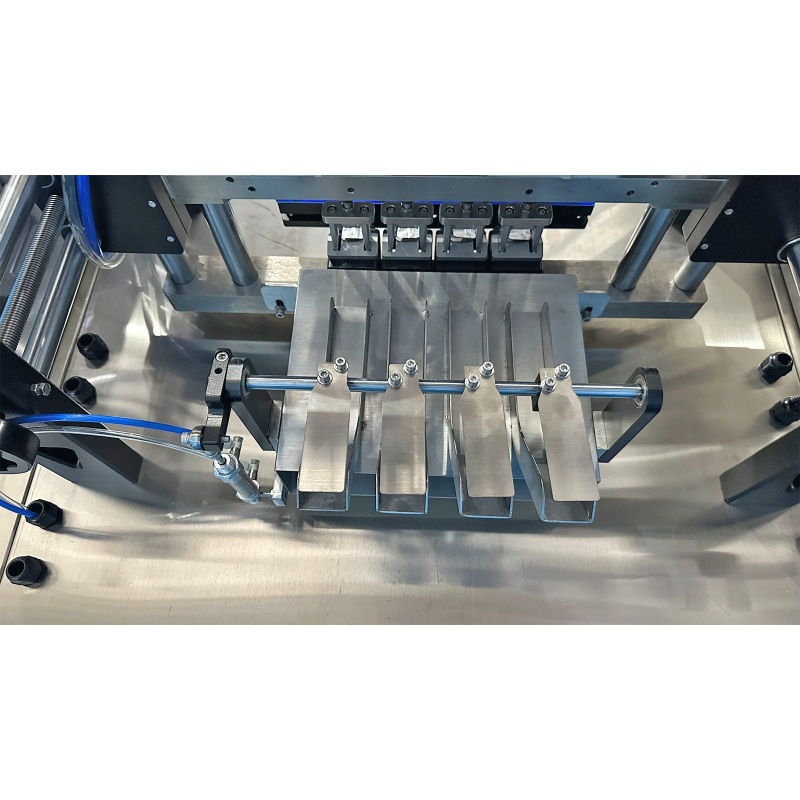
- Sealing. Seal jaws close across the pack. Seal quality depends on the film structure, the seal layer and the cleanliness of the sealing zone, and is validated on the film that will actually be used in production.
- Cutting. Finished packs are separated and released. From there they can go to a collection tray, a counting system or a cartoning machine, depending on the factory's downstream plan.
Because all of these steps run in one in-line sequence, the whole configuration is interdependent. Changing the pack format changes the film width, the lane geometry and the dosing arrangement together.
Free-flow dosing: what decides whether salt feeds cleanly
Free-flow dosing sounds straightforward, and for a narrow, uniform crystal band it can be. The difficulty is that salt is rarely uniform across a production day. Three properties govern how cleanly it feeds.
Crystal size and size distribution
A tight band flows predictably and doses consistently. A wide band, or a product carrying a high proportion of fines, tends to segregate as it moves: the fines migrate, the coarse fraction lags, and the dose becomes less even. Sourcing a tighter band is often a cheaper fix than adding complexity to the machine, but the decision has to be made on the sample.
Moisture and caking
Salt draws moisture from the air. Once it has picked up enough, it cakes in the hopper and bridges above the dosing point, and a dosing device that was perfectly consistent on a dry sample becomes erratic. Storage conditions, handling and ambient humidity are therefore part of the machine selection discussion, not an afterthought.
Dust and static
Fine salt dust is generated wherever the product falls, and fine particles can hold a static charge. Together they make dust cling to film, guides and machine surfaces, including the sealing area. Dust on a seal is one of the most common reasons a line that runs well in trial drifts out of specification in production.
None of these three properties is solved by a single setting. They are addressed together, through the feeding and dosing arrangement, through control of the filling zone and through attention to the sealing area, and the right combination depends on the sample.
Corrosion, moisture, dust and static: factors for engineering review
Salt is aggressive to many metals, and the areas of a sachet machine closest to the product see the most exposure: the feed path, the dosing device, the forming area, the fill zone and the seal jaws. The materials, finishes and cleanliness of these areas are therefore treated as engineering review and selection factors.
This is a deliberate position rather than a limitation. A specific material grade or corrosion rating is only meaningful when the product, the ambient conditions, the cleaning regime and the expected service life are known. Here those items are stated as factors to review, not as promises, because a claim that is not tied to your material and your plant cannot be honoured.
Dust, moisture and static belong in the same review, because they act on the same surfaces. Dust carried into the sealing area affects seal quality. Moisture picked up during storage affects both flow and the risk of caking in the feed path. Static affects where fines settle. Each is reviewed from the sample and from the way the product is stored and handled today.
Three-side seal sachets vs stick packs
Both formats come off the same family of roll-film machines, but they are not interchangeable, and the choice shapes the rest of the project.
The multi-lane three-side seal sachet
A three-side seal sachet is formed from two film layers sealed along three edges, giving a flat, roughly rectangular pack. It is the familiar format for a standard single-serve salt portion. The wider sealing face and the flatter shape make it comparatively tolerant of variation, and it is usually the first format to consider when the brief is simply a single-serve salt portion at a defined weight.
The narrow stick pack
A stick pack is a long, narrow tube, sealed at both ends and usually formed from a single film web folded around the product. It is designed for slim single-dose sticks. The advantages are a compact shape and efficient use of film, but the geometry is less forgiving: a narrow lane leaves less room for error in film tracking, and the long fill path puts more emphasis on consistent dosing and on dust control in the sealing area.
Which one fits your programme
The decision usually comes down to the pack the market expects, then to what the factory can handle downstream. If the finished packs will be counted, stacked and cartoned, the pack geometry has to suit the counting and cartoning equipment as well as the sachet machine. If the packs will be sold loose in a jar or a box, the constraint is lighter. In both cases the format must be fixed before the machine configuration is confirmed, because it determines film width, lane layout and dosing.
Two adjacent routes are often confused with this one. Large bags and premade zipper pouches are not made from roll film on a sachet machine; they are filled on premade-pouch (doypack) equipment, which is a different workflow with a different set of selection criteria. Coarse salt, salt blocks and rock salt are a separate assessment again. Suitability for salt still has to be confirmed in every case, and the equipment route may be entirely different.
Which equipment route fits which requirement
| Route | How the pack is made | Typical fit | Main selection inputs |
|---|---|---|---|
| Multi-lane three-side seal sachet | Roll film formed and sealed on three sides, filled from multiple lanes | Standard single-serve salt portions in a flat rectangular sachet | Salt sample, target weight, sachet width and length, film, output |
| Multi-lane stick pack | Roll film formed into narrow tubes, sealed at both ends | Slim single-dose salt sticks | Salt sample, target weight, stick width and length, film tracking, output |
| Premade pouch / doypack | Ready-made bags, including zipper and stand-up formats, filled and sealed | Larger retail or bulk packs, not single-serve portions | Pouch type and size, fill weight, product flow behaviour, output |
| Large or irregular salt | Not covered by a standard sachet configuration | Coarse salt, salt blocks, rock salt, irregular or damp products | Separately assessed: a sample review is required before any route is proposed |
The table is a routing guide, not a specification. Each row still ends with the same requirement: the route has to be confirmed against a real sample and real packaging requirements.
Buyer checklist: what to prepare before a quotation
- A representative salt sample, with a note on crystal size and how the salt is stored and handled today.
- Target pack weight, plus an acceptable weight tolerance and the reason for it.
- Pack dimensions — width and length — and the pack format (three-side seal sachet or stick pack).
- The film you intend to use, including whether it is pre-printed, and the print repeat if it is.
- The daily production plan: total packs per day, working hours and loading pattern.
- Factory information: available floor space, electrical supply and compressed air.
- Downstream requirements: collection, counting, inspection and cartoning, and the pack count per carton.
A supplier who asks for these items is not being difficult. Dosing and the final configuration cannot be confirmed without them, and a quotation issued without them is only a guess.
About the packaging-format illustration below
The image below is an unbranded packaging-format illustration. It shows the general shape of salt stick packs and sachets and is used only to explain pack formats. It is not a customer case, not a customer product, and not a trademark, formulation or performance claim.

Frequently asked questions
What is the difference between a salt sachet packaging machine and a stick pack machine?
Both are roll-film machines that form, dose, fill, seal and cut packs in one line. The difference is the pack geometry: a sachet is sealed on three sides and is comparatively flat and wide, while a stick pack is a narrow tube sealed at both ends. The pack format decides the lane geometry, the film width and the dosing arrangement.
Can one machine produce both three-side seal sachets and stick packs?
They belong to the same family of multi-lane roll-film equipment, but the format is a configuration decision, not a setting. Pack geometry, film and lane layout have to be specified together, so the format should be fixed and confirmed against your salt sample before the machine is defined.
Which salt grades are suitable for a multi-lane sachet configuration?
Free-flowing fine granular salt such as refined table salt and fine free-flowing grades is the intended application. Coarse salt, salt blocks, rock salt and other large or damp products behave differently and have to be assessed separately. In all cases suitability is confirmed from a sample.
How do you handle corrosion, dust and moisture with a product like salt?
They are treated as engineering review and selection factors rather than fixed claims. The materials and finishes of the product-contact areas, the control of the filling zone and the cleanliness of the sealing area are reviewed together with the sample, the plant conditions and the cleaning regime. No specific material grade or corrosion rating is promised in advance.
What is the difference between a roll-film sachet machine and a premade pouch machine?
A roll-film machine makes each pack from flat film inside the machine. A premade pouch machine fills ready-made bags, including zipper and stand-up formats. Large bags and premade pouches are a different equipment route from a multi-lane salt sachet configuration.
What information do I need to send before requesting a quotation?
A representative salt sample, target pack weight and tolerance, pack dimensions and format, the intended film, the daily production plan, and factory information covering space, electrical supply and compressed air. Downstream collection and cartoning requirements should be stated as well.
Next step
If you are planning a single-serve salt programme, the fastest route is to send the sample and the packaging requirements together. The product page for the salt sachet packaging machine explains the multi-lane configuration in more detail, and the contact page is the place to send your salt sample, target weight, pack format and production plan for a configuration review.