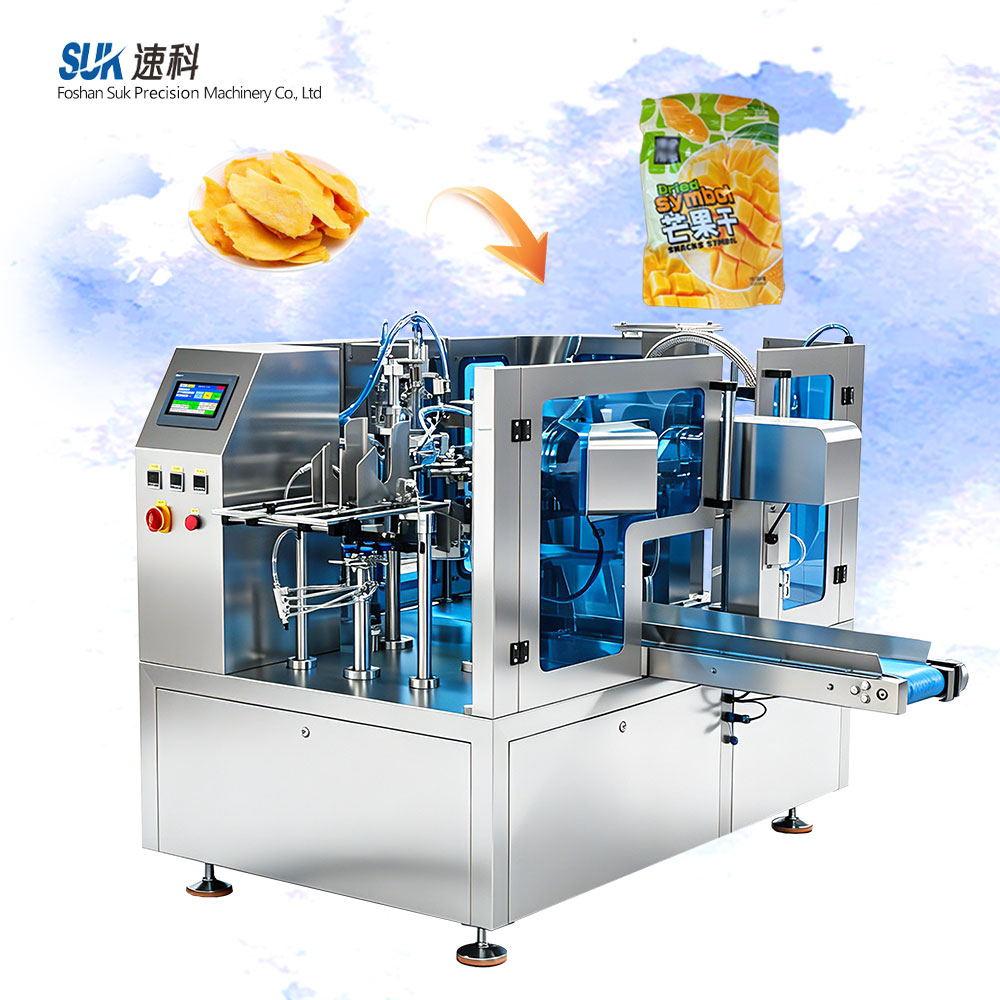
product
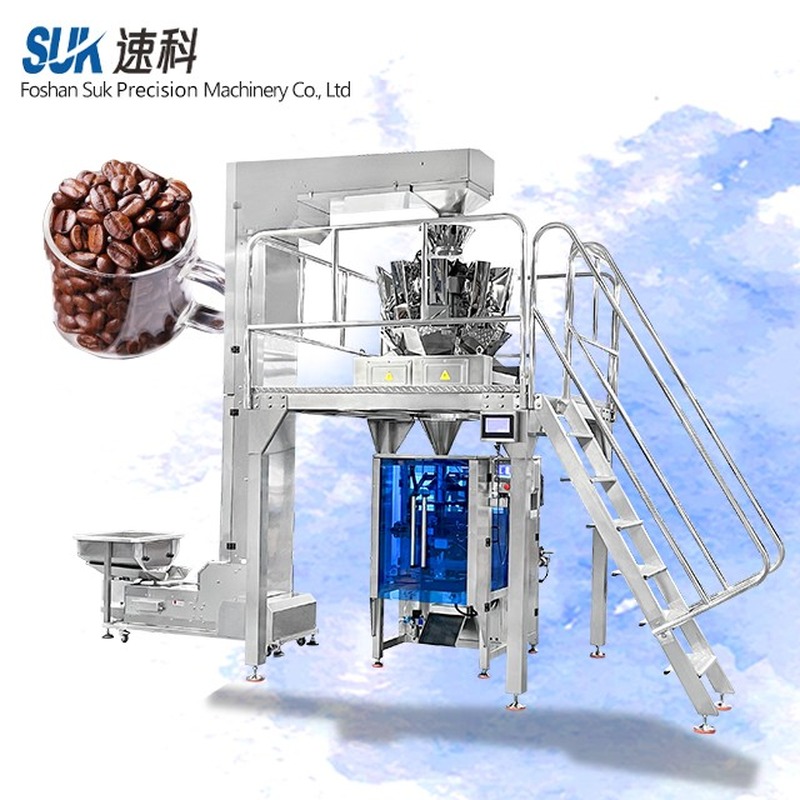
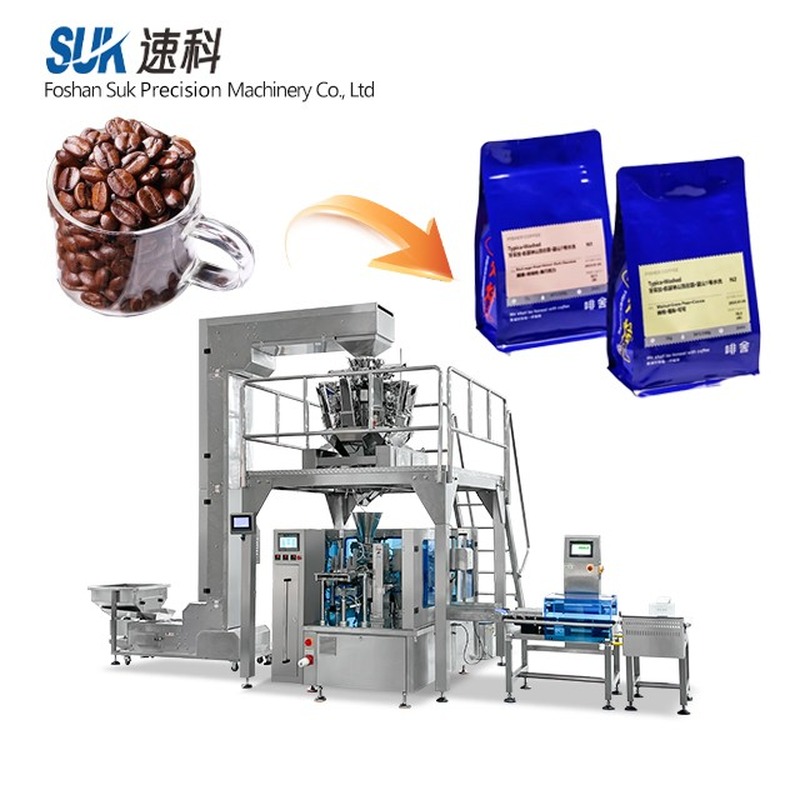
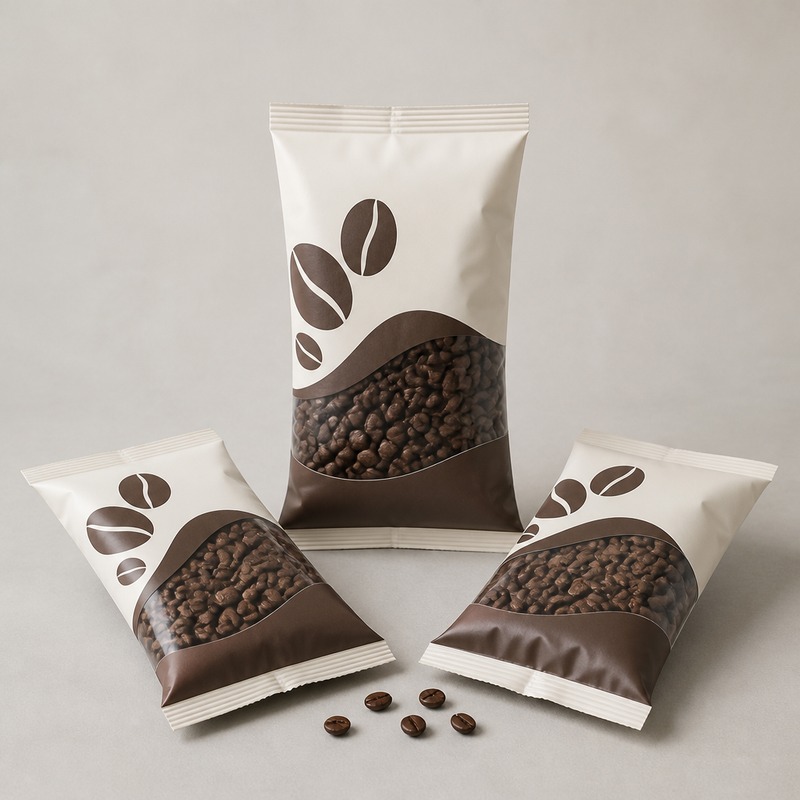
SUK offers two packaging routes for whole roasted coffee beans: premade-pouch packaging for ready-made bags up to the listed model range, and vertical form-fill-seal (VFFS) packaging for roll-film bags and larger target fills. Therefore, the right coffee bean packaging machine depends on your required pack weight, bag style, production speed, film or pouch supply, and the coffee bean sample.
For larger coffee-bean pack projects, including customer targets of 1–8 kg, first request a feasibility review. Catalog VFFS measuring ranges are stated in millilitres, not grams or kilograms. No model is confirmed for an 8 kg coffee pack by these volume figures alone. Provide bean bulk density, a product sample and the intended bag so the filling volume, bag capacity and feeding system can be checked.
Send us your coffee bean sample, target fill weight and preferred bag drawing for a machine recommendation.
Choose a premade-pouch route when your factory purchases pre-made bags and wants the machine to pick up, open, fill and seal them. This route suits ready-made pouch projects such as stand-up, zipper and other compatible bag formats listed for the machine. For example, many factories choose it for retail coffee packs that use a printed pouch with defined dimensions.
In addition, the listed SUK SKGD-200R and SKGD-300R coffee premade-pouch models have stated maximum package weights of 2,500 g and 3,500 g, respectively. If your target exceeds the selected model's listed range, review a VFFS route instead. However, you should still confirm bag compatibility, feeding, weighing and sealing using the actual pouch and whole-bean sample.
A vertical VFFS system forms, fills and seals a bag from roll film. SKL-820 and SKL-1020 are catalog models to discuss for a roll-film project, but their listed measuring volumes do not prove that either can pack a specified mass of coffee beans. Select the system only after reviewing the actual bean volume, finished bag dimensions, feeding arrangement and desired output.
The catalog measuring ranges are volumetric. Whole-bean bulk density and settling affect the volume needed for a target net weight. Do not convert these millilitre ranges to a coffee weight without measured product data and technical validation.
The following SKGD values match the current SUK coffee premade-pouch product information. Compare them with the VFFS data below before you select a coffee bean packaging machine.
| Model | Package weight | Bag length | Bag width | Packing speed | Power | Voltage |
|---|---|---|---|---|---|---|
| SKGD-200R | 10–2,500 g | 100–350 mm | 80–200 mm | 20–60 bags/min | 3.5 kW | 380 V, 50 Hz |
| SKGD-300R | 10–3,500 g | 100–400 mm | 180–300 mm | 20–45 bags/min | 5.5 kW | 380 V, 50 Hz |
Also confirm compatible bag shapes and film structures against the actual ready-made bag. Do not assume that every zipper, valve, gusset, paper structure or laminate is supported unless SUK engineering has checked it.
The following values are catalog reference data, not validated coffee-specific net-weight ranges. Finished bag width needs separate confirmation because the source width definition is unresolved. Electrical supply and the installed configuration must also be confirmed for the destination factory.
| Model | Catalog measuring range | Bag length | Finished bag width | Packing speed | Power |
|---|---|---|---|---|---|
| SKL-820 | 1,000–6,000 ml | 80–500 mm | To be confirmed | 10–40 bags/min | 5 kW |
| SKL-1020 | 2,000–10,000 ml | 120–600 mm | To be confirmed | 8–30 bags/min | 3.2 kW |
Reference speeds and measuring volumes are not simultaneous guarantees at the largest fill. Confirm usable bag volume, dosing performance and sustained output using the proposed coffee beans and film.
First, define the net weight per bag and the finished package format. For example, if the project uses pre-made printed pouches and stays within the stated SKGD weight range, compare SKGD-200R and SKGD-300R against bag size and production target. However, if the target is above the selected premade-pouch model's range, or the factory wants to form bags from roll film, assess the SKL VFFS route. For a target around 1 kg, either route may be worth reviewing depending on the pack design; for higher fills, check the VFFS measuring range and bag dimensions first.
Next, provide the coffee beans for a test. Also, bean size, roast profile and bulk density affect how much product fits in the bag and how the measured volume corresponds to net weight. Moreover, share the largest and smallest pack sizes if one line will run multiple SKUs. In addition, include desired bags per minute, operating hours, changeover frequency, film or pouch details, installation space and electrical supply at the destination.
SUK can then review the machine route, bag dimensions and line arrangement based on the actual project. Do not select a single model from a keyword or image alone.
For a useful first review, send:
If you are still deciding between pouch and roll-film packaging, send images or drawings of the preferred pack appearance and explain whether you will purchase the bags pre-made or form them on the line. As a result, the technical team can compare the two routes without assuming an unconfirmed package feature.
A single machine covering both targets has not been established by the available data. The SKGD reference maximum weights are 2,500 g and 3,500 g; SKL VFFS values are volumetric and cannot independently establish an 8 kg coffee-bean capability. Ask SUK to review both target packs with your samples and bag drawings.
Choose a premade-pouch machine when you use ready-made stand-up zipper pouches. However, compatibility depends on the pouch dimensions and construction, so send a sample or drawing for review.
For a 5 kg or 8 kg target, send the bean bulk density, sample and bag drawing for a feasibility review. A catalogue range in ml is not proof of a matching range in kg. Machine selection and any required configuration remain subject to technical confirmation.
No. Millilitres describe volume and grams describe mass. Whole-coffee-bean bulk density varies with bean size, roast and settling, so a mass target requires product data and testing rather than a universal conversion.
Additionally, SUK can make an initial recommendation from the bean sample or product information, target fill weight, bag sample or drawing, required output, destination electrical supply and line requirements. Confirm the final configuration through technical review and testing.
Finally, send your coffee bean sample, bag sample or drawing, target weights and production requirement to SUK Precision Machinery. Then tell us whether you plan to use pre-made pouches or roll film. SUK can then compare the applicable SKGD and SKL models and recommend a coffee bean packaging machine for your project.
For ready-made retail bags, review the coffee bean premade pouch configuration. For other coffee formats, use the coffee packaging route comparison.