product
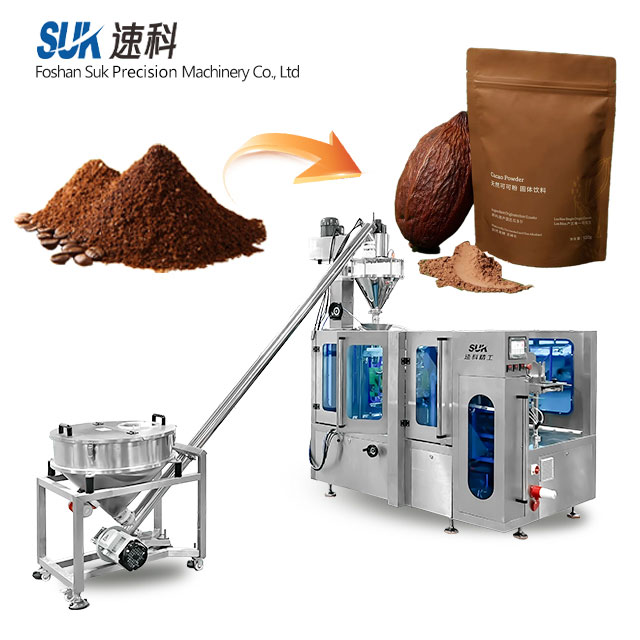
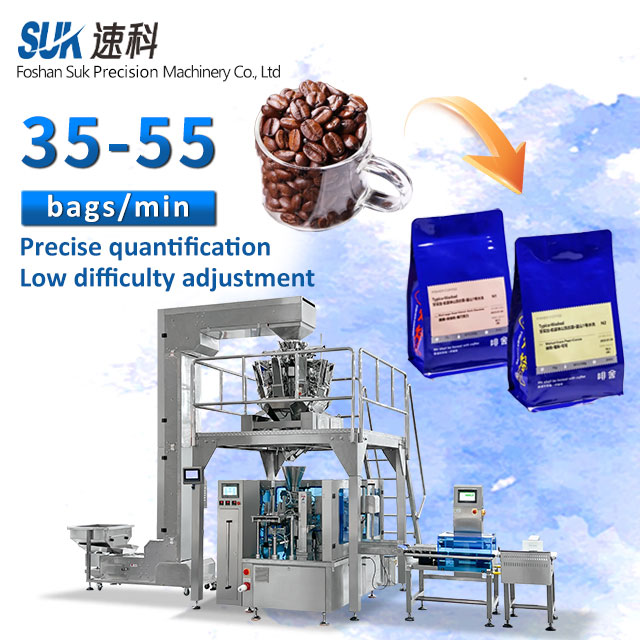
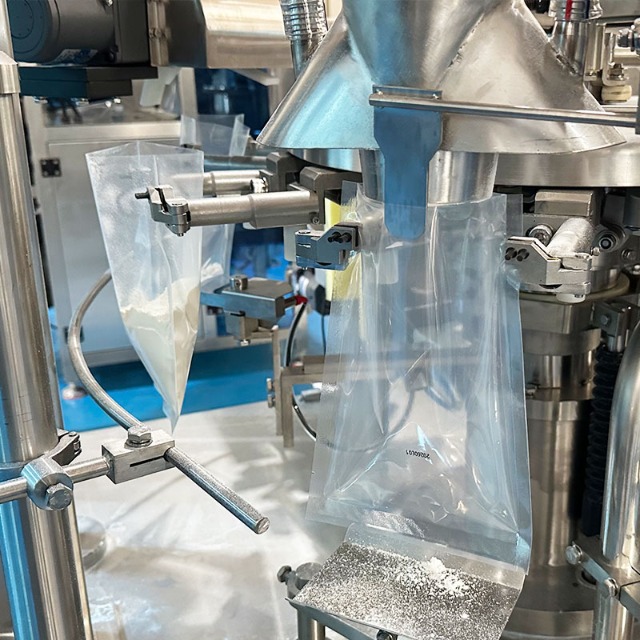
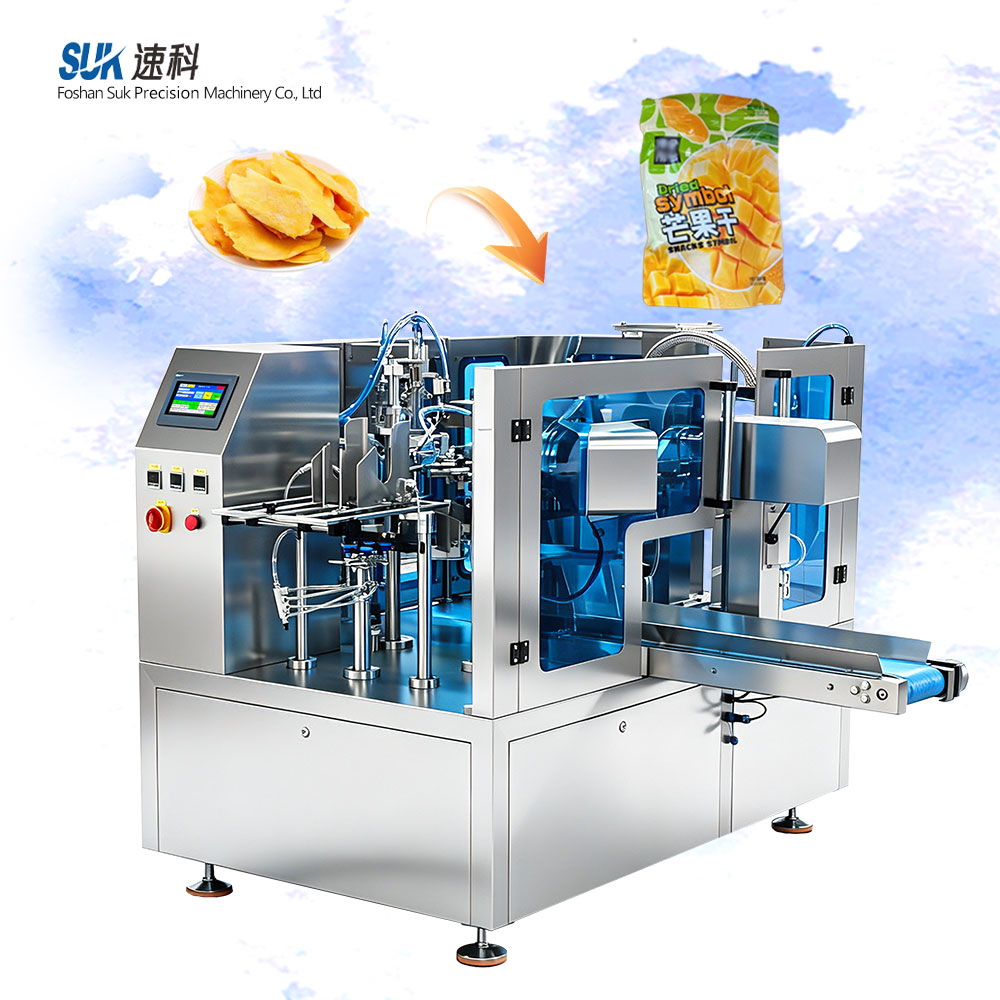
The SUK Coffee Packaging Machine is a premier choice for roasters who prioritize brand presentation. Utilizing a rotary premade bag system, it handles stand-up pouches and zipper bags with absolute precision. Ideal for high-end coffee beans and powder, this machine ensures your product stays fresh while looking professional on the shelf.
SUK coffee packaging equipment is designed for coffee roasters, coffee processors and food factories that need to pack whole coffee beans, ground coffee or both products in retail-ready pouches. This industry landing page is designed for buyers searching for a coffee packaging machine and comparing bag format, filling range, production speed and factory integration.
The most suitable machine depends on the product form and the finished package. Whole beans and ground coffee do not behave in exactly the same way during feeding and filling, so a project review should start with the roast profile, grind size, target pack weight, pouch format and production plan.
For premade-pouch coffee projects, SUK's SKGD rotary packaging machine family supports stand-up pouches, zipper pouches, four-side-seal pouches and other ready-made bag formats. Send a coffee sample, pouch drawing or finished pack sample to confirm the suitable machine configuration.
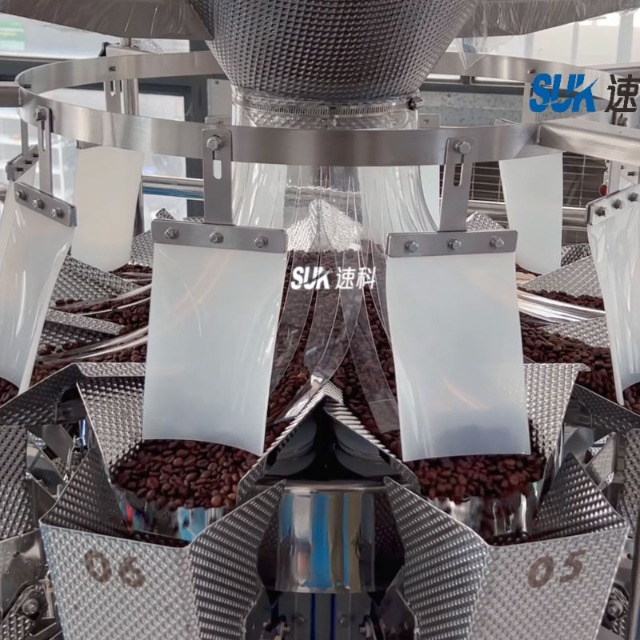
Whole beans are free-flowing pieces with a larger particle size and irregular shape. A coffee factory normally needs to consider the bean size, roast level, product density, target weight and handling method when selecting a feeding and weighing system. The pouch also needs to accept the bean volume without damaging the package or creating an unstable finished pack.
The machine selection should therefore connect the product sample, target weight and pouch dimensions. A small retail pouch for specialty coffee and a larger food-service bag can require different machine settings and bag sizes even when the product is from the same roaster.
Ground coffee is a powder-like product with different flow and settling behavior from whole beans. Grind size, density, moisture, oil content and the way the product is transferred can affect filling consistency and the cleanliness of the seal area. The machine should be reviewed with the actual coffee powder and the intended pouch material instead of relying only on a generic coffee category.
Ground coffee projects may also use different pack formats from whole-bean projects. A factory may need a flat pouch, stand-up pouch, zipper pouch or another premade bag depending on the retail channel, pack weight and opening requirement.
SUK's coffee packaging applications include ready-made pouches such as stand-up pouches, zipper pouches, four-side-seal pouches, tote bags and paper bags. The correct option depends on how the coffee will be displayed, opened, stored and transported after packaging.
A stand-up pouch gives the retail pack a stable presentation on the shelf. A zipper pouch can support repeated opening when the package design and material are suitable. A four-side-seal pouch provides a different visual and sealing structure. These are supplied pouch formats: the machine feeds the premade bag, opens it, fills the coffee and seals it according to the configured process.
This is different from a vertical VFFS machine that forms a bag from roll film. It is also different from a multi-lane powder sachet machine that forms several narrow single-serve packs in parallel. If the desired coffee package is a retail pouch with a printed front and optional zipper, a premade-pouch route should be assessed first.
The following values are taken from the existing SUK Coffee Packaging Machine product information for the SKGD rotary premade-pouch machine family. The final model and configuration should be confirmed against the coffee product, pouch, target weight and production requirement.
| Model | SKGD-200R | SKGD-300R |
| Packing speed | 20–60 bags/min | 20–45 bags/min |
| Bag length | 100–350 mm | 100–400 mm |
| Bag width | 80–200 mm | 180–300 mm |
| Measurement range | 10–2500 g | 10–3500 g |
| Power | 3.5 kW | 5.5 kW |
| Machine weight | 1400 kg | 1800 kg |
| Machine dimensions | 2480 × 1600 × 1483 mm | 2460 × 1870 × 1460 mm |
These values are a starting point for model comparison. They do not replace a coffee sample and pouch test. The final project review should confirm the weighing system, bag opening, sealing, coding, discharge and any downstream equipment required by the factory.
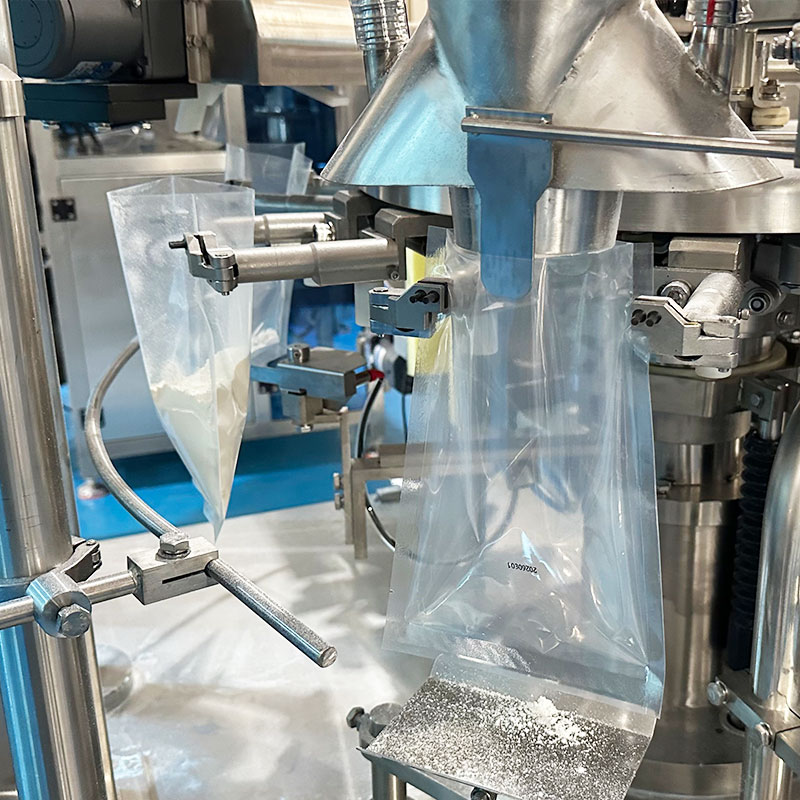
Provide the product form, roast type, grind size if applicable, product density, target weight and expected product range. If the same line will run several coffee products, include the smallest and largest pack as well as the expected changeover frequency.
Send the pouch length, width, thickness, zipper or opening details, material structure and a physical sample where possible. The machine needs to work with the actual premade pouch rather than a generic image. If the pouch is still being designed, provide a dimensional drawing and the intended retail presentation.
Share the required bags per minute, hours per shift, daily output, number of changeovers and expected peak demand. A factory that needs a flexible line for several coffee SKUs may make a different choice from a factory that runs one high-volume pouch continuously.
Explain what happens after the pouch is sealed. The line may need a conveyor, checkweighing, metal detection, date coding, carton packing, case packing or manual inspection. A coffee packaging machine should be evaluated as part of the factory workflow, not as an isolated filling unit.
Coffee packaging decisions are closely connected to the way the product is stored and sold. Whole beans and ground coffee should be reviewed with the desired barrier properties, closure method, pouch design and handling conditions. The package material and any freshness-related process should be confirmed by the coffee producer and packaging engineer for the specific product.
A valve, zipper, seal structure or gas-related option should never be assumed from a general coffee keyword. If the project requires a one-way valve, special oxygen-barrier material or gas flushing, state that requirement clearly in the inquiry so SUK can confirm whether the selected machine and pouch configuration support it.
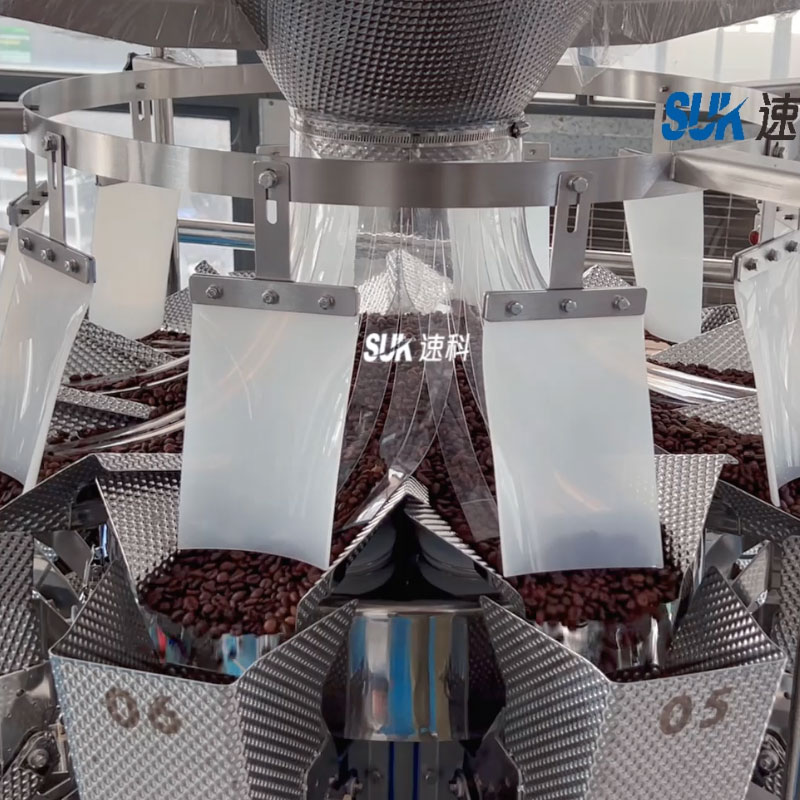
SUK's coffee packaging applications include whole coffee beans and ground coffee. Final suitability depends on the product form, density, roast and grind characteristics, target weight, pouch design and required production process.
A machine platform may be used for different coffee products, but the weighing, feeding, pouch and cleaning requirements must be reviewed for the actual products. Send both product samples if one line will pack whole beans and ground coffee.
The existing SUK coffee product information lists stand-up pouches, zipper pouches, four-side-seal pouches, tote bags and paper bags. The compatible format depends on the supplied pouch and the selected machine configuration.
A premade pouch machine starts with bags that have already been made and printed. It opens, fills and seals those bags. A VFFS machine forms a bag from roll film before filling and sealing. The choice depends on the desired retail format, pouch supply and production plan.
Send the coffee product form, roast or grind information, target weight, pouch dimensions, pouch material, required output, destination country, electrical standard and any downstream packaging requirements. Product and pouch samples are especially useful for a technical review.
Send your coffee sample, pouch sample or drawing and target production requirement to SUK Precision Machinery. SUK can compare the coffee product form, pouch format and SKGD machine options before recommending a configuration for your factory. For the buyer's checklist behind this product page, read our guide: Coffee Packaging Machine: How to Choose Equipment for Beans and Ground Coffee.