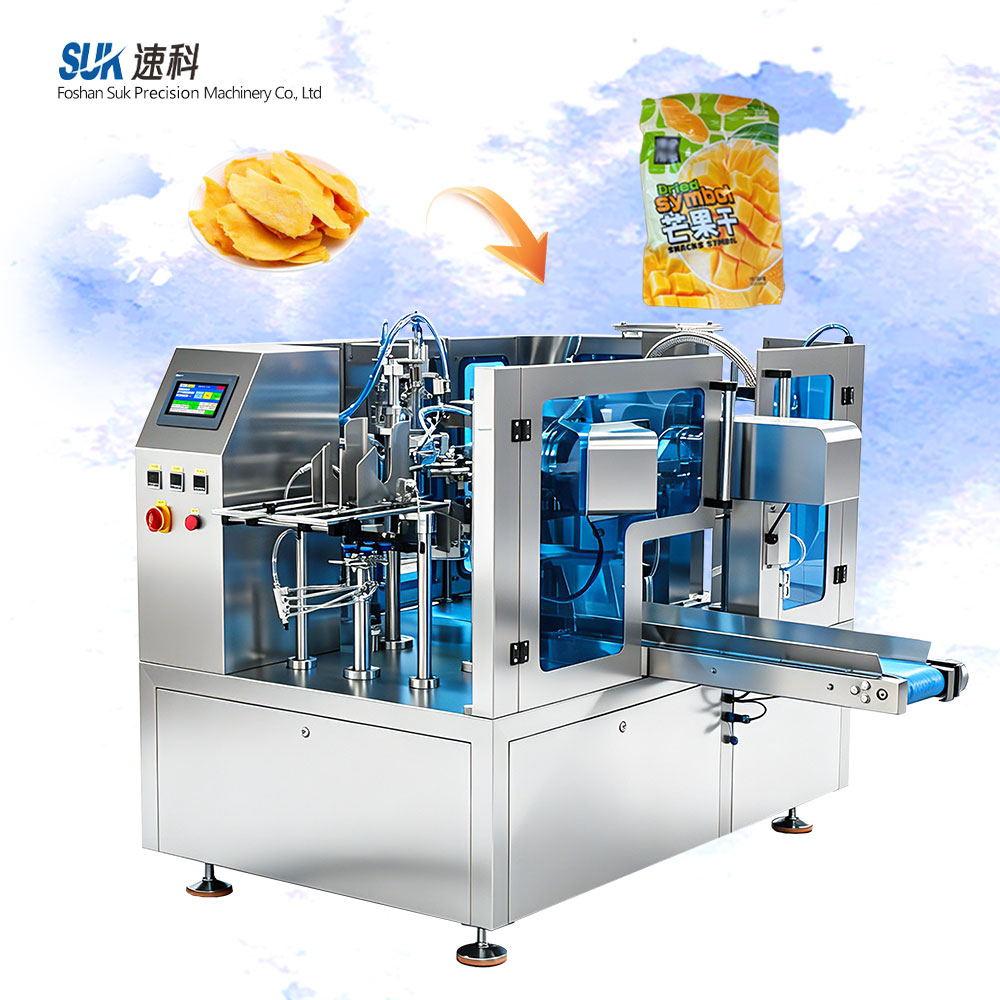
Include Supplied-Bag Packaging in the Batch Comparison
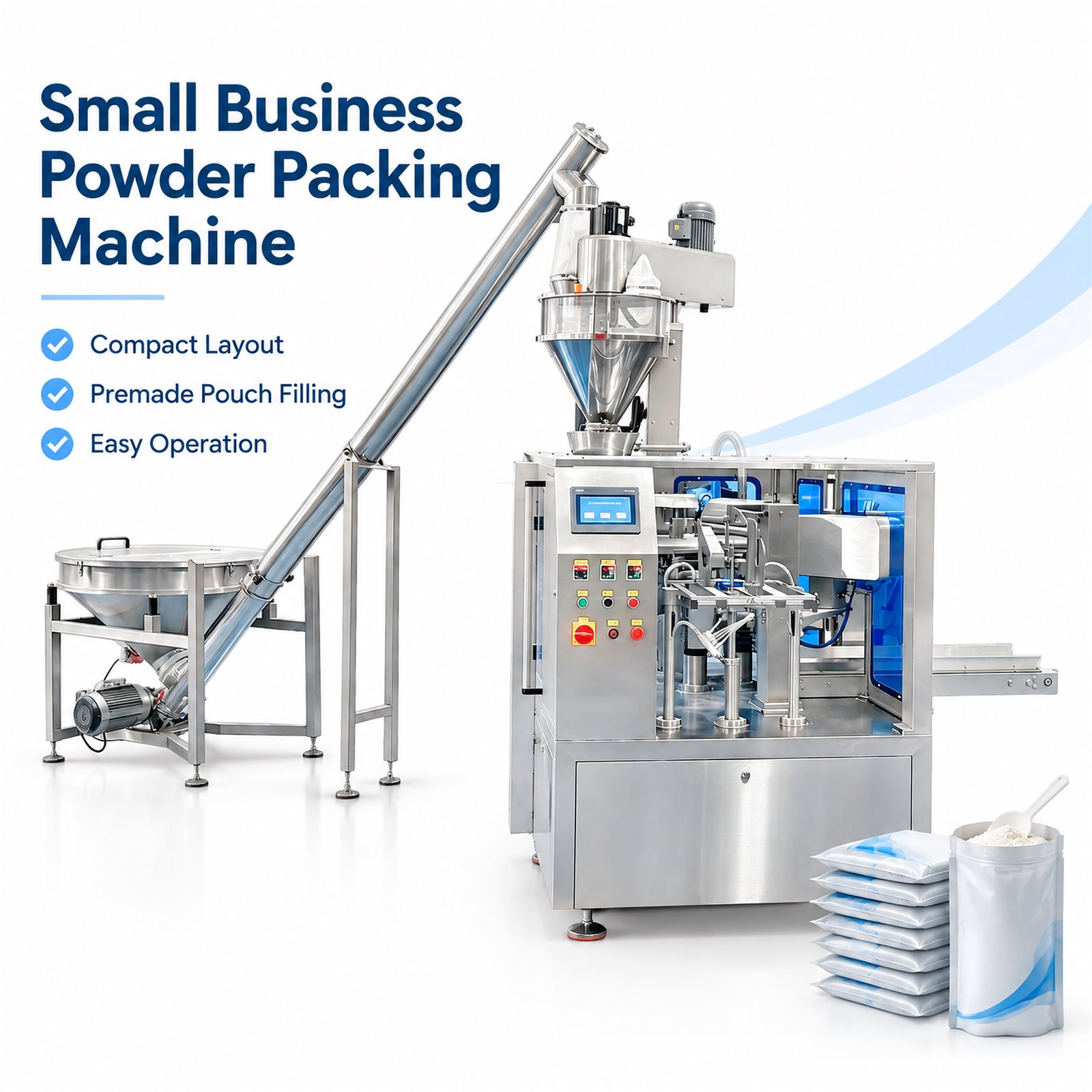
Record the whole shift: setup, powder loading, bag supply, production, rejects, cleaning and recipe changeovers. Compare a premade pouch configuration with the sachet option using the same batch schedule. A larger advertised output does not automatically mean more saleable packs per shift for short runs.
Request an equipment drawing that includes the feed system and service access. Use the small-batch product page and premade pouch configuration as alternative starting points.
Choosing a Powder Sachet Packing Machine for Small Batches
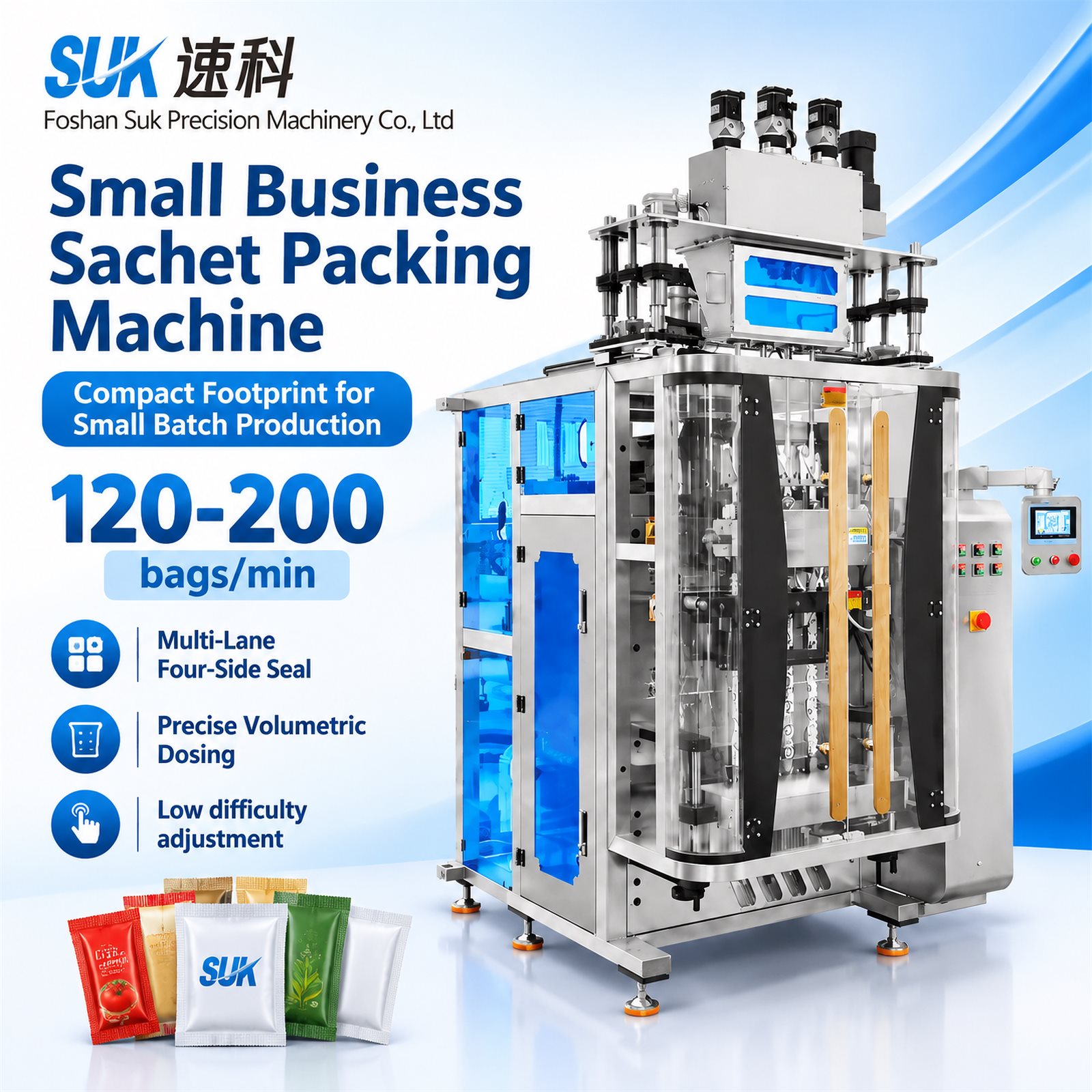
Small-batch powder packaging needs a machine matched to the planned run length and product changes. SUK can review a sachet or stick packing configuration around your powder, finished pack and factory workflow. Multi-lane production is one option when the repeated demand supports it.
Calculate the Batch Requirement First
List the number of accepted packs needed for each order and how often the order repeats. Include the fill weight and pack design for each SKU. A factory with a few repeated products has a different scheduling problem from one making many short runs.
Compare Single-Lane and Multi-Lane Production
Parallel lanes can help when enough identical packs are required to justify the setup. For short runs, film threading, setting, cleaning and first-pack checks may occupy much of the shift. Compare the proposed configurations using the actual production schedule rather than selecting the largest headline output.
Count Changeovers as Production Time
Ask which parts change when the recipe, fill quantity, pack width or film changes. Review setup and restart steps with the intended operators. Record the quantity of setup material used during the demonstration; do not assume the same waste or time for every format.
Check Layout Beyond the Machine Footprint
A machine dimension alone does not establish whether the line fits. Include powder loading, film-roll handling, finished pack collection, access for cleaning and maintenance, and any external feeder or inspection equipment. Request a layout for the supplied configuration.
Use a Shift-Level Comparison
Compare accepted packs completed within the available shift after the planned changes and checks. Include operator tasks, powder replenishment and pack collection. Any automatic counting or cartoning should have its own scope and output target.
Send the Schedule with the Inquiry
Provide powder and packaging samples, pack drawings, expected batch sizes, SKU changes, utilities and available space. Ask for the configuration that meets that schedule, with the proposed trial method and the included change parts clearly listed.
DLA-400F Four-Lane Powder Configuration
| Model | DLA-400F, powder configuration |
|---|---|
| Lanes | 4 |
| Reference output | 120–200 bags/min for the complete four-lane machine |
| Available seal formats | Back-seal stick packs, three-side seal or four-side seal, with the selected format tooling |
| Fill weight and pack dimensions | Confirmed for the actual powder, target portion, film and selected format |
The output range is for the complete machine, not for each lane. Actual production rate depends on powder behavior, fill weight, finished pack dimensions, film and seal format. Format changes and the required tooling are defined in the quotation.
Inquiry Checklist
- Packs per batch, SKU count and expected order frequency
- Powder sample, target grams and the chosen pack drawing
- Number of recipe, fill-size and film changes during a shift
- Available floor space plus access for loading, cleaning and maintenance
- Utilities, staffing, change parts and the desired accepted output per shift
Discuss the Equipment Configuration
Review the Small-Batch Powder Sachet Packing Machine or send SUK your product and packaging requirements. Include the actual materials and production target so the proposed equipment and trial can be defined together.