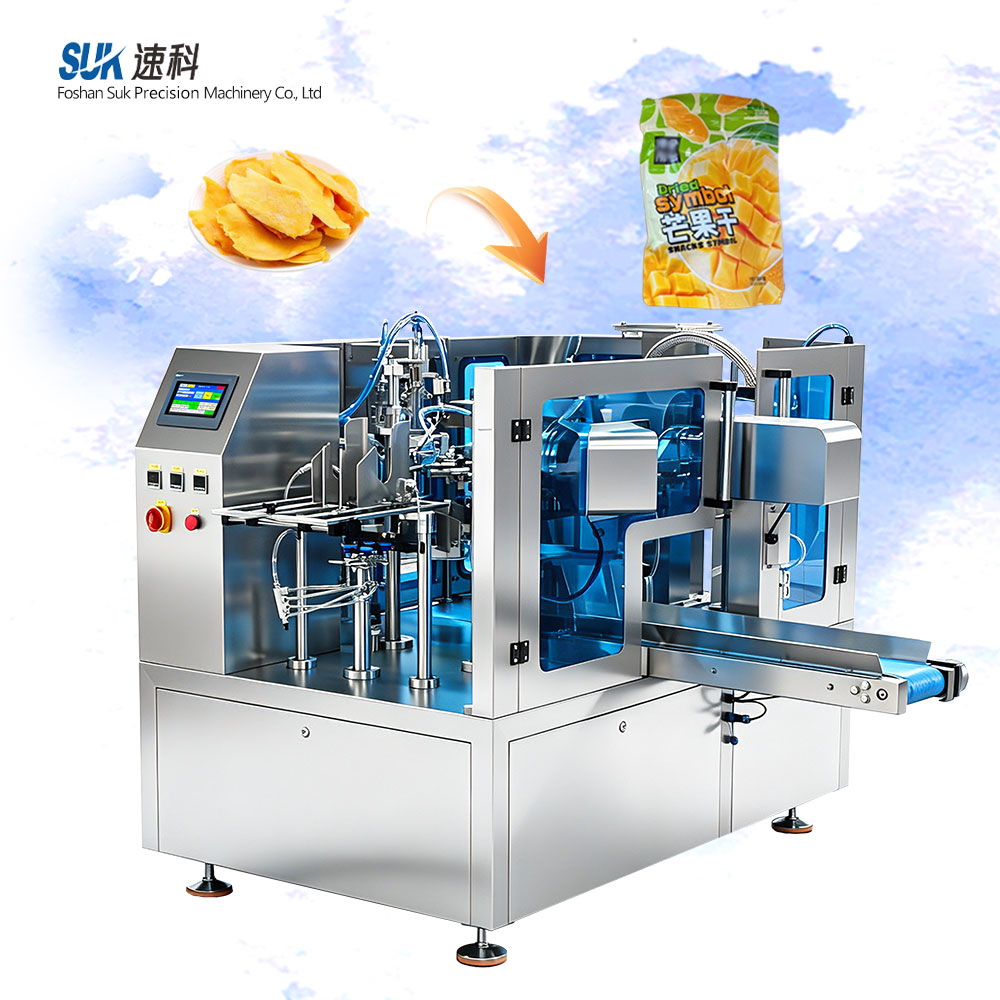
A collagen powder packaging machine should be selected from the powder properties, single-dose format and required output—not from a generic “sachet machine” label. For health-food factories producing collagen powder sticks, a multi-lane powder packaging configuration can combine parallel dosing, roll-film forming, filling, sealing and cutting in one line. The correct project setup depends on the powder sample, stick dimensions, target dose, film, lane layout and downstream cartoning plan. A real machine image proves the equipment type; an unbranded stick-pack illustration can show the intended pack format without using a customer’s packaging design.
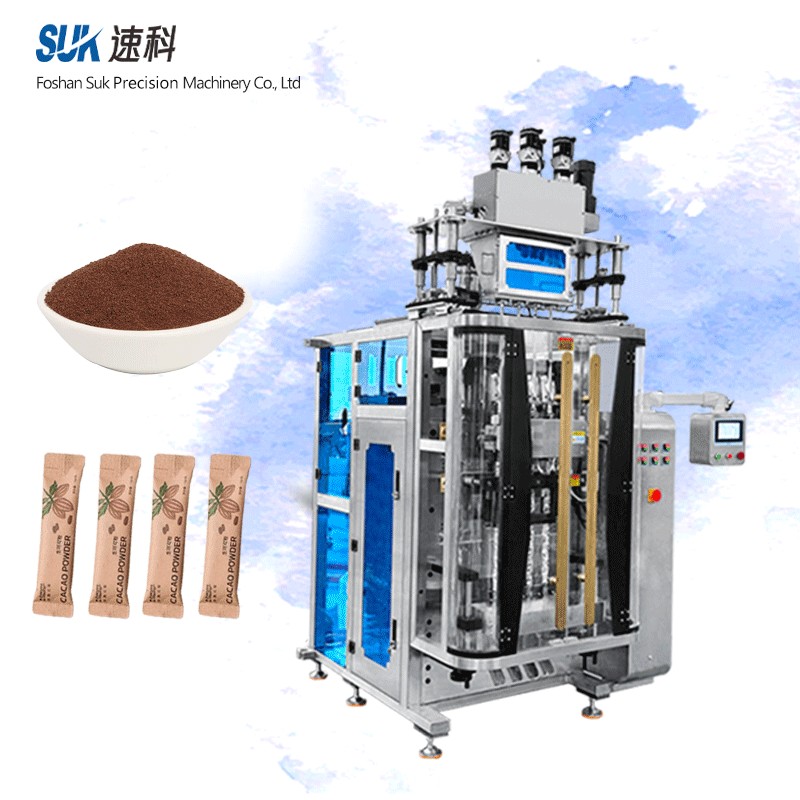
Start with the powder and single-dose format
Collagen products can differ in particle size, density, flow behavior and formula. A plain collagen powder, a blended nutrition powder and a flavored formula may not move through a dosing system in the same way. Before a factory chooses a collagen powder packaging machine, it should define the material characteristics and the intended single-dose pack.
Provide a representative powder sample
A representative sample gives the engineering team a basis for reviewing the hopper, dosing route and material-contact surfaces. It helps identify powder behavior such as bridging, inconsistent feeding, dusting or changes in bulk density. The objective is not simply to fill a sachet; it is to repeat the target portion across multiple lanes while maintaining stable sealing and a workable production flow.
If the factory plans to sell more than one formula, include the formulation with the most demanding flow behavior in the early review. This produces a more reliable configuration than assuming all collagen products behave alike. The final dosing arrangement should be confirmed from the actual material rather than from a generic product name.
Confirm the stick-pack dimensions
A stick pack is a narrow single-dose package formed from roll film. The desired width, length, tear feature, film structure and target dose should all be specified before the machine configuration is confirmed. A larger dose may need a longer or wider pack, while a compact travel pack may require a different film path and cut length.
The buyer should also describe how the sticks will be packed after production. Some factories collect sticks for manual carton loading, while others need counting, bundling, inspection or automatic cartoning. The downstream process affects the practical layout of the multi-lane packaging line.
Why multi-lane packaging fits collagen powder factories
A multi-lane machine is designed to create multiple narrow packs in parallel. For collagen powder sticks, this is useful when the factory needs repeated single-dose packaging at a production scale beyond a single lane. The line combines parallel lanes with powder dosing, film forming and synchronized sealing and cutting.
Parallel lanes for continuous stick production
Each lane must receive stable powder dosing and maintain correct film tracking. The machine’s value comes from coordinated lane operation, not from an isolated maximum-speed statement. Actual output depends on the number of lanes, target dose, powder behavior, pack dimensions, film, sealing conditions and factory operation.
When comparing quotations, ask the supplier to describe what is included for each lane: dosing points, forming parts, film handling, sealing and cutting. This makes it easier to understand whether two proposals describe the same production scope.
Powder dosing is different from granule weighing
Collagen powder should not be assigned to a granular multi-head weigher by default. Granular products and powders use different feeding and dosing approaches. A collagen powder line needs an arrangement suitable for powder flow and the target stick dose. The actual system may include powder hoppers, dosing assemblies and other components selected for the material.
Compare stick packs with other packaging routes
A health-food factory may consider several package formats, but the equipment route changes with the material and bag type. Selecting the correct machine prevents a project from mixing incompatible assumptions about dosing, film or bag construction.
| Product and package requirement | Suitable equipment direction |
|---|---|
| Collagen powder in narrow single-dose sticks | Multi-lane powder stick-pack machine with powder dosing and roll film |
| Collagen powder in larger single-lane sachets | Powder VFFS configuration after confirming dose and bag size |
| Collagen powder in premade stand-up or zipper pouches | Premade pouch packing machine |
| Liquid collagen shots or liquid sticks | Liquid filling or liquid stick packaging configuration |
| Granular health-food products | Granule weighing configuration, selected separately from powder dosing |
Stick packs for carton-ready daily doses
Stick packs are suited to retail cartons, travel packs and daily-use portions because they are narrow and easy to count. The final format must be planned with the carton and downstream process in mind. A factory should confirm whether it wants individual sticks, grouped sticks, bundles or an automatic cartoning connection after the packaging machine.
Premade pouches are a different workflow
A premade pouch line does not form stick packs from roll film. It opens preformed bags, fills them and seals them. This may be appropriate for larger premium pouches, but it is not the same project as multi-lane stick production. The factory should decide the retail format before selecting the machine type.
Review the real multi-lane machine layout
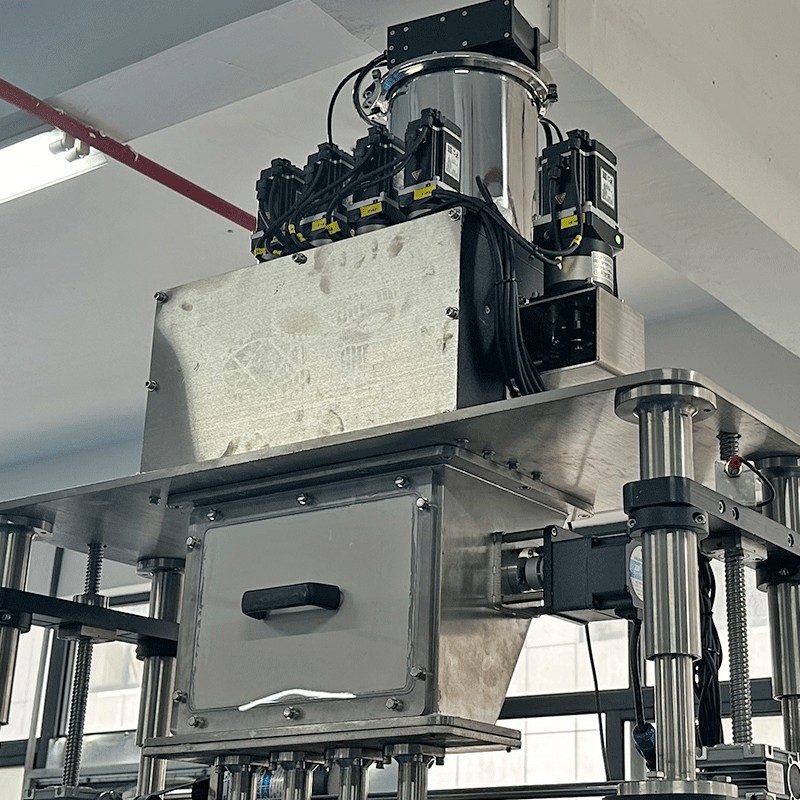
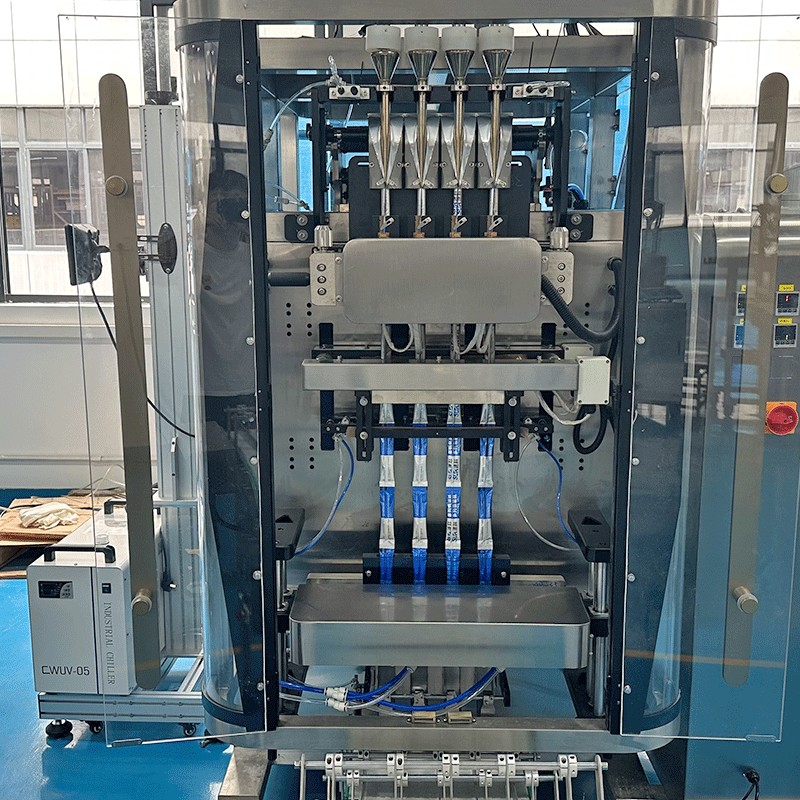
The supplied real SUK machine images show the type of equipment and powder-dosing area used for multi-lane production. The running-machine image is real equipment evidence; the packs visible in that photograph are not presented as customer collagen packs. The separate unbranded application illustration is used for the collagen stick-pack scenario.
Running-machine reference
A multi-lane line needs access for powder loading, film installation, parameter adjustment, cleaning and maintenance. During a factory-layout review, consider the available height, operating space, film-roll access, electrical supply and connection to downstream handling equipment.
Unbranded application illustration
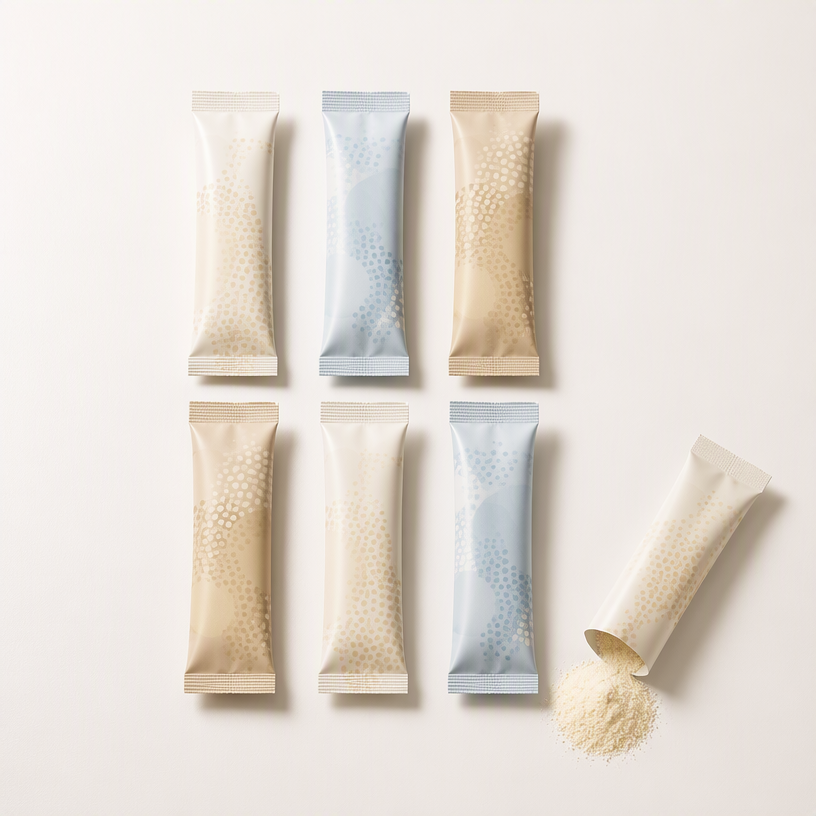
The sample image below uses unbranded stick packs so the page can show a possible collagen powder format without displaying a customer’s trademark, logo or finished packaging design. It is an application illustration, not a customer case or a production guarantee.
Confirm film and sealing requirements
Roll film must be suitable for the powder product, the required shelf-life expectation and the chosen pack dimensions. A multi-lane line forms and seals each narrow stick from the film web, so film tracking, seal strength and cutting consistency must all be reviewed. The buyer should provide film information or a package sample when available.
Film structure and print registration
The film supplier’s material specification and artwork layout can affect sealing conditions and print positioning. If the collagen sticks require a specific tear position, mark, notch or printed alignment, provide this information early. The machine configuration should be reviewed against the film rather than assuming every printed web will run in the same way.
Sealing and powder control
Powder near the seal area can affect the finished pack if the dosing, settling and seal timing are not coordinated. The line should be assessed from the actual powder behavior and the desired stick format. The buyer should ask how the proposed configuration addresses stable filling, film control and sealing in the intended operating conditions.
Plan the downstream packaging line
Stick-pack production is usually only one stage of the final product workflow. After sealing and cutting, the sticks may need to be counted, collected, inspected, cartoned or case packed. Discussing these steps early helps the factory decide how the multi-lane machine should connect to the rest of the line.
Collection and inspection
The finished sticks may discharge to a conveyor, collection system or inspection point. Depending on the factory, additional equipment may be needed for checkweighing, metal detection or vision inspection. The exact choice depends on the product, packaging standard and planned production method.
Cartoning and end-of-line handling
Many collagen stick products are sold in cartons. The factory should define carton count, stick orientation, grouping method and expected line output before it finalizes the equipment scope. This allows the multi-lane machine and any cartoning equipment to be planned as one coordinated packaging solution.
Use a collagen powder packaging buyer checklist
Before requesting a quotation, prepare the following project information. The goal is to describe the actual powder, stick format and production workflow clearly enough for the supplier to review the right multi-lane configuration instead of offering a generic powder machine.
- Collagen powder sample and product photos
- Powder density, flow behavior and formula notes
- Target dose per stick
- Stick-pack width, length and preferred seal style
- Film structure and printed-film information
- Expected output and operating hours
- Required lane count or required throughput
- Factory power, compressed air and installation space
- Required collection, inspection or cartoning equipment
- Cleaning and material-contact requirements
Also state whether the factory will run one formulation or change between several powders. Explain how finished sticks will be counted and packed into cartons, because those decisions affect the discharge and downstream connection. This information gives the supplier a basis for matching powder dosing, lane configuration, roll-film handling and downstream equipment to the actual health-food packaging project.
Request a collagen powder stick packaging solution
Send your collagen powder sample, target stick dimensions, target dose and expected output to SUK. The team can review powder dosing, multi-lane forming, film, sealing and downstream cartoning requirements for your factory.
A practical inquiry should also identify the expected operating hours, desired lane count or throughput, carton packing method and available factory services. If you already have printed film artwork or a stick-pack sample, include it with the request. These details help the engineering review connect the dosing system, film path, seal format and discharge arrangement into one production plan rather than treating the machine as an isolated unit. Final recommendations are confirmed only after the powder sample and package requirements have been reviewed together.
For the equipment landing page, see Collagen Powder Multi-Lane Stick Packaging Machine. For an existing general multi-lane page, see Multi-Lane Powder Sachet Packaging Machine.
FAQ
What machine type is used for collagen powder stick packs?
A collagen powder stick project can use a multi-lane powder stick-pack configuration with powder dosing and roll-film forming. The final arrangement depends on the powder sample, target dose and stick dimensions.
Is a multi-lane machine suitable for collagen powder?
It can be evaluated for collagen powder when the factory needs multiple narrow single-dose sticks produced in parallel. Powder behavior and required output must be confirmed before the configuration is finalized.
Are the stick packs shown on this page real customer packs?
No. The stick-pack sample image is an unbranded application illustration. It shows a possible format only and does not represent a customer brand, logo or collagen formula.
What is the difference between a stick pack and a premade pouch?
A stick pack is formed from roll film on the multi-lane machine. A premade pouch is manufactured before filling and is opened, filled and sealed by a different type of machine.
What should I send for a quotation?
Send a powder sample, target dose, stick dimensions, film information, expected output, required lane count and downstream packaging requirements.