Choosing a fertilizer packing machine begins with the fertilizer material, the target bag weight and the finished bag format. This article focuses on granular fertilizer packed with a multi-head weighing and vertical form-fill-seal (VFFS) system. For the application discussed here, the target examples are 5 kg and 8 kg bags, with 8 kg as the stated maximum package weight. The final configuration should be confirmed using the actual fertilizer sample, target tolerance, film, bag dimensions and factory conditions. A speed graphic from a reference image should not be treated as a universal performance promise for every fertilizer product.
Powder fertilizer, granular fertilizer, premade-pouch fertilizer and narrow sachet fertilizer should not be assigned the same machine automatically. Powder products normally require a different dosing method, such as auger or screw filling; premade pouches use preformed bags; and multi-lane machines are intended for multiple narrow sachets. The correct machine type follows the material state, target dose, bag format and production requirement.
Start with the fertilizer material
Granular fertilizer and blended fertilizer are not automatically identical from a packaging-machine perspective. Particle size, density, surface texture, moisture, formulation and flow behavior can all influence feeding and weighing. A fertilizer packaging machine must deliver a stable portion to the bag while avoiding unnecessary product surges, bridging or irregular discharge.
Why a representative sample is important
A product name is not enough to select the correct configuration. Granular products may have different particle shapes and densities, while blended fertilizer can contain components that move differently through the hopper. A representative sample gives the engineering team a basis for reviewing the feeding route, weighing range and bag fill behavior. It also helps identify whether the product needs a particular hopper, conveyor or dosing arrangement.
The sample should represent the material that will actually be produced. If the factory uses several fertilizer formulas, provide the formula with the most difficult flow characteristics or the widest particle-size variation. This creates a more useful starting point than selecting a machine from a generic “fertilizer” label.
Separate granular and powder applications
The phrase fertilizer can refer to granular products, powders, prills or mixtures. This article focuses on dry granular and blended fertilizer suitable for the stated small-bag application. Powder fertilizer may require a different dosing method, such as an auger-based system, and should not automatically inherit the configuration of a multi-head or other granule-weighing line. Confirm the product state before comparing equipment.
Match the fertilizer material to the machine type
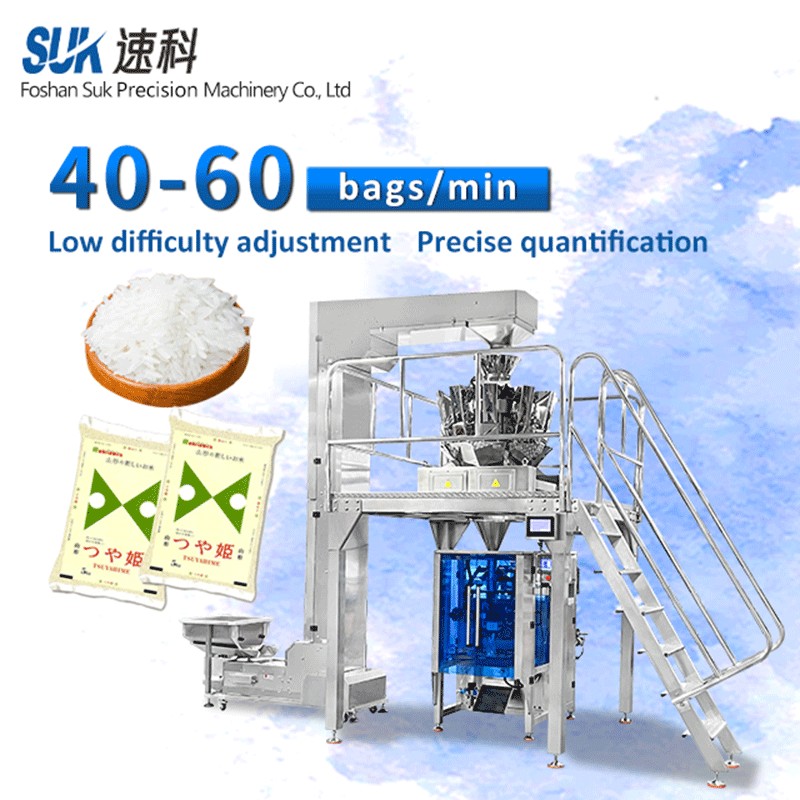
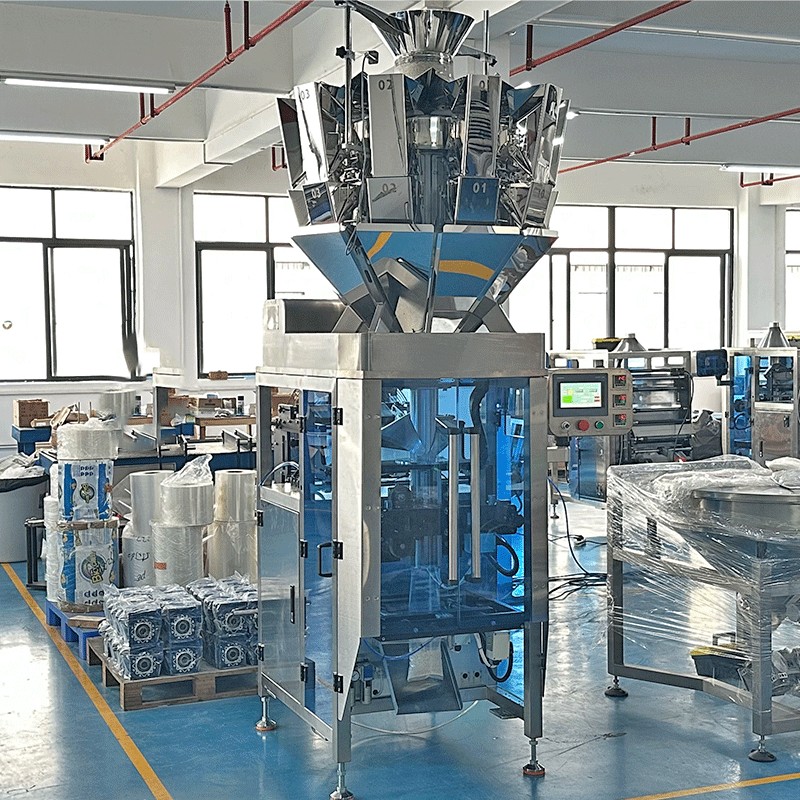
The machine shown in the new application image is a multi-head weigher + vertical form-fill-seal (VFFS) machine for granular fertilizer. It uses a weighing system for free-flowing granules and forms bags from roll film. This is the primary configuration discussed in this article.
The following configurations should be separated during project planning:
| Application | Machine direction | Why it is different |
|---|---|---|
| Granular fertilizer | Multi-head or suitable weigher + vertical VFFS | Weighs free-flowing granules and forms roll-film bags |
| Powder fertilizer | Auger/screw dosing + powder VFFS | Powder flow and dust behavior require another dosing approach |
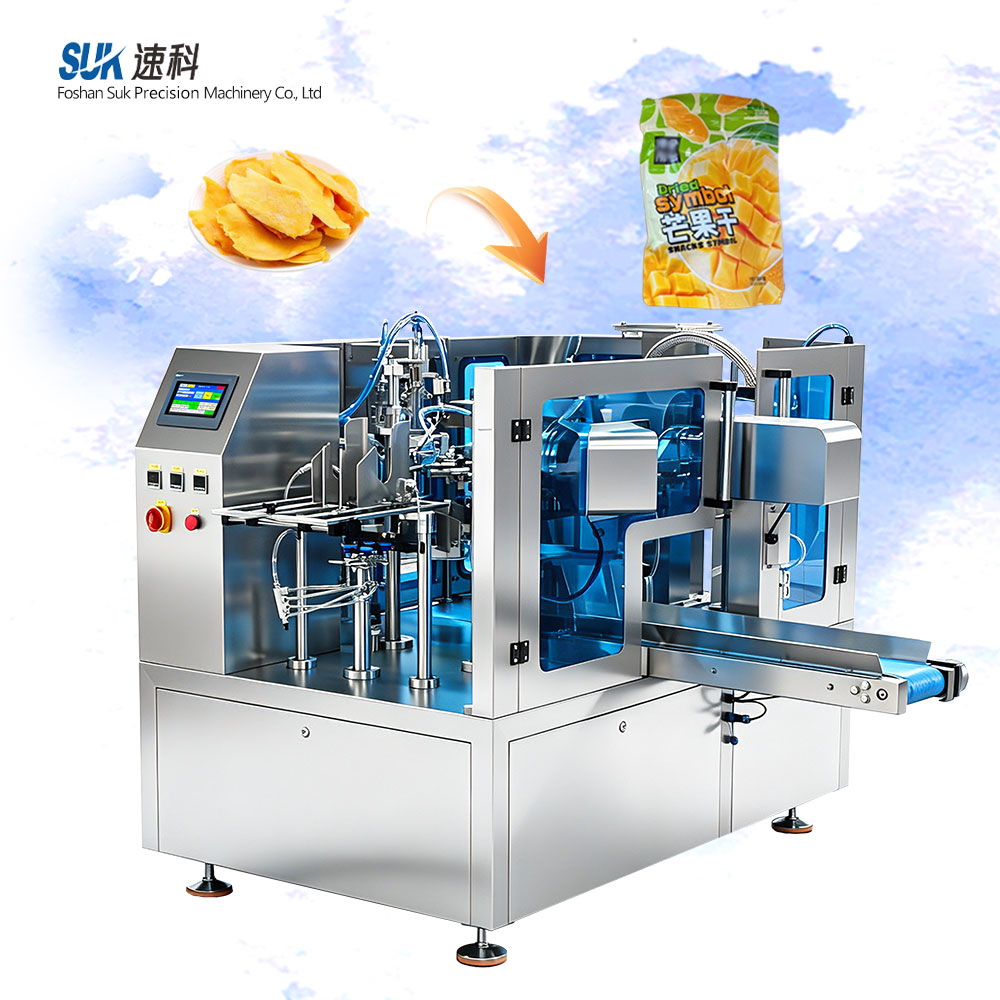
| Fertilizer in premade pouches | Premade pouch packing machine | Opens, fills and seals preformed stand-up or zipper pouches |
| Multiple narrow fertilizer sachets | Multi-lane sachet or stick packing machine | Produces several narrow sachets in parallel at smaller doses |
Some fertilizer projects may use a different machine type even when the product name is similar. Confirm the product state, target dose and finished bag before choosing the equipment.
Confirm the 5 kg to 8 kg bag range
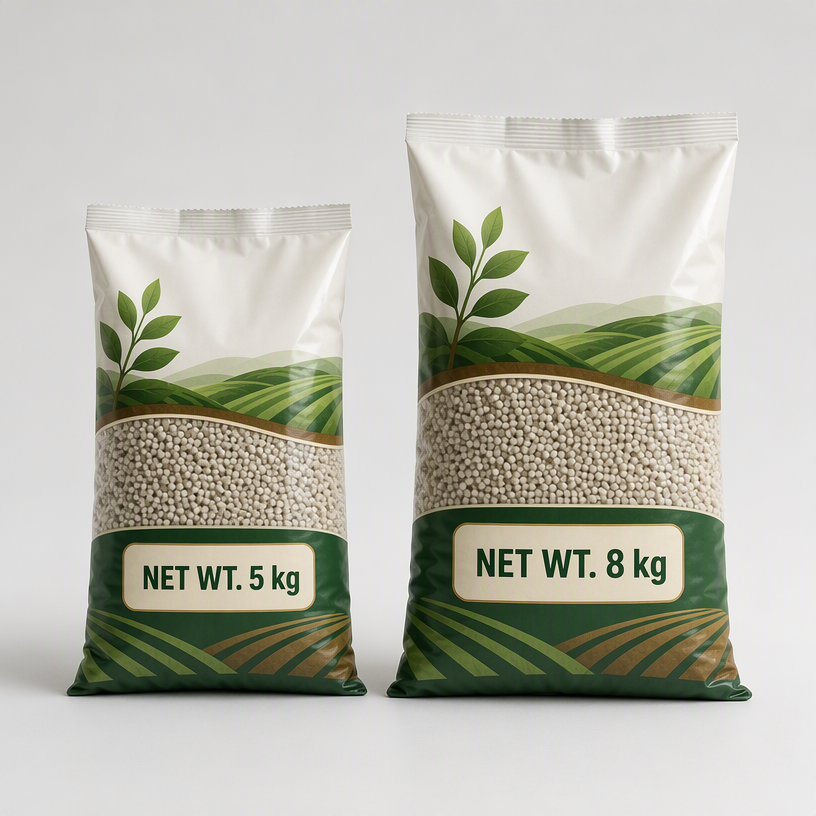
The target package weight is one of the first engineering inputs. The application discussed here uses 5 kg and 8 kg examples, with a maximum stated package weight of 8 kg per bag. This range affects the weighing capacity, hopper arrangement, bag dimensions, film width, forming tube and the space required for the finished bag to discharge cleanly.
A 5 kg bag and an 8 kg bag may not use the same physical dimensions if the product density or bag design changes. The buyer should provide the desired width, length, gusset depth or finished bag sample rather than specifying weight alone. A larger or denser granule may require a different fill profile even when the target weight is the same.
Weight is not the same as bag size
Net weight describes the amount of product in the bag, but it does not define the complete package. Product density, headspace, film width and bag shape determine the final appearance. This is why a fertilizer bagging machine should be selected from both the target weight and the finished-bag drawing. The 5 kg and 8 kg illustration used with this article is a visual application reference, not a fixed commercial package design.
Confirm tolerance and weighing conditions
Ask how the supplier defines weighing accuracy and under what material and operating conditions the result is measured. Product flow stability, vibration, target weight and operator settings can all affect the actual result. A practical quotation should state the target weight, acceptable tolerance and test conditions rather than presenting a single number without context.
Choose the bag format and film
The machine format affects how the bag is formed and sealed. A vertical form-fill-seal, or VFFS, system forms bags from roll film before filling and sealing. For fertilizer applications, pillow bags and selected gusset bags may be considered depending on the required presentation, bag dimensions, film structure and downstream handling.
Pillow bags for roll-film production
Pillow bags can be suitable for continuous roll-film packaging when the factory wants a straightforward vertical forming and sealing process. The finished bag dimensions depend on the film width, forming tube, cut length and product fill. Seal quality also depends on film compatibility, temperature, pressure and operating speed. These variables should be checked with the intended film instead of assumed from a general machine description.
Gusset bags for a different profile
Gusset bags can provide a different standing profile and side-fold structure. They may be considered when the bag needs a broader base or a particular shelf and transport presentation. A gusset format requires appropriate forming and sealing parts, so a drawing or physical sample should be supplied before the machine is confirmed. The same fertilizer product can require different settings when the bag format changes.
Compare the feeding and weighing system
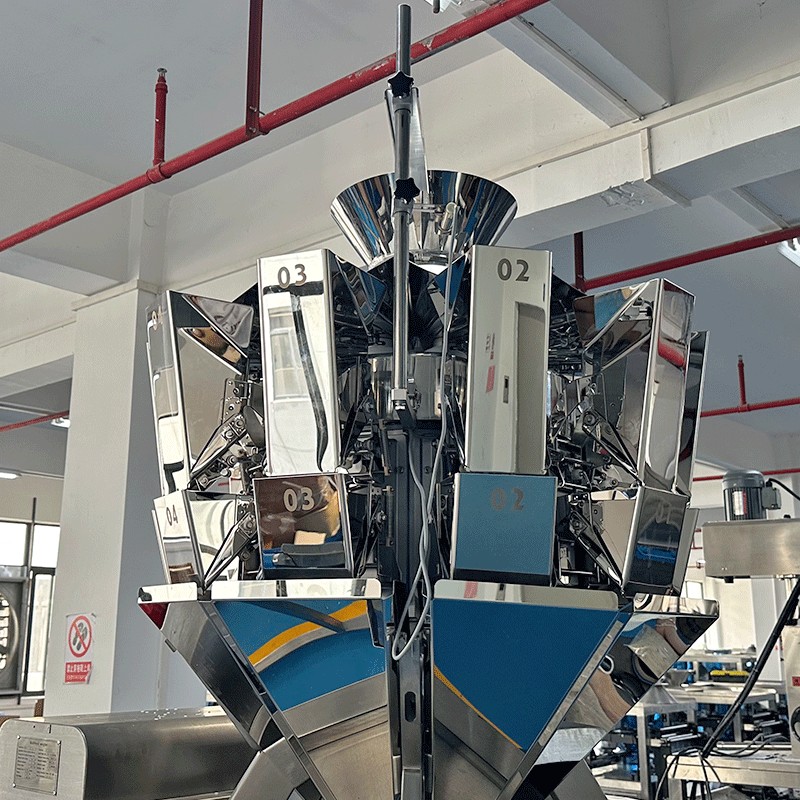
The feeding and weighing system is the core of a fertilizer packing line. Product is transferred to the weighing unit, the target portion is prepared and the product is released into the formed bag. The system should provide a stable flow without excessive surges or blockages. The best arrangement depends on the actual product and the desired 5 kg or 8 kg portion.
Feeding for granular fertilizer
The feeding route may include a storage hopper, conveyor, elevator or other transfer equipment. It should keep the weighing system supplied without causing uncontrolled overfeeding. Product that bridges, sticks or separates may require different hopper geometry or settings from a dry, free-flowing granule. Layout height and maintenance access should also be considered when the weighing equipment is elevated above the VFFS unit.
Weighing blended fertilizer
Blended fertilizer can contain particles with different densities or sizes. The weighing system should therefore be reviewed against the blend rather than a single component. The buyer should ask how the machine handles product variation and whether the test material represents the actual formula. A stable result depends on the feeding system, weighing method, target tolerance and operating settings working together.
Review the complete packaging workflow
A fertilizer packing machine is one part of a factory process. The complete workflow may include product storage, feeding, weighing, bag forming, filling, sealing, collection and downstream handling. Reviewing every stage helps the factory avoid a situation where the main machine can run but the surrounding equipment cannot maintain the required production flow.
Forming, filling and sealing
After the weighing system prepares the portion, the fertilizer enters the film tube. The VFFS unit forms the bag, fills it and completes the sealing and cutting cycle. The film and seal settings must be suitable for the product and bag range. For 5 kg and 8 kg bags, the factory should verify that the bag can be filled without excessive deformation and that the sealed edges remain suitable for handling.
Discharge and downstream handling
The sealed bag may be discharged to a conveyor, inspection point or collection station. Depending on the factory, further operations may include checkweighing, metal detection, secondary packing, case packing, palletizing or warehouse transfer. These requirements should be stated during the initial inquiry so the main machine can be positioned and connected correctly.
Check the machine specification responsibly
A useful specification review connects each figure to the material and the target package. The application here confirms a planned 5 kg to 8 kg range and an 8 kg maximum stated package weight. It does not confirm one universal speed for every fertilizer. Output can change with product density, bag size, target weight, film, sealing time, feeding stability and the selected configuration.
When comparing fertilizer packaging machines, ask the supplier to clarify whether a specification is a reference value, a tested result or a project guarantee. This distinction is important for agricultural products because two materials with the same nominal category can behave differently in the machine.
Questions to ask about the quotation
Ask for confirmation of:
- Target weight range and maximum package weight
- Product sample and test conditions
- Bag width, length, gusset depth and finished format
- Film width, structure and sealing requirements
- Expected output at 5 kg and at 8 kg
- Feeding and weighing method
- Power, compressed air and working height
- Machine footprint and operator access
- Downstream conveyor and inspection interfaces
- Changeover parts for different bag sizes
A clear quotation makes it easier to compare suppliers because the product, bag, output and test conditions are defined in the same terms.
Prepare the factory layout
The physical layout should provide safe access to the weighing platform, product infeed, film roll, control panel and finished-bag discharge. The factory should reserve space for cleaning, inspection and maintenance. An elevated weighing system also needs a suitable platform or access arrangement, and the overall ceiling height should be checked before installation planning.
Upstream planning
The upstream system should deliver fertilizer steadily to the weighing equipment. Storage hoppers and conveyors need to match the product flow and required output. If the factory changes between formulas, the layout should also allow cleaning and inspection between products. These practical requirements can affect the final position of the machine more than the machine footprint alone.
Downstream planning
The downstream area should receive and organize sealed 5 kg or 8 kg bags without creating a bottleneck. Conveyors, checkweighers, metal detectors, case packing and palletizing may be added when required. Discussing the complete line early helps the factory decide whether it needs one machine or a coordinated packaging solution.
Use a fertilizer packing machine buyer checklist
Before asking for a quotation, prepare a project brief with the product, target bag and factory information. Include clear product photos and a representative sample when possible. State whether the factory needs 5 kg bags, 8 kg bags or both, and provide the preferred pillow or gusset format.
The brief should also explain how the bags will be handled after sealing. A factory filling 5 kg retail-style bags may need a different collection and secondary-packing arrangement from a factory moving 8 kg bags directly to warehouse pallets. Mentioning the working environment, expected operating hours and changeover frequency helps the supplier review access, cleaning and maintenance requirements at the same time as the machine specification.
Use this checklist:
- Fertilizer type and product photos
- Representative granular sample
- Target weights: 5 kg, 8 kg or both
- Acceptable weighing tolerance
- Bag width, length and preferred format
- Film structure and printed-film information
- Required output and working hours
- Available power, air and installation height
- Existing conveyors or downstream equipment
- Cleaning and material-contact requirements
This information helps the supplier recommend a suitable fertilizer bagging machine instead of sending a generic granule-machine quotation that may not match the actual application. It also gives the buyer a consistent basis for comparing feeding, weighing, sealing and downstream-line proposals from different suppliers.
Request a fertilizer packing machine recommendation
If you are selecting a fertilizer packing machine for 5 kg to 8 kg granular or blended fertilizer bags, send the product sample, target weight, bag dimensions, film information and expected output to SUK. The engineering team can review the feeding, weighing, VFFS forming and sealing requirements, then confirm whether the proposed configuration suits the material and factory workflow.
A complete inquiry should state whether both 5 kg and 8 kg formats are required, whether the factory changes between fertilizer formulas, and whether the finished bags move to manual collection or a downstream line. Include the preferred bag drawing or a reference sample if one is available. These details allow the supplier to review the forming parts, weighing range, film path and discharge arrangement together. They also reduce the chance of receiving a quotation that lists a general granule machine but does not address the actual fertilizer product or bag-handling process.
For the dedicated equipment overview, see Fertilizer Packing Machine for Granular and Blended Fertilizer. For related granule equipment, see the Granule Packing Machine for Snacks, Nuts and Grains.
CTA: Send Your Fertilizer Product and Bag Details to SUK
FAQ
What is a fertilizer packing machine?
It is an automated system for feeding, weighing and packing fertilizer into sealed bags. A VFFS configuration forms bags from roll film, fills the measured product and seals the package.
Can the machine pack 5 kg and 8 kg bags?
The planned application range includes 5 kg and 8 kg examples, with 8 kg as the stated maximum package weight. Final configuration, bag dimensions and performance should be confirmed using the actual fertilizer sample.
Is a multi-head weigher suitable for fertilizer?
A weighing system may be considered for suitable granular fertilizer applications, but the correct configuration depends on particle size, density, flow behavior, target weight and tolerance. Sample testing is recommended before final confirmation.
Can fertilizer be packed in pillow or gusset bags?
A VFFS system may support pillow bags and selected gusset bags when the film width, forming parts and sealing arrangement are suitable. A finished bag drawing or sample should be provided for a specific format.
Is the 5 kg and 8 kg bag image a real customer package?
No. It is an unbranded application illustration showing two possible net-weight examples. It does not represent a customer brand, a fixed fertilizer formulation or a guaranteed final bag design.
What should I send to get a fertilizer packaging quotation?
Send the fertilizer type, product sample or photos, target weight, bag dimensions, film details, expected output and factory conditions. Also describe any conveyors, inspection equipment or downstream packing machines that must connect to the line.