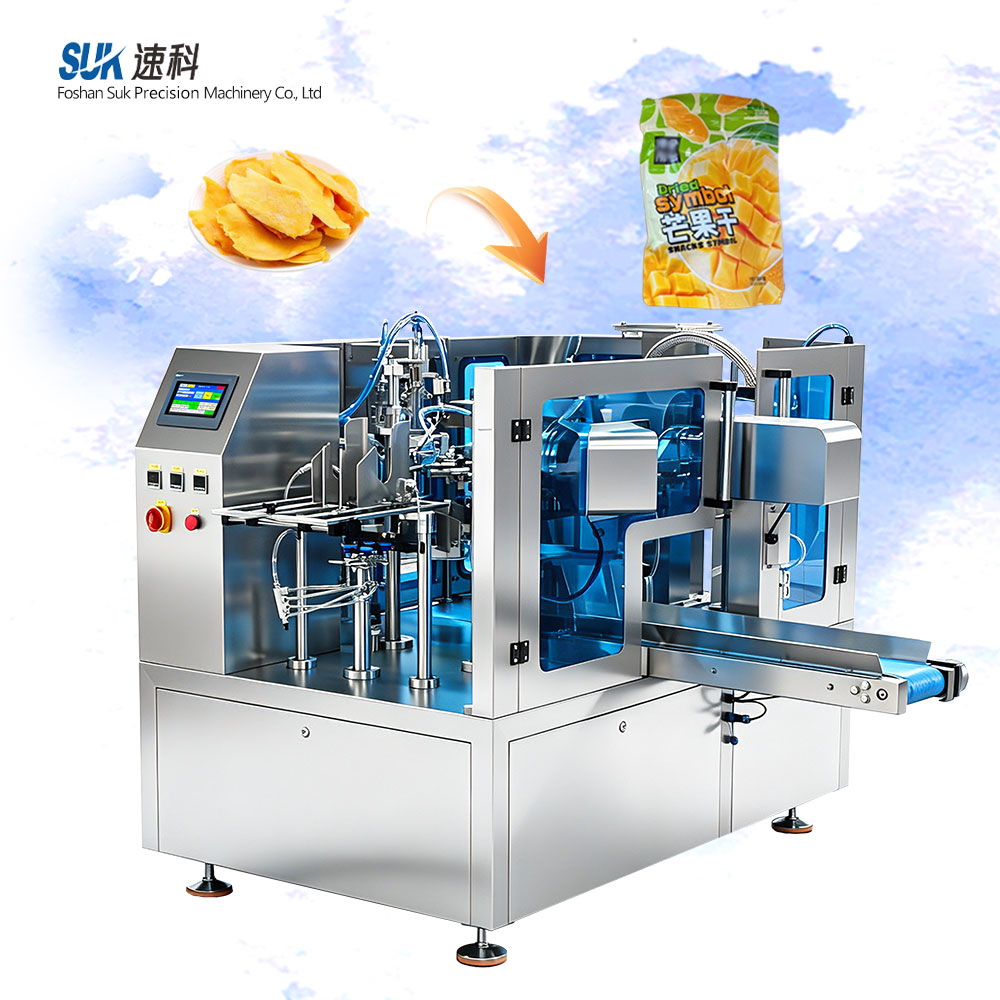
Choosing a granule packing machine starts with the product and target bag, not with a speed number. Snacks, nuts, grains and seeds can differ in density, shape, fragility and flow behavior, so the feeding and weighing system must be matched to the material. For many food factories, an automatic vertical form-fill-seal line with a multi-head weigher is a practical starting point because it combines portion weighing, bag forming, filling and sealing in one workflow. The final configuration should be confirmed with product samples, target weight, bag dimensions, film information and the required production rate.
Start with the product characteristics
The same granule packing machine may perform differently when it packs potato chips, peanuts, cereal, seeds or mixed nuts. Before selecting a model, record the product's particle size, bulk density, moisture, surface characteristics and fragility. These details affect how quickly the product moves through the hopper, how consistently it reaches the weighing buckets and how much product can be released without damage.
Why product samples matter
A product name alone is not enough for machine selection. “Nuts” can mean whole peanuts, almonds, mixed nuts or irregular pieces, and each material may require a different feeding approach. A sample also helps the engineering team evaluate whether the product bridges in the hopper, flows too quickly, sticks to contact surfaces or breaks during transfer. Sample testing reduces the risk of choosing a machine based on a generic application label that does not reflect the actual factory material.
Match the weighing method to the material
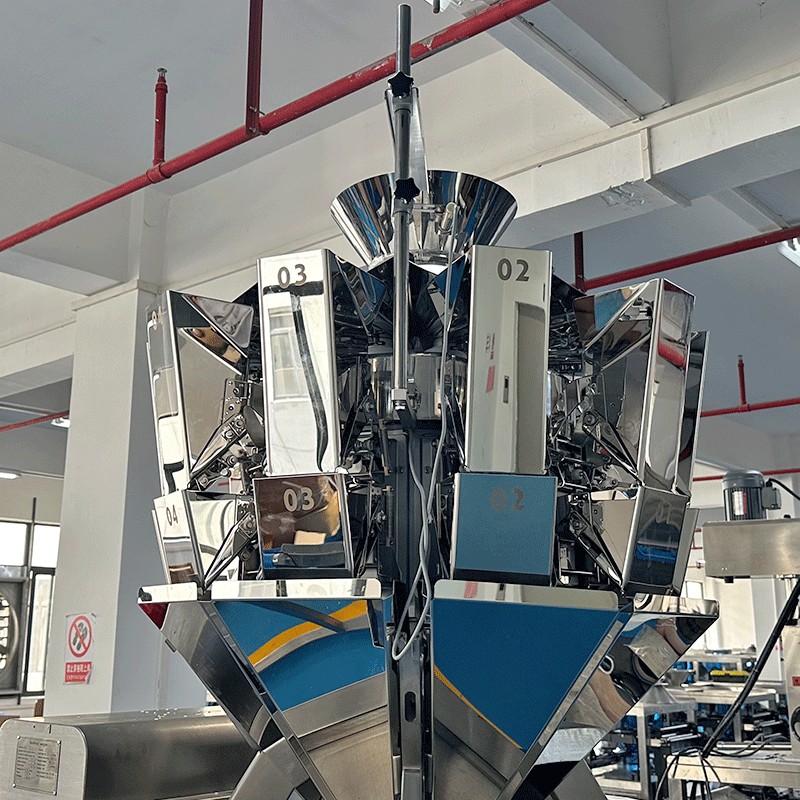
Multi-head weighing is commonly used for snacks, nuts, seeds and grains because it combines portions from multiple hoppers to approach the target weight. Linear weighing can be suitable for some products and simpler configurations. The correct choice depends on target weight, accuracy requirements, product flow and the output needed. Accuracy should be treated as an application result rather than a universal number: product variation, vibration, feeding stability and operator settings all influence the result.
Choose between VFFS and premade pouches
One of the first decisions is whether the factory wants to form bags from roll film or fill premade pouches. A vertical form-fill-seal, or VFFS, machine pulls film from a roll, forms the bag, fills it and seals it. This can be efficient for continuous production and gives the factory control over film supply and bag dimensions. A premade pouch machine takes bags that have already been manufactured and completes the filling and sealing process.
When a vertical granule packing machine is a good fit
A VFFS line is often considered when the factory wants continuous roll-film packaging, pillow bags or selected gusset formats, automated bag forming and a compact flow from weighing to sealing. It can be a practical choice for snacks, grains and seeds where the required bag format is compatible with a vertical forming tube and the film supplier can provide suitable roll stock.
When a premade pouch machine is a better fit
Premade pouches can be preferable when the brand requires a specific stand-up pouch, zipper pouch, four-side-seal pouch or printed pouch appearance. The bag is prepared before it reaches the packing machine, so the factory can focus on pouch opening, filling and sealing. SUK also provides a Granule Premade Bag Packing Machine for projects where premade pouch presentation is more important than roll-film bag forming.
Compare pillow bags and gusset bags
Bag format affects shelf presentation, film use, sealing, transport and downstream handling. Pillow bags are a common choice for high-throughput products because the film path and forming process are straightforward. Gusset bags add side folds that can change the bag's standing appearance and usable volume. Neither format is automatically better for every granule product; the decision should be made from the required retail or industrial presentation and the customer's film structure.
Pillow bags for continuous snack and grain packaging
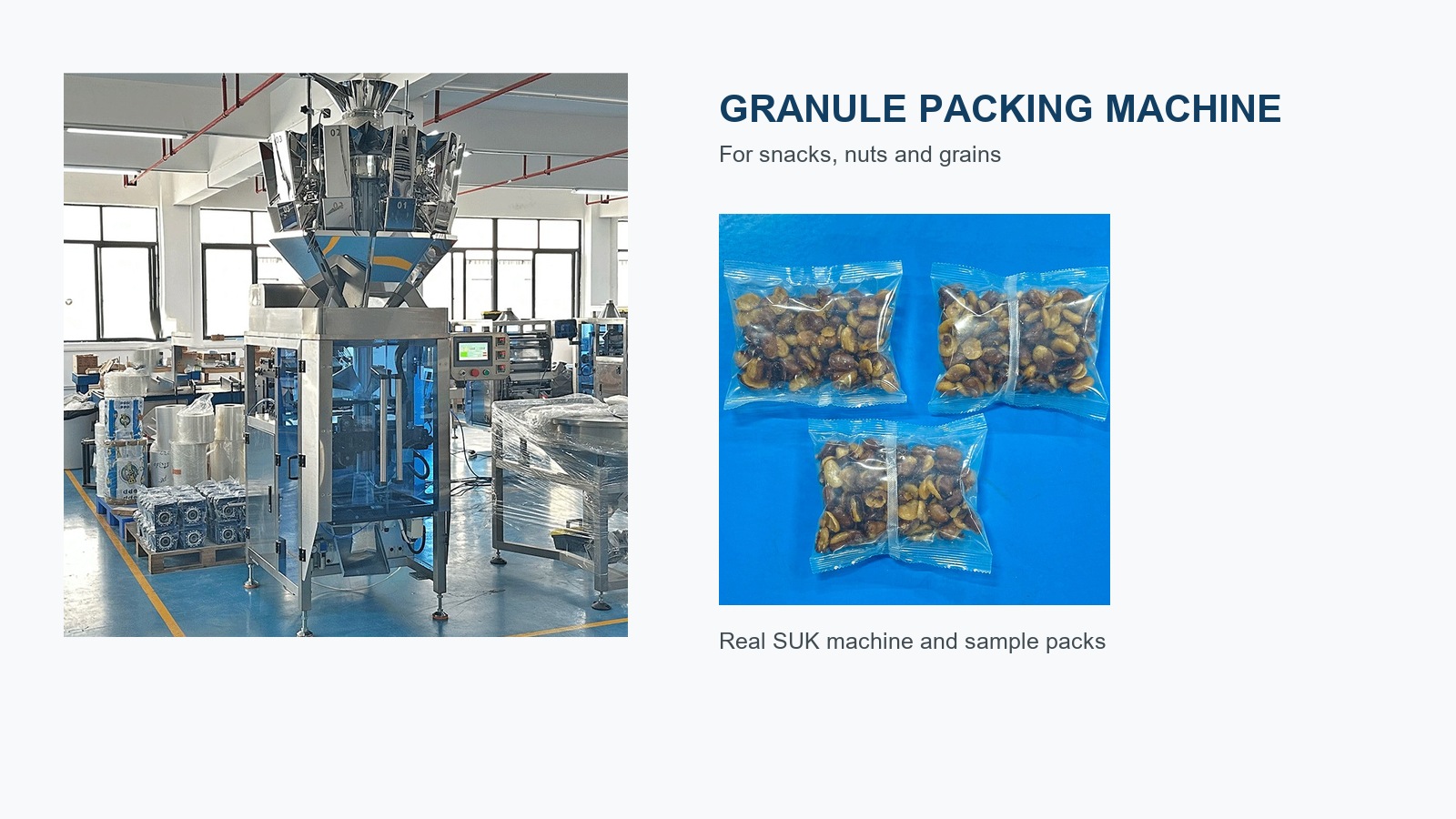
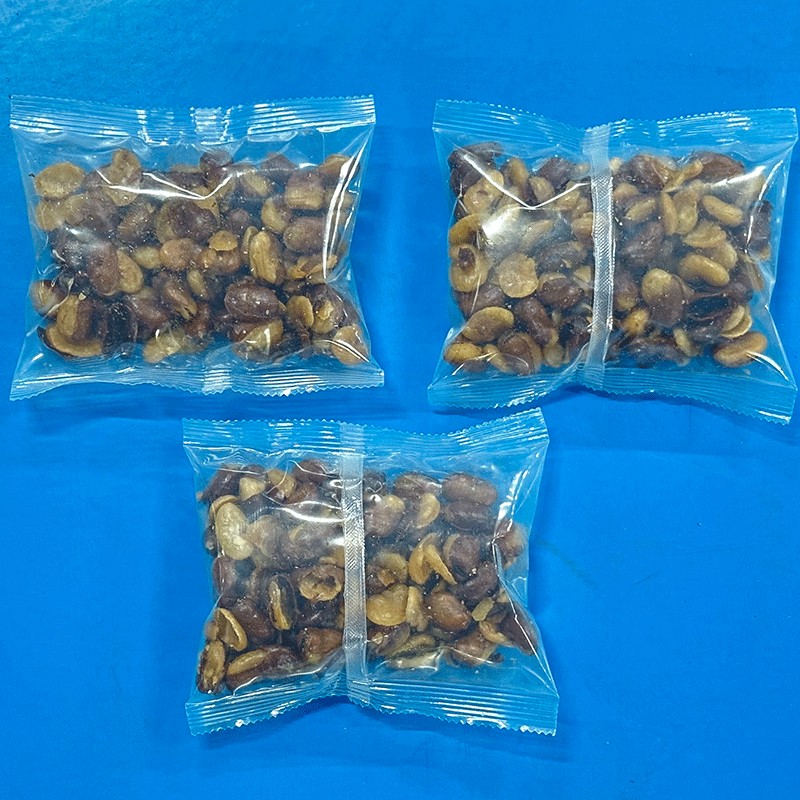
Pillow bags are suitable for many snack, seed and grain applications. They can be produced from roll film and discharged continuously after the horizontal and vertical seals are completed. The final result depends on the product fill level, film width, seal temperature and bag length. The supplied sample image shows pillow-style granule bags, which can be used as a reference when discussing the desired output with the packaging-machine supplier.
Gusset bags for a different presentation
Gusset bags can provide a broader base or a different shelf profile. They may also be useful when the required volume and bag proportions are not well served by a flat pillow profile. The forming set, film width and sealing arrangement must be checked before confirming that a gusset format can be produced reliably. Always send a drawing or physical sample if a particular gusset shape is required.
Review the machine workflow
An automatic granule packaging line normally includes product feeding, weighing, bag forming, filling, sealing and discharge. Reviewing the complete workflow helps a factory identify bottlenecks that may not appear in a product brochure. For example, a high-speed weigher does not improve total output if the film path, sealing cycle, collection conveyor or downstream cartoner cannot keep up.
Feeding and distribution
The feeding section transfers product to the weighing system. It should be stable enough to maintain a consistent supply without excessive breakage or blockage. Fragile snacks may need gentler handling, while smaller grains or seeds may need controls that prevent overfeeding. The hopper shape, vibration or timing settings and contact-surface design should be reviewed against the sample material.
Weighing and release
The weighing system builds the target portion before opening the selected hoppers. The target weight, allowable tolerance and product variation influence the number of weighing heads and the control settings. A buyer should ask how the supplier defines accuracy, under what product conditions it was measured and whether the quoted speed changes at different weights.
Bag forming, sealing and discharge
After weighing, the product enters the formed bag. The film must track correctly through the forming tube, and the sealing system must match the film structure and production conditions. The filled bag is then discharged for collection or downstream equipment. A factory planning a complete line should reserve space for inspection, coding, checkweighing, metal detection, cartoning or case packing when those functions are required.
Check the key specifications
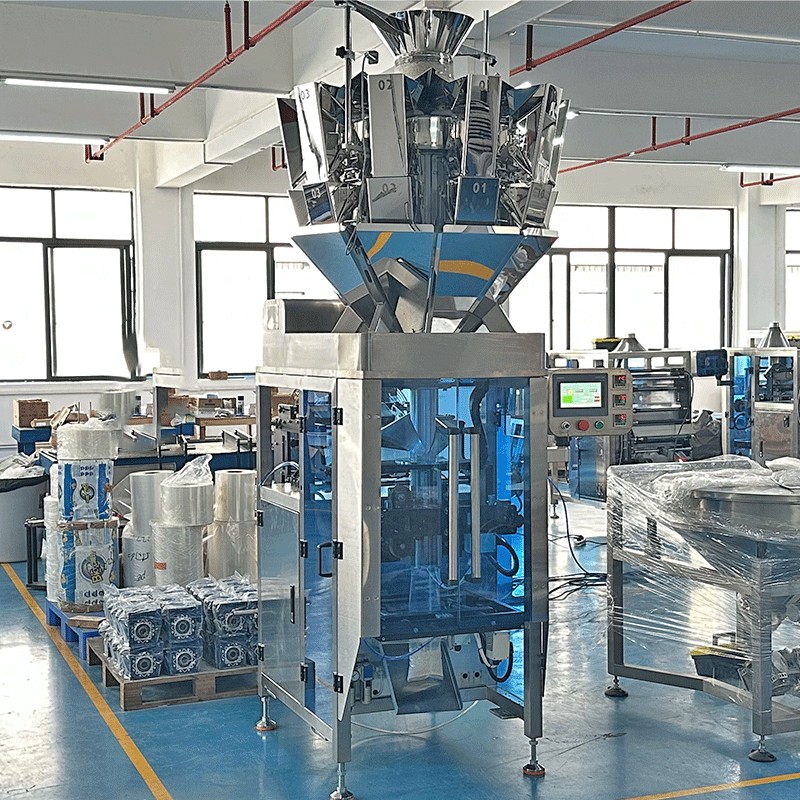
A useful specification review should connect each number to the customer's actual production goal. For the SKL-420 reference configuration shown on SUK's vertical weighing and packaging page, the listed compatible materials include granules, snacks, seeds and grains. The reference packing speed is 30–70 bags per minute, depending on the material. The bag length range is 80–300 mm and the bag width range is 60–200 mm. The maximum film width is 420 mm.
The same reference table lists an accuracy range of ±0.1–1.5 g, a reference power configuration of approximately 3.5 kW, and air consumption of approximately 0.4 m³/min at 0.6 MPa. These numbers are useful for initial project screening, but they should not be treated as a guaranteed result for every product. Final performance depends on product characteristics, target weight, film, bag format, settings and factory conditions.
Specifications to confirm before ordering
Ask the supplier to confirm the following points in writing:
- Product types and sample-testing conditions
- Target weight and acceptable tolerance
- Bag length, bag width and finished bag style
- Film width, film material and sealing requirements
- Expected speed at the target weight
- Weighing head type and feeding arrangement
- Power supply, compressed air and machine footprint
- Product-contact materials and cleaning requirements
- Interfaces for conveyors and downstream equipment
- Changeover method and spare forming parts
The goal is not to collect the largest specification table. The goal is to confirm that the selected configuration can produce the required bag from the customer's material under realistic operating conditions.
Plan for factory layout and line integration
A granule packing machine is easier to operate when the factory layout allows safe access to the weighing platform, film roll, control panel and discharge point. The layout should include space for material loading, operator movement, cleaning, maintenance and finished-bag collection. An elevated multi-head weigher also requires attention to platform access and product handling above the VFFS unit.
Upstream equipment
Depending on the product and plant layout, the line may include a storage hopper, bucket elevator, conveyor or other product-feeding equipment. These components should supply the weigher steadily without creating a surge that affects weighing stability. The correct connection depends on the product, required output and available room height.
Downstream equipment
Finished bags may go to a collection conveyor, checkweigher, metal detector, inspection station, cartoner or case packer. If the factory expects a complete line, it should describe the downstream process before the main machine is finalized. This prevents a situation where the primary packing machine works correctly but the overall line cannot maintain the target output.
Use a practical buyer checklist
Before requesting a quote, prepare a short project brief. Include the product name, sample photos, target weight, bag size, bag format, film information, target bags per minute, working hours and factory conditions. If the product is a mixture, provide the recipe or a representative sample so the supplier can understand particle-size variation.
A good request also explains what the factory wants to achieve. The objective may be to reduce manual weighing, increase output, improve bag consistency, replace an older machine or connect a new machine to an existing line. The same granule packaging machine may need a different configuration for each objective.
Use this checklist:
- Product sample and product photos
- Target weight and tolerance
- Bag drawing or finished bag sample
- Required output in bags per minute
- Film width and material, if known
- Available power and compressed air
- Available height and floor space
- Existing conveyors or downstream machines
- Cleaning and material-contact requirements
- Preferred delivery and installation scope
Request a granule packing machine recommendation
If you are comparing a granule packing machine for snacks, nuts, grains or seeds, send the product sample, target weight, bag dimensions and expected output to SUK. The team can review whether a vertical weighing and packaging machine or a premade pouch solution is the better fit, then confirm the machine configuration from the actual project information.
A useful quotation request should also state whether the bags will be made from roll film or supplied as premade pouches, whether the product is fragile or mixed-size, and whether the line must connect to an existing conveyor, checkweigher, cartoner or case-packing system. These details help the supplier assess the complete workflow instead of matching the project to a generic machine title. They also make it easier to compare quotations because the output, bag format and operating conditions are described in the same terms.
For a dedicated product overview, see the SUK Granule Packing Machine page. For projects using preformed bags, compare the Granule Premade Bag Packing Machine. For the integrated weighing approach, see the Vertical Weighing and Packaging Machine.
Send Your Product and Bag Details to SUK
FAQ
What is a granule packing machine?
A granule packing machine is an automated system for weighing and packing dry granular products such as snacks, nuts, seeds and grains. A typical VFFS configuration forms bags from roll film, fills the measured product and seals the finished bag.
Is a multi-head weigher suitable for nuts and snacks?
It is commonly considered for nuts, snacks, seeds and grains because it combines portions from multiple weighing hoppers. Suitability and actual accuracy depend on product size, shape, density, fragility, target weight and feeding stability.
How fast can a granule packing machine run?
The reference SKL-420 configuration lists 30–70 bags per minute depending on material and pack conditions. The speed for a real project should be confirmed at the target weight, bag size and product sample rather than taken as a universal guarantee.
What bag types can a granule VFFS machine produce?
Depending on the forming and sealing configuration, it can support pillow bags, gusset bags or other defined formats. A bag drawing or sample should be supplied when the project requires a specific shape.
Should I choose VFFS or premade pouch packaging?
Choose VFFS when forming bags from roll film and continuous production suit the factory. Choose premade pouches when the project requires already-made stand-up, zipper or other custom pouch formats. The decision should consider bag appearance, film supply, changeover and line planning.
What should I send for a quotation?
Send the product name, sample or photos, target weight, bag dimensions, desired speed, film information, factory power and air conditions, and any upstream or downstream equipment details. This allows the supplier to recommend a project-specific configuration.