product
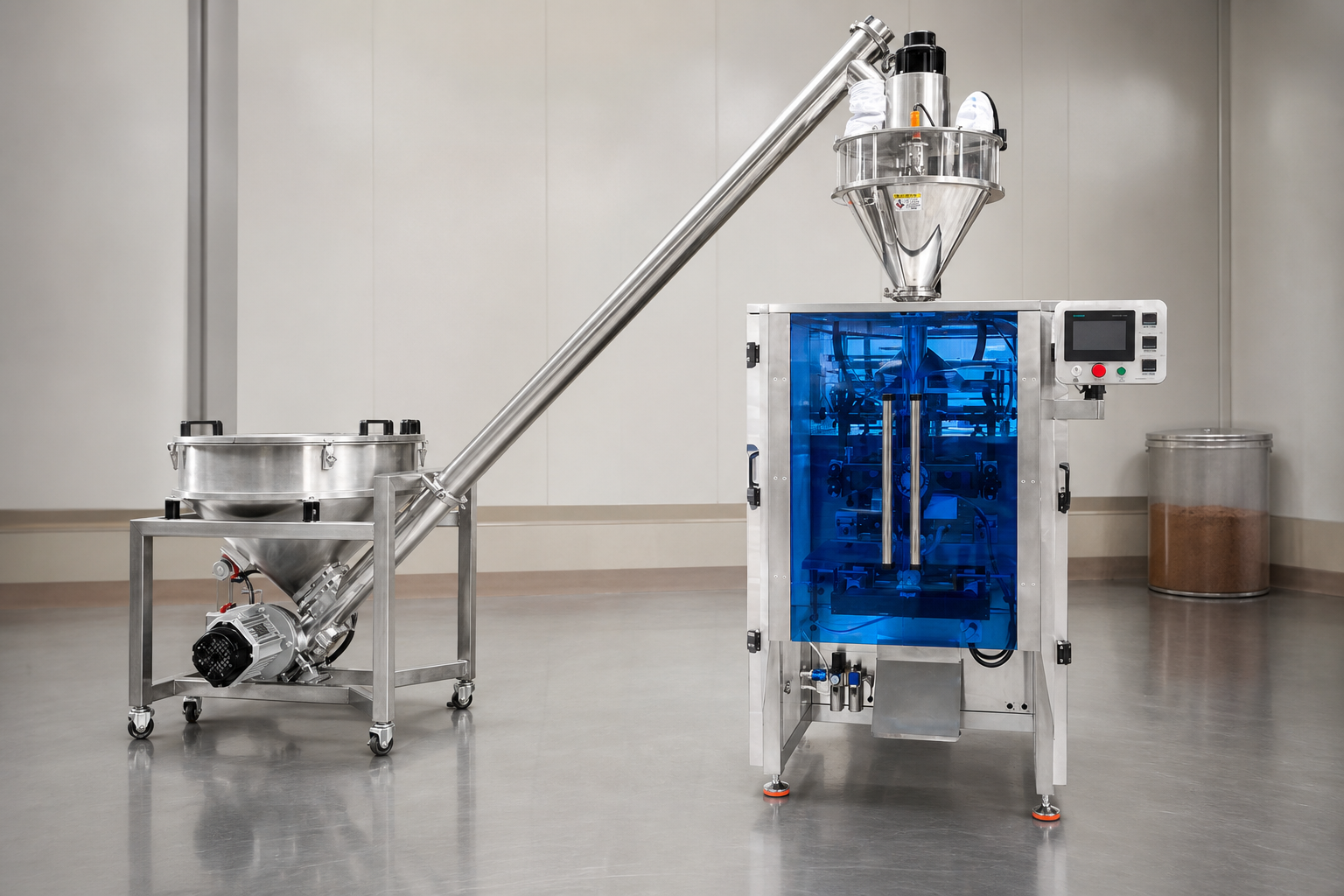
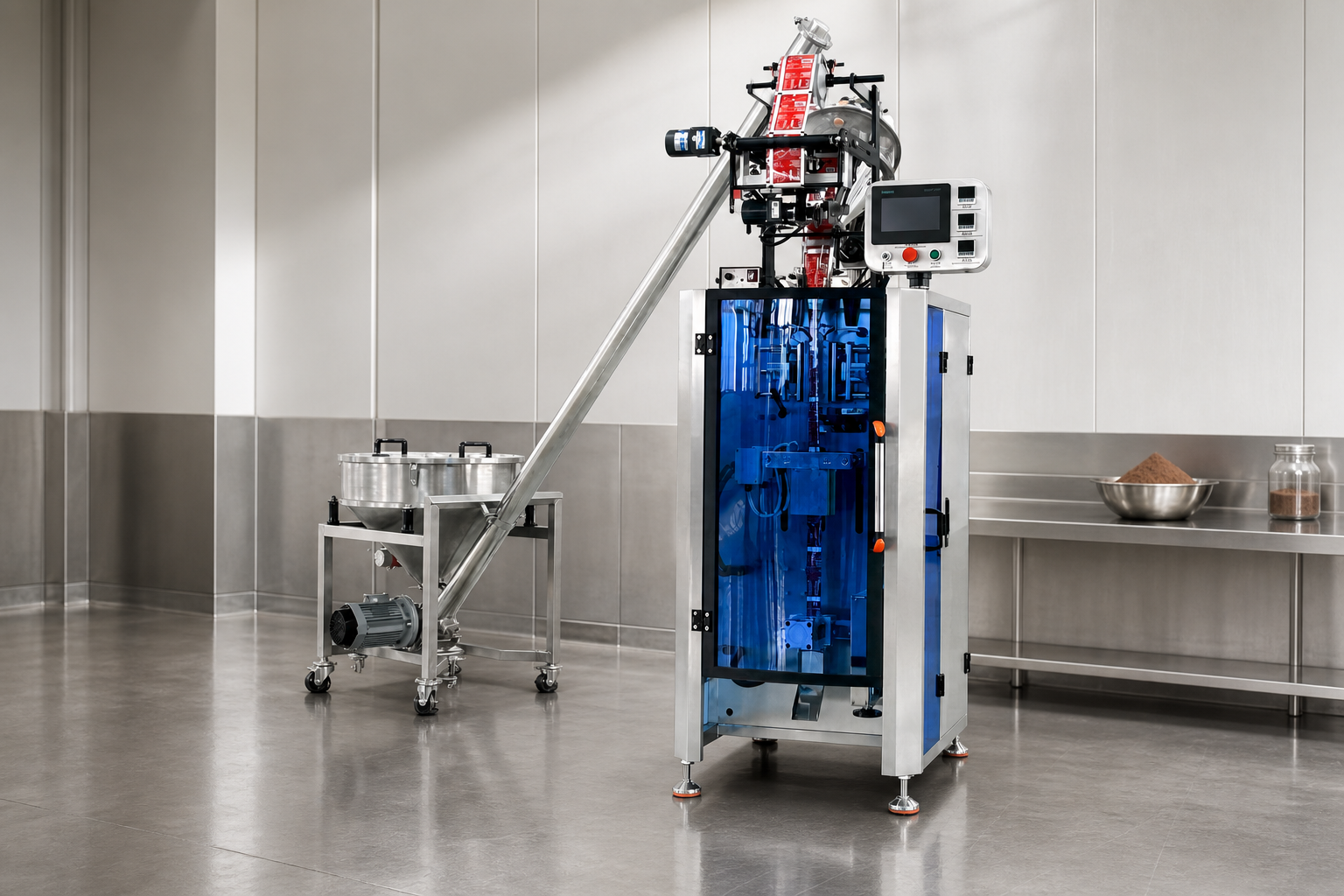
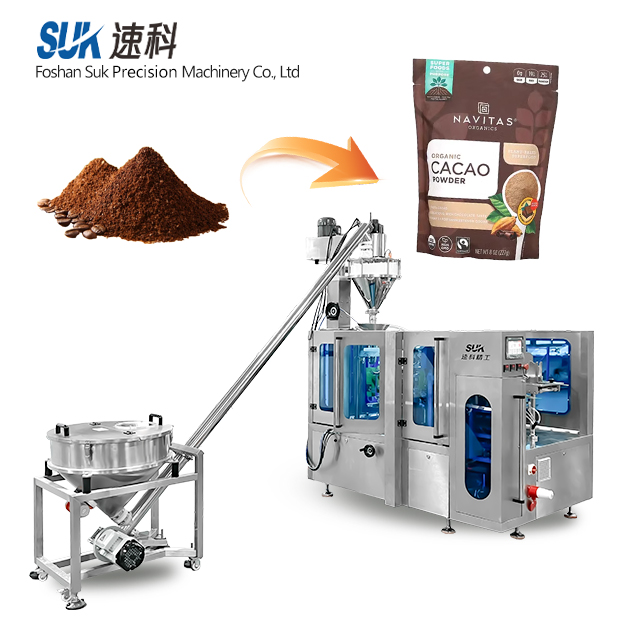
Cocoa powder is a fine, light and slightly oily powder, so it behaves differently from free-flowing granules on a packaging line. Dust, aeration, bridging in the hopper and powder build-up around the sealing area are usually the first points food factories ask us to look at. A practical solution therefore starts with the powder itself, and only then moves on to the bag format, the feeding method and the way the filled pack is handled downstream.
Most cocoa powder projects sit in one of two families: film-based vertical bags for retail or food-service packs, or small stick sachets for single-serve portions. Both are film-based formats, and both need the feeding and filling method to suit the powder rather than the other way round. If you already pack other powders, the powder packing machine platform is often a sensible starting point before the bag format is fixed.
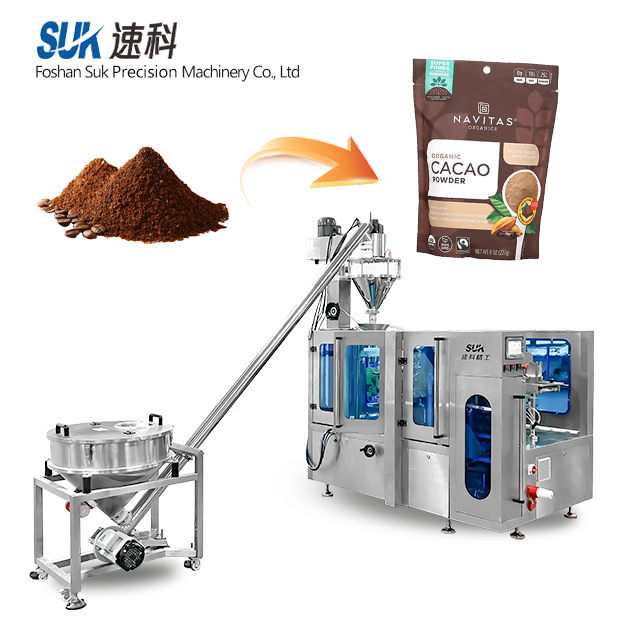
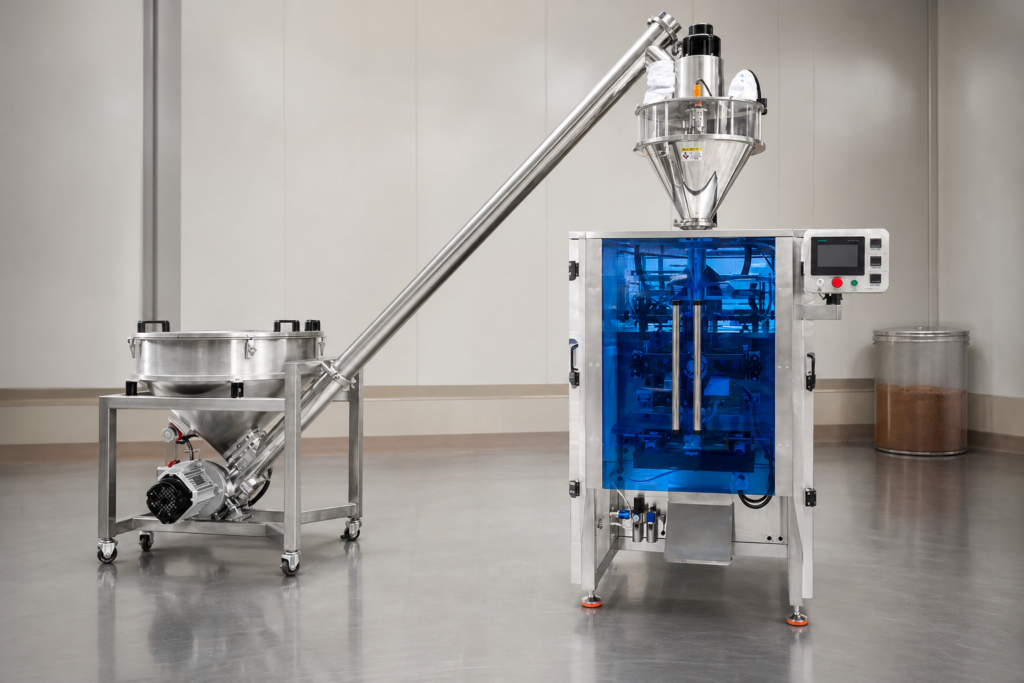
A vertical form fill seal machine forms the bag from a flat film roll, fills it through a vertical tube and seals it in one continuous cycle. For cocoa powder the feeding side matters most: a screw or auger feeder normally moves the powder from the hopper to the filling tube in a controlled way, and the hopper, agitator and tube are chosen around how the powder actually flows. Film structure, bag width, seal type and the way the film is pulled all affect whether the finished pack looks the way you want it to.
Points worth reviewing include whether dust needs to be contained at the filling point, how the powder behaves when the hopper is nearly empty, which bag formats you really sell, and how the finished bag leaves the machine for weighing, metal detection, cartoning or case packing.
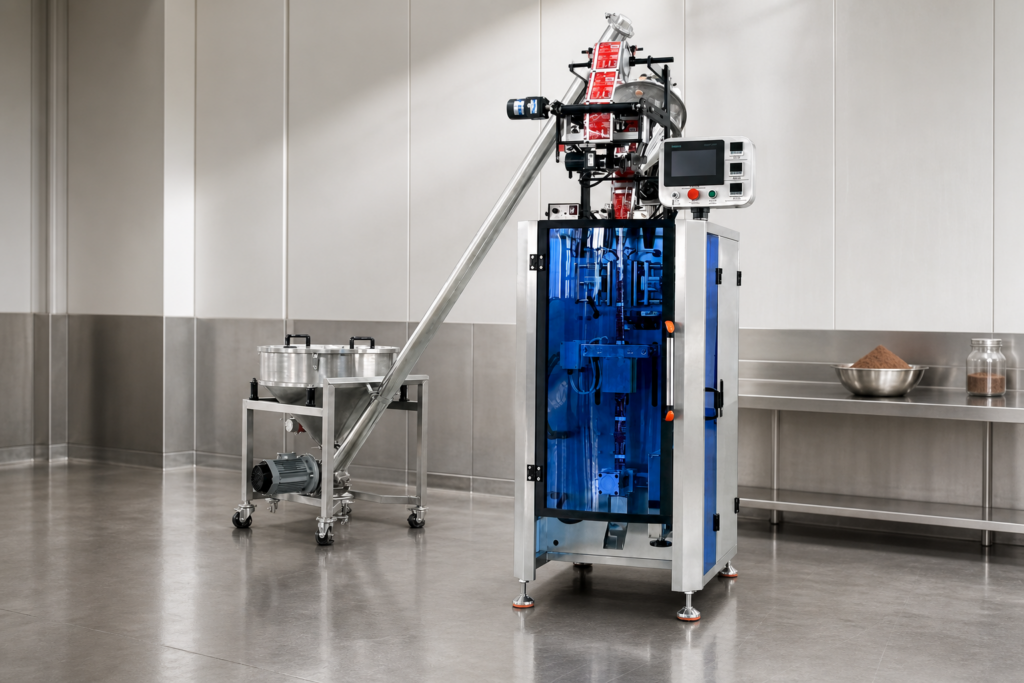
Stick packs suit single-serve cocoa portions and sample packs. A multi-lane powder packaging machine forms several narrow sticks at the same time from one film roll, which changes the way the powder has to be distributed across the filling heads. Because each stick holds only a small amount of powder, consistent filling across the lanes and clean sealing on narrow seals are the two points to look at during a selection review.
It is worth deciding early whether stick packs are a permanent part of your range or a trial. That decision affects how the rest of the line is laid out and how much flexibility you want to keep for future bag formats.
Before a configuration is proposed, these are the points we normally confirm with the factory:
This checklist is a starting point only. The right configuration comes from your own product and your own pack, which is why the review below is built around samples rather than a generic specification.
A configuration review works best when it is based on your real product and your real pack. Sending cocoa powder samples, a finished pouch or stick sample, or a packaging drawing lets the feeding, filling and sealing side be checked against something concrete instead of a written description.
It also helps to share the target pack sizes, the film structure you plan to use, and how the machine will fit into the existing line. With that information we can suggest which machine family to look at first and where samples or trials are still needed. You can reach us through the contact page to start a configuration review.