product
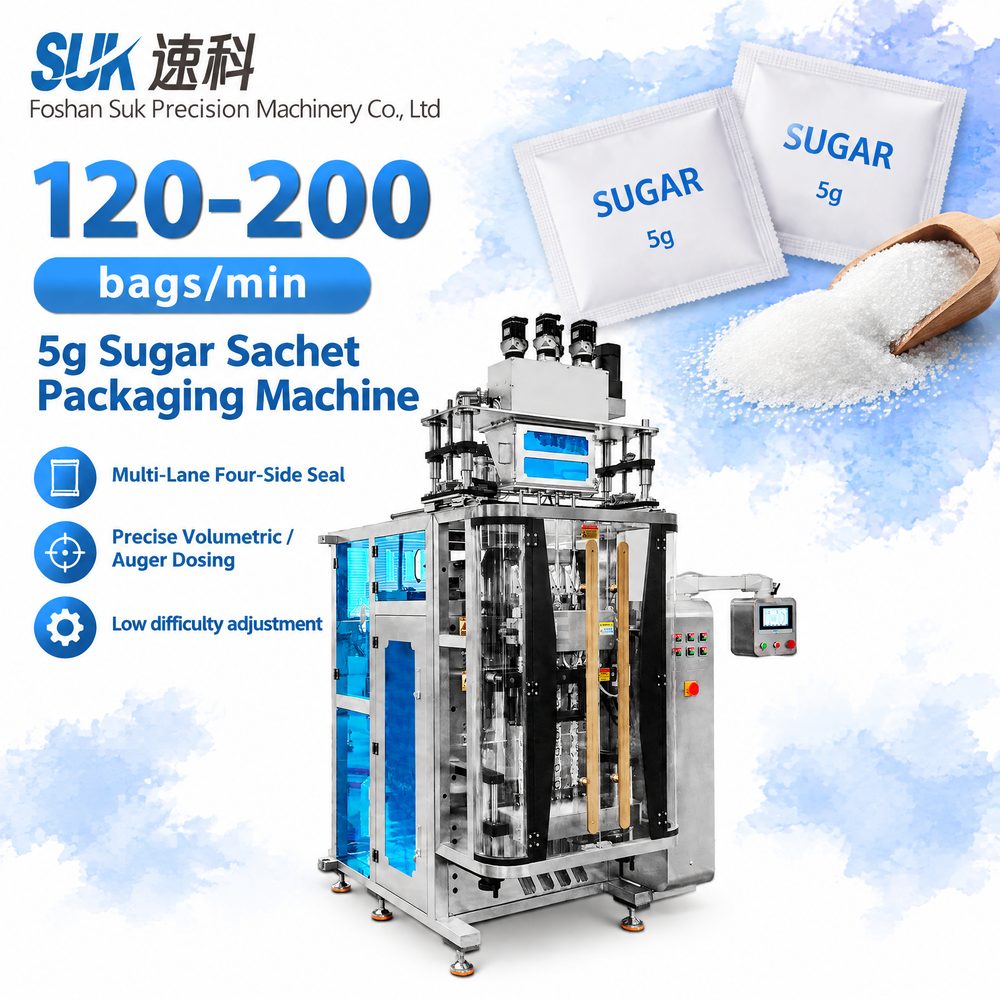

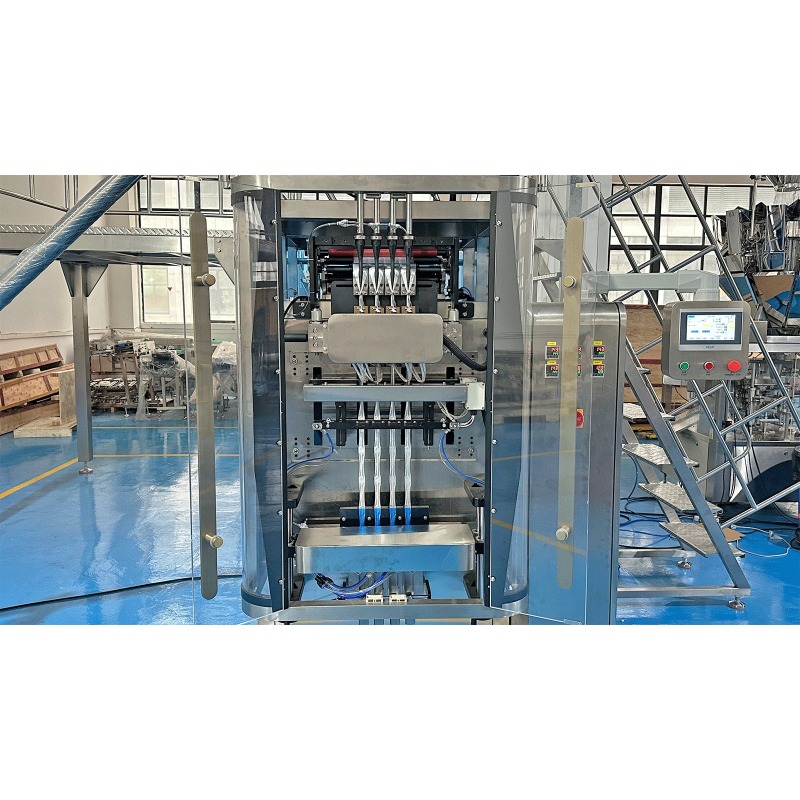
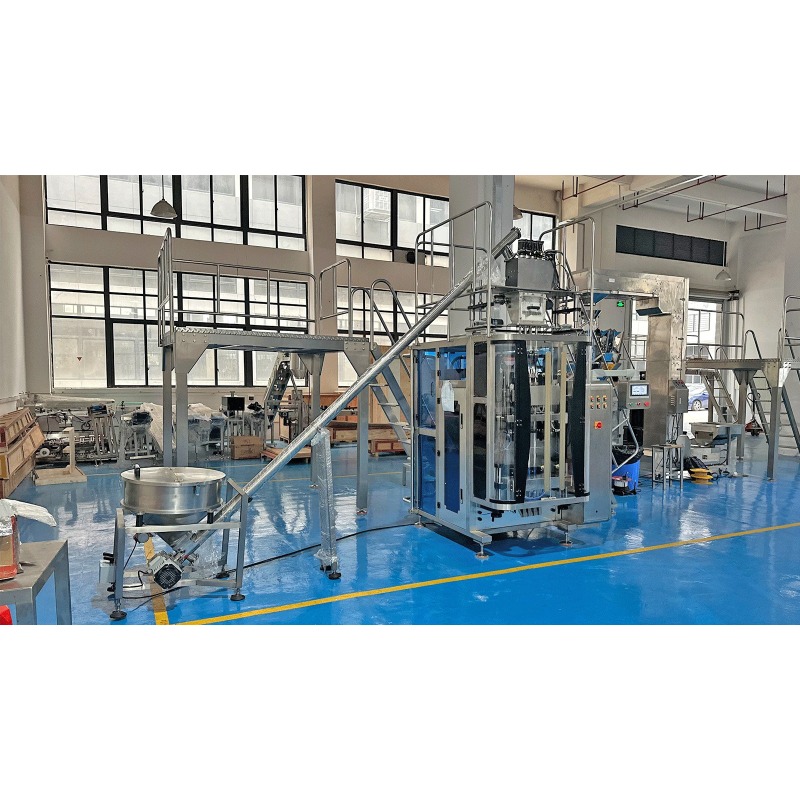
The SUK sugar sachet packaging configuration uses roll-film forming, dosing, filling and sealing to produce multi-lane sugar sachets or stick packs for free-flowing fine granular sugar. Lane layout, dose, film and output are confirmed from your sugar sample and packaging requirements.
Cover artwork shows a SUK promotional configuration with illustrative packaging samples, not a completed customer production case. Speeds shown are configuration references; actual output depends on the material, pack dimensions and agreed configuration, and is confirmed through sample trials.
The SUK sugar sachet packaging machine is a multi-lane sugar sachet / stick-pack configuration that works from roll film. The machine forms each lane from the roll, doses the sugar, fills, seals and cuts a finished sachet or stick pack in one continuous in-line sequence. It is built for B2B sugar packaging factories that need large numbers of small single-serve packs produced in parallel.
This page covers free-flowing fine granular sugar, including white granulated sugar and yellow (light brown) sugar. Sugar is not a uniform material: crystal size, surface moisture, static and flow behaviour all change the way a packer feeds and doses it. The dosing method and the final machine configuration must therefore be confirmed from your sugar sample, target weight, pack format, film and required output.
Send your sugar sample, target pack weight, pack dimensions, preferred format and daily production plan for a configuration review. Request a configuration review
This page describes one equipment route: a multi-lane configuration that produces small three-side seal sugar sachets or narrow sugar stick packs from roll film.
The scope is deliberately narrow. Larger roll-film sugar bags use a separately selected vertical packaging route; premade zipper pouches require premade-pouch filling equipment. Powders, coarse or irregular granules and sticky products are assessed separately and are not covered by this standard sachet configuration.
The intended product family is free-flowing fine granular sugar, such as white granulated sugar and yellow (light brown) sugar, packed as single-serve sachets or stick packs.
Other sugar materials sit outside this route. Icing sugar is a fine powder with different flow and dust behaviour. Coarse crystals, sugar cubes, rock sugar and other large or irregular materials need a separate assessment before any route can be proposed. In every case, suitability is confirmed from a sample rather than from a product name.
Because every pack is built inside the machine from flat film, the stages are interdependent rather than independent options.
A three-side seal sachet has three sealed edges and a folded edge, producing a flat, roughly rectangular pack. It is the familiar format for a standard single-serve sugar portion and is comparatively tolerant of variation. A stick pack is a long, narrow tube sealed at both ends, designed for slim single-dose sticks; it uses film efficiently but the narrow lane and long fill path place more emphasis on film tracking and on dust control around the sealing area.
Both formats come from the same family of multi-lane roll-film machines, but the choice is a configuration decision rather than a setting. Pack geometry determines film width, lane layout and dosing arrangement, so the format has to be fixed before the configuration can be confirmed. The companion guide below compares the two formats in detail.
Several project inputs drive the final machine definition. They should be supplied together, because they constrain each other.
Lane count, dosing range and output are specified together after reviewing your sugar sample, pack drawing and film. Ask for a matched configuration rather than applying powder or liquid machine parameters to granular sugar.
The equipment images on this page show real SUK machines. They are shown to explain the machine layout, not to describe a customer's product or production results.
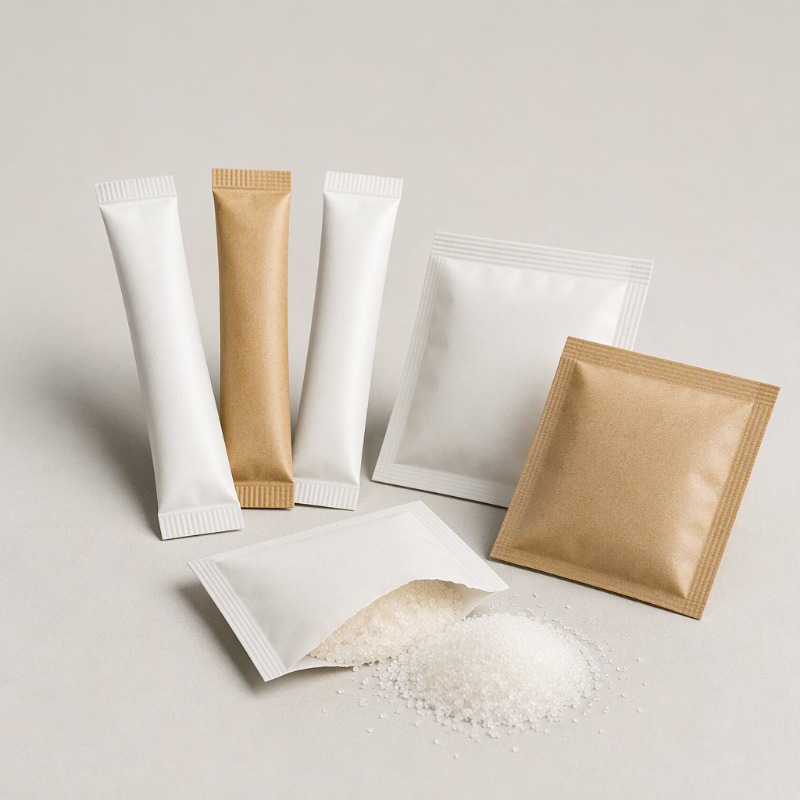
The third image is an unbranded packaging-format illustration used only to show the general shape of sugar stick packs and sachets. It is not a customer case, not a customer product and not a trademark, formulation or performance claim.
Dosing and the final configuration are confirmed from your sugar sample and packaging requirements. Send the sample together with the target weight, dimensions, format, film, daily production plan and factory information, and SUK will review the configuration with you. Request a configuration review
It is a roll-film machine that forms, doses, fills, seals and cuts several small sugar packs in parallel from a single roll of film. It produces single-serve three-side seal sachets or narrow stick packs in an in-line sequence.
Free-flowing fine granular sugar, such as white granulated sugar and yellow (light brown) sugar, is the intended application. Powders such as icing sugar, and large or irregular materials such as coarse crystals, cubes and rock sugar, must be assessed separately. Suitability is always confirmed from a sample.
No. Those figures depend on the sugar, the dose, the pack format and the film, so they are confirmed from your sample and packaging requirements rather than quoted in advance on this page.
A sachet is sealed on three sides and is comparatively flat and wide. A stick pack is a narrow tube sealed at both ends for slim single-dose portions. Both are made from roll film, but each changes the lane layout, film width and dosing arrangement.
No. Larger roll-film bags require a separately selected vertical packaging machine, while premade zipper pouches require premade-pouch equipment. This page covers multi-lane roll-film sachets and stick packs only.
Send a representative sugar sample, the target pack weight and tolerance, pack dimensions and format, the intended film, the daily production plan, factory space, electrical and air supply details, and your collection or cartoning requirements.
No. The equipment images are real SUK machines. The stick pack and sachet image is an unbranded packaging-format illustration, not a customer case, product, trademark or formulation.
For a detailed comparison of three-side seal sachets and stick packs, including how sugar flow, pack size, film and factory planning affect the choice, read the companion guide: Sugar Sachet Packaging Machine: 3-Side Seal vs Stick Pack.
For retail multipacks, specify the number of sachets per carton and the required cartons per minute as well as the packing-machine output. Review the SUK multi-lane counting and cartoning line for downstream planning. For larger packs, compare vertical roll-film packaging and premade-pouch filling and sealing.
For factories supplying hospitality portions, catering packs or retail multipacks, SUK can review a 5g four-side-seal sugar sachet configuration. This is a different finished pack from a narrow back-seal sugar stick. Send a drawing showing all four perimeter seals, the required outside dimensions, print position and opening feature so the proposed forming and sealing arrangement matches the pack you intend to sell.
The 5g figure is your target net weight, not a conversion from a machine's volumetric filling specification. Granule size, bulk density and feeding consistency must be assessed with your actual white or brown sugar. Lane count, dosing settings and sustained output are specified after this review; no universal speed or filling tolerance is promised for every sugar formulation.
If the project includes counting and cartoning, specify sachets per carton, carton dimensions, required sachet orientation and finished cartons per minute. SUK can assess the discharge, transfer and counting interface as part of a connected packaging and cartoning line. The line target needs to be based on accepted filled sachets rather than empty-machine cycles.
SUK confirms that this application can be configured, but a completed 5g four-side-seal sugar project is not presented on this page. Existing machine photographs show equipment references, not a validated sugar customer installation. Review the sugar sachet buying guide or request a sample-based configuration review.