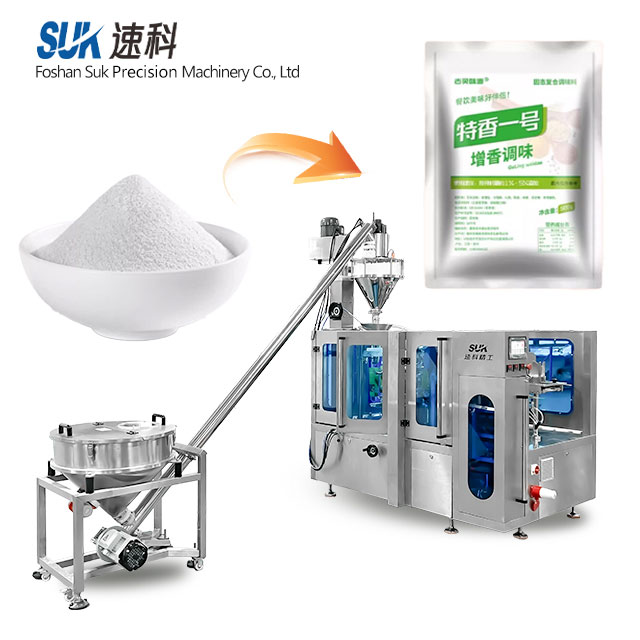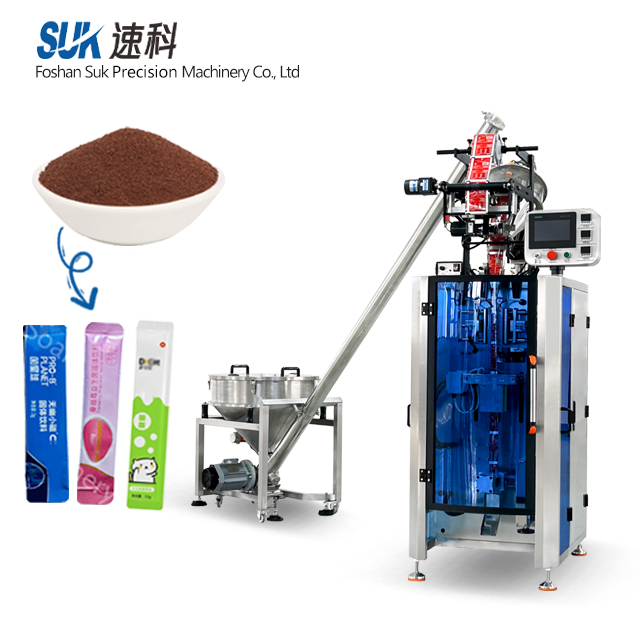
In the spice industry, the quality of your product is judged by its aroma and appearance. However, packing fine powders presents unique challenges, particularly regarding dust control and hermetic sealing. A professional spice packaging machine is no longer a luxury but a necessity for growing brands.
Overcoming the Challenge of Dust
Fine particles from chili or turmeric can interfere with the sealing area of a bag, leading to leaks and contamination. Our advanced rotary systems utilize a "No Bag - No Fill" sensor and specialized dust extraction hoods to ensure the sealing jaws stay clean, resulting in 100% airtight pouches every time.
Preserving Volatile Aromas
The essential oils in spices are what give them value. Exposure to oxygen can quickly degrade these flavors. By using a premade pouch machine, you can achieve a superior seal compared to traditional methods. Furthermore, the use of high-barrier films like PET/Alu/PE ensures that the fragrance stays in the bag until the customer opens it.
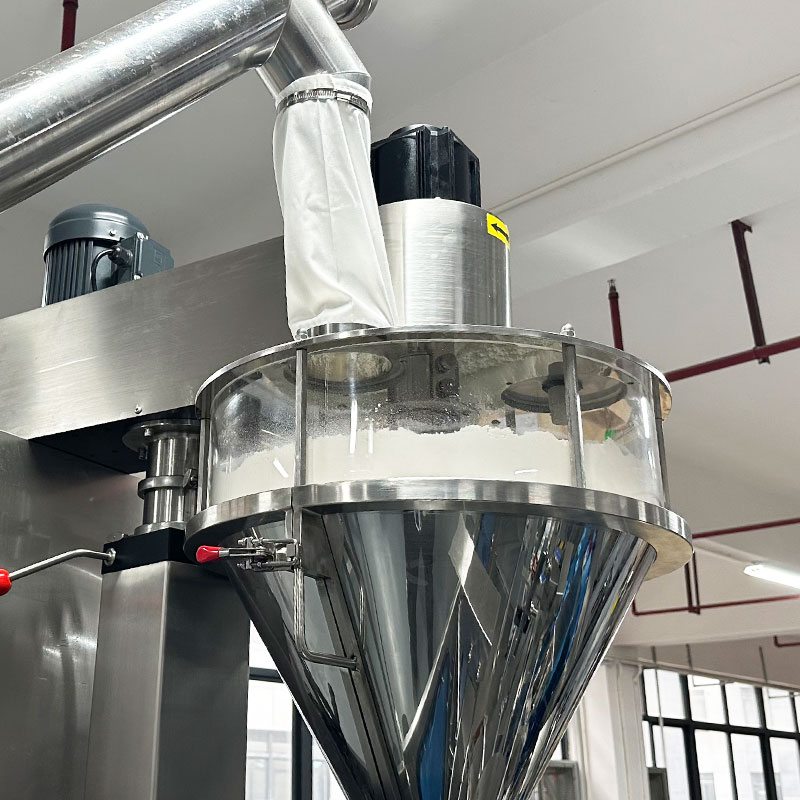
Modern spice packaging solutions incorporate several features to mitigate dust. Enclosed weighing and feeding systems prevent particles from escaping into the air. Additionally, vacuum dust extraction units can be integrated at critical points, such as the filling station, to capture airborne particles immediately. By maintaining a clean sealing surface through specialized cleaning nozzles or vacuum systems, manufacturers can ensure a 100% dust-free seal, even with the finest powders.
Advanced Rotary Pouch Packaging Technology
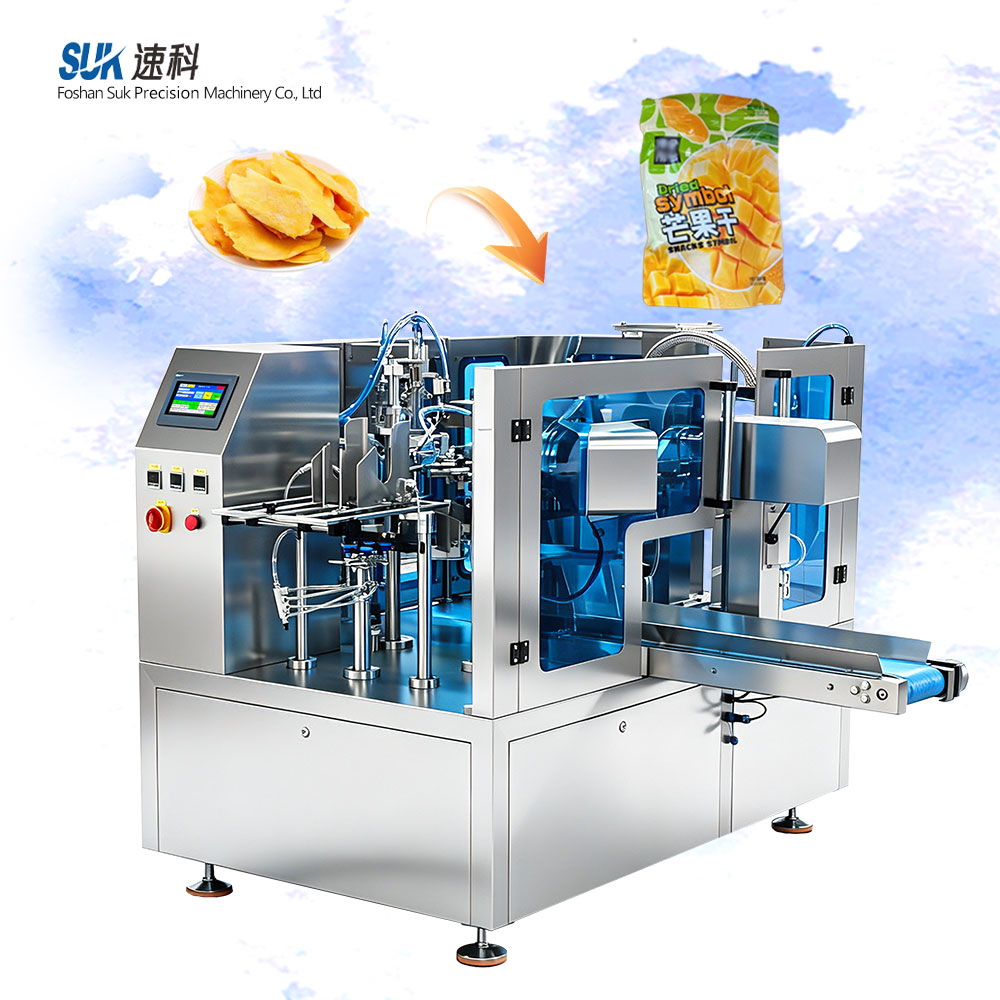
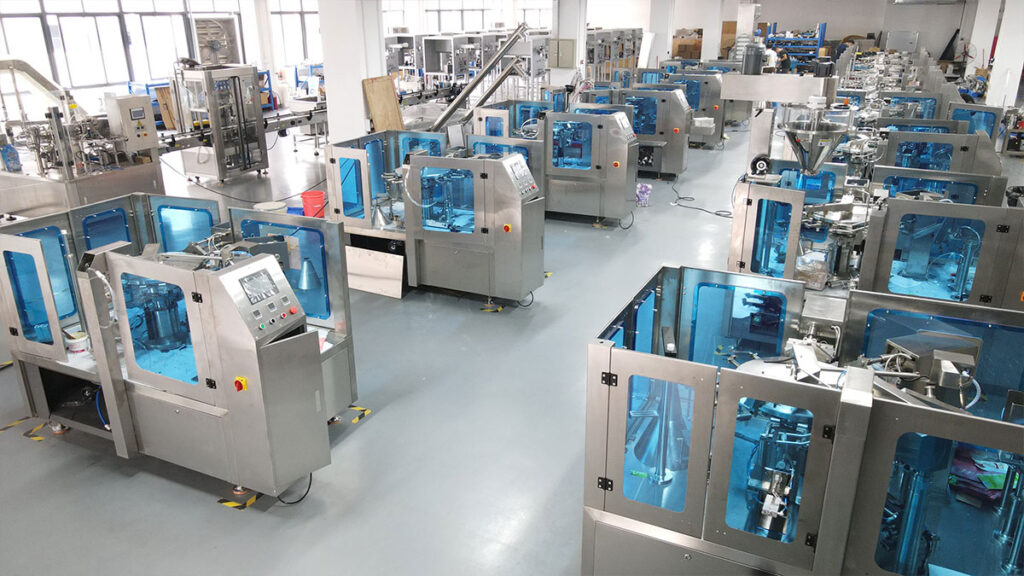
For manufacturers looking for high efficiency and versatility, rotary premade pouch packaging machines are the gold standard. These machines are designed to handle various bag types, including stand-up pouches (Doypacks), zipper bags, and flat pouches. The rotary design allows for multiple stations dedicated to different tasks—bag feeding, printing, opening, filling, dust extraction, and sealing—all occurring simultaneously.
This specialization allows for much higher production speeds compared to manual or semi-automatic systems. For instance, the SUK-RP series of rotary machines can reach speeds of up to 60 bags per minute while maintaining exceptional accuracy. The intermittent motion of the rotary system provides enough dwell time at each station to ensure precise filling and high-quality sealing, which is particularly beneficial for spices that require careful handling.
Case Study: Optimizing Chili Powder Production
Chili powder is one of the most difficult spices to package due to its fine particle size and oily nature. A leading spice manufacturer recently upgraded their facility with a SUK Spice Packaging Machine. By implementing a customized auger filler with a specialized dust hood, they were able to reduce airborne dust by 95%. The machine’s ability to handle zipper pouches also allowed them to offer a premium, resealable product that maintains its potency long after the first opening. The result was a 20% increase in production efficiency and a significant reduction in waste.
Maintenance Tips for Longevity
To ensure that your spice packaging machine continues to operate at peak performance, regular maintenance is essential. Given the abrasive nature of some spices, cleaning the filling components and sealing jaws daily is a must. Checking the dust extraction filters and ensuring the vacuum lines are clear will prevent buildup that could hinder performance. Investing in a machine made from high-quality stainless steel, such as SUS304, will also ensure durability and compliance with food safety standards.
Conclusion
Achieving aroma-preserved and dust-free spice production is a combination of choosing the right Heat-sealable composite films (OPP/CPP, PET/PE) and the right machinery. By investing in advanced solutions like the SUK Spice Packaging Machine, manufacturers can enhance their product quality, reduce operational costs, and meet the growing demand for premium spice products. Whether you are packaging whole seeds or fine powders, the right technology is the key to success in the modern spice market.
For more information on our range of solutions, visit our product page: Spice Packaging Machine.
Detailed Breakdown of Heat-sealable composite films (OPP/CPP, PET/PE)
Choosing the right Heat-sealable composite films (OPP/CPP, PET/PE) is a science in itself. For spices, a multi-layer laminate is usually required. The outer layer, often PET (Polyethylene Terephthalate), provides strength and a high-quality surface for printing branding and nutritional information. The middle layer is typically a barrier layer like Aluminum foil or VMPET (Vacuum Metallized PET), which is crucial for blocking UV light and oxygen—the two biggest enemies of spice freshness.
The inner layer, often PE (Polyethylene) or CPP (Cast Polypropylene), is the sealant layer that comes into direct contact with the product. It must be food-safe and capable of forming a strong, leak-proof seal even when exposed to heat. By selecting the right combination of these Heat-sealable composite films (OPP/CPP, PET/PE), spice producers can ensure that their products remain "shelf-stable" for months or even years without losing their characteristic "punch."
The Role of Oxygen Absorbers and Nitrogen Flushing
In addition to barrier films, many high-end spice packaging lines utilize Modified Atmosphere Packaging (MAP). This typically involves "Nitrogen Flushing," where the oxygen inside the pouch is replaced with inert nitrogen gas just before sealing. Since oxygen causes oils in spices to turn rancid, removing it drastically extends the product's lifespan. Some manufacturers also include small oxygen absorber sachets inside the pouch for extra protection. Advanced Spice Packaging Machines are often equipped with nitrogen injection nozzles that integrate seamlessly into the filling cycle.
Automation in Spice Packaging: From Filling to Cartoning
True efficiency in a spice factory is achieved when the entire line is automated. The process often starts with a bulk elevator lifting the product into a multi-head weigher. The weigher precisely portions the spice before dropping it into the rotary packaging machine. Once the pouch is sealed, it is conveyed to a checkweigher and metal detector to ensure safety and compliance. Finally, the pouches can be automatically packed into boxes using a cartoning machine. This end-to-end automation reduces human contact, further ensuring hygiene and reducing the likelihood of errors.
Quality Control Measures in the Packaging Line
Quality control shouldn't be an afterthought; it should be built into the machine. Modern systems feature sensors that detect if a bag has failed to open. If the bag isn't open, the machine will not drop the product, preventing waste. Similarly, temperature sensors on the sealing jaws provide real-time feedback, ensuring that every seal is made at the optimal temperature. These "smart" features are what separate high-quality machinery from basic models, allowing for a "set it and forget it" operation that produces consistent results every single day.
Expanding Your Spice Business Globally
With the rise of e-commerce and global trade, spices are being shipped further than ever before. This means packaging must be robust enough to withstand the rigors of international shipping. Durable, puncture-resistant pouches coupled with reliable machinery like the SUK-RP series provide the peace of mind that your product will arrive at its destination in perfect condition. Whether you are a small local producer or a large-scale exporter, having the right packaging foundation is the first step toward global expansion.