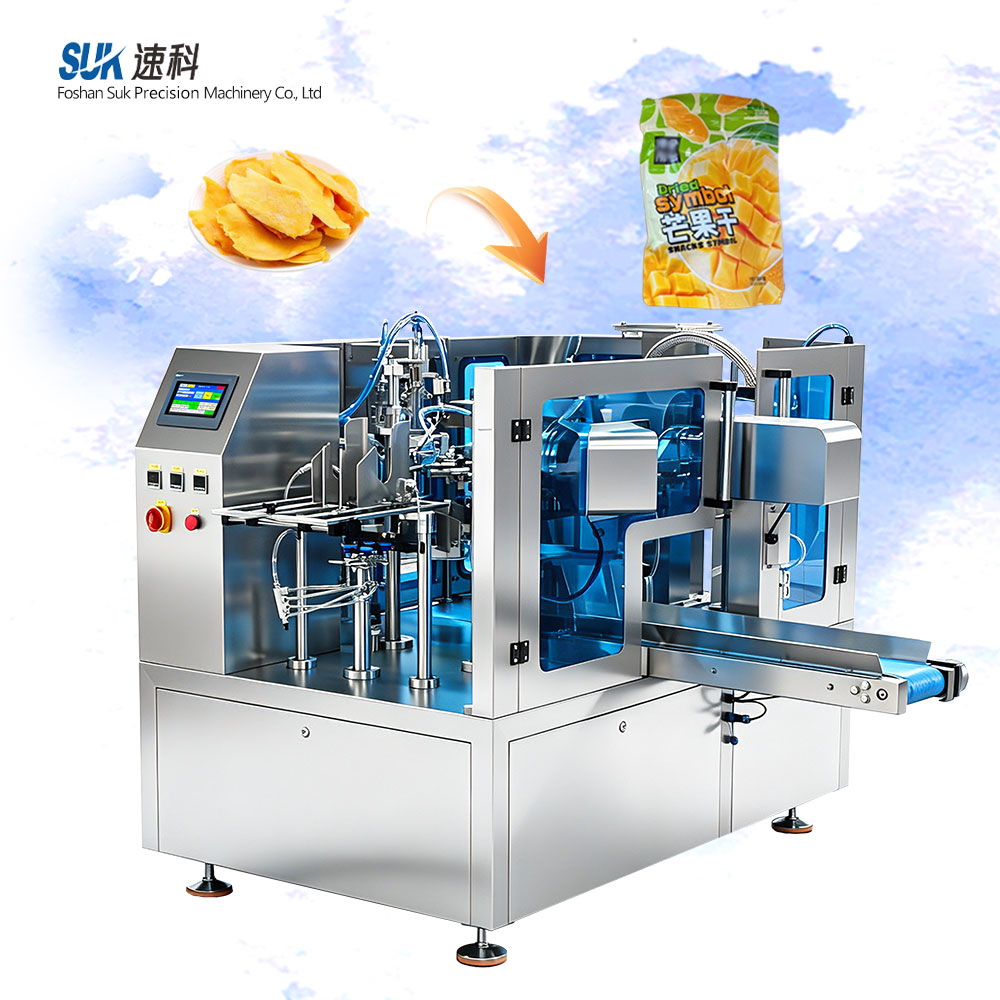
Choosing a matcha powder packing machine is easier when the powder, the package and the factory workflow are reviewed in a fixed order. This guide sets out seven practical steps that food factories can work through before a configuration discussion.
1. Define the Matcha Powder Product
Start with the product itself. Matcha is a finely milled green tea powder, and its behaviour in a packaging line differs from coarser powders. Note how the powder is supplied, how it is stored before packing and what the finished pack should contain.
Those product notes become the reference point for every later decision, from feeding through to sealing.
2. Confirm the Fill Range and Powder Handling
Record the intended fill range and how the powder should move into the bag. The fill range influences the dosing direction, and the powder handling method should reflect how matcha actually flows rather than how it is assumed to flow.
Planning the mechanism at this stage keeps the later mechanical review focused on the real requirement.
3. Choose the Bag or Pouch Format
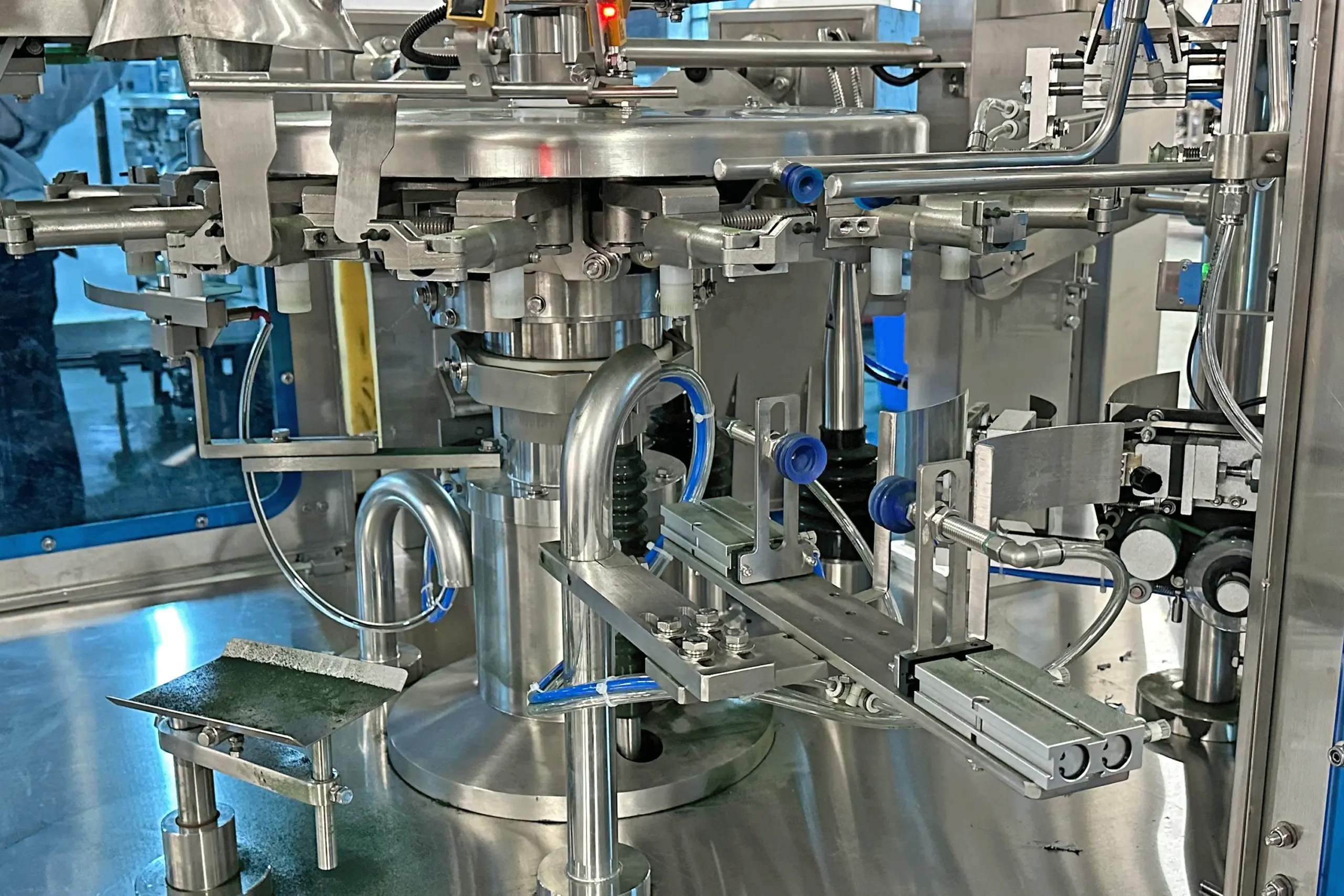
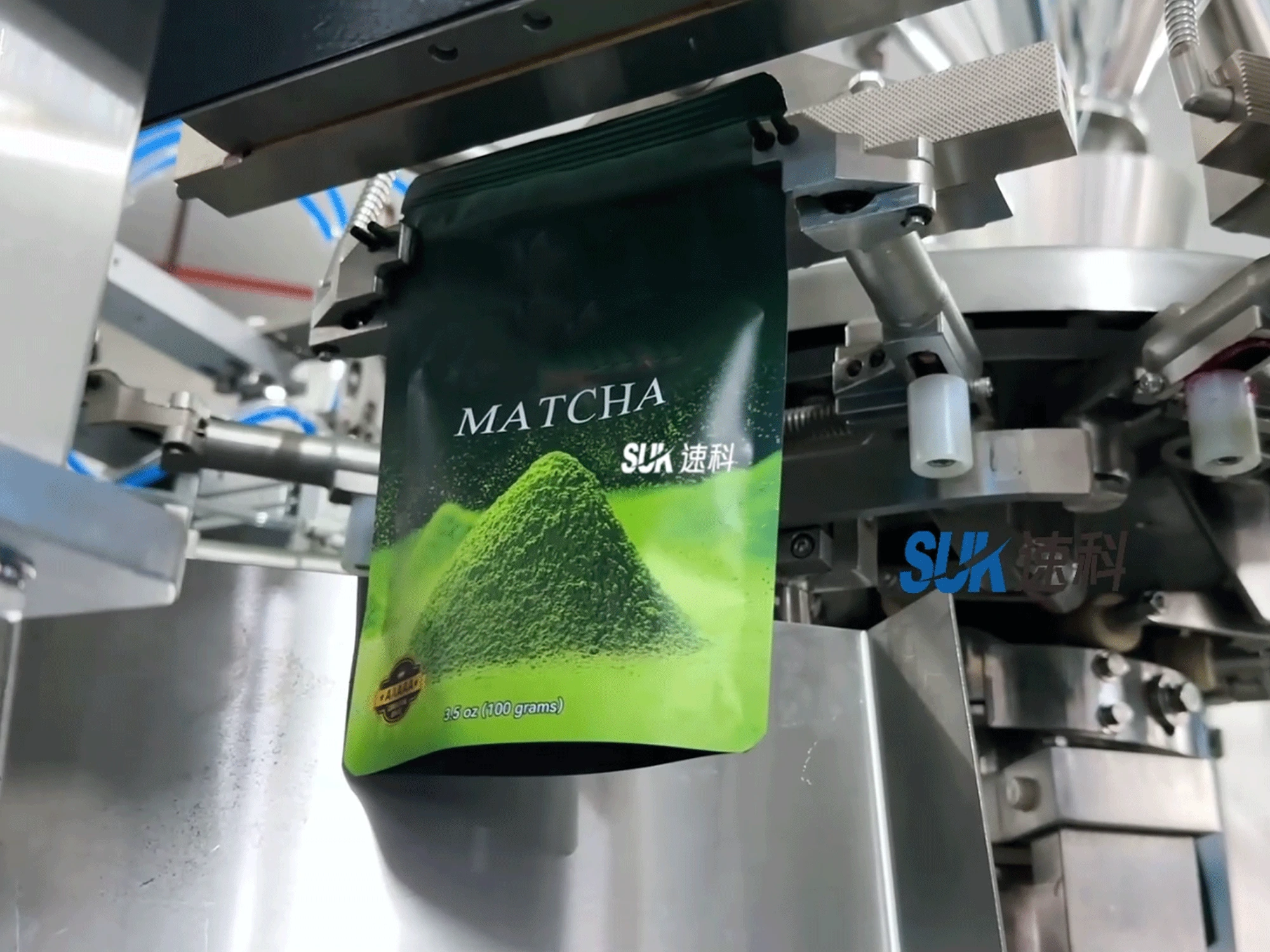
Decide whether the project uses film-formed bags or prepared pouches. Film-based bags are formed, filled and sealed on the line, while pre-made stand-up pouches, zipper pouches and sachets are filled as prepared packages.
Matcha is also sold in stick packs and flat sachets. Whichever route the factory takes, the bag format sets the opening, filling and sealing requirements for everything downstream.
4. Review Feeding and Filling on the Line
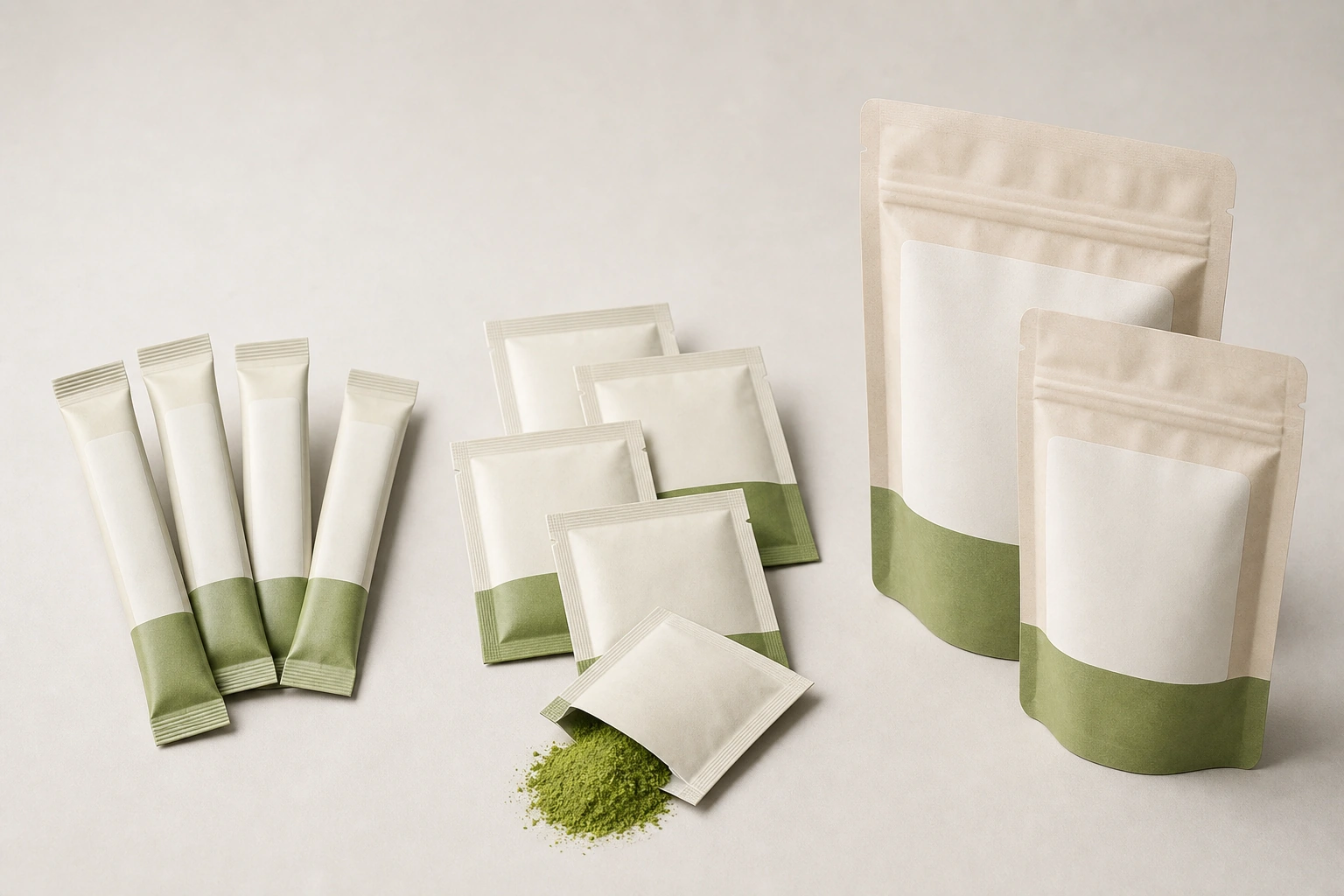
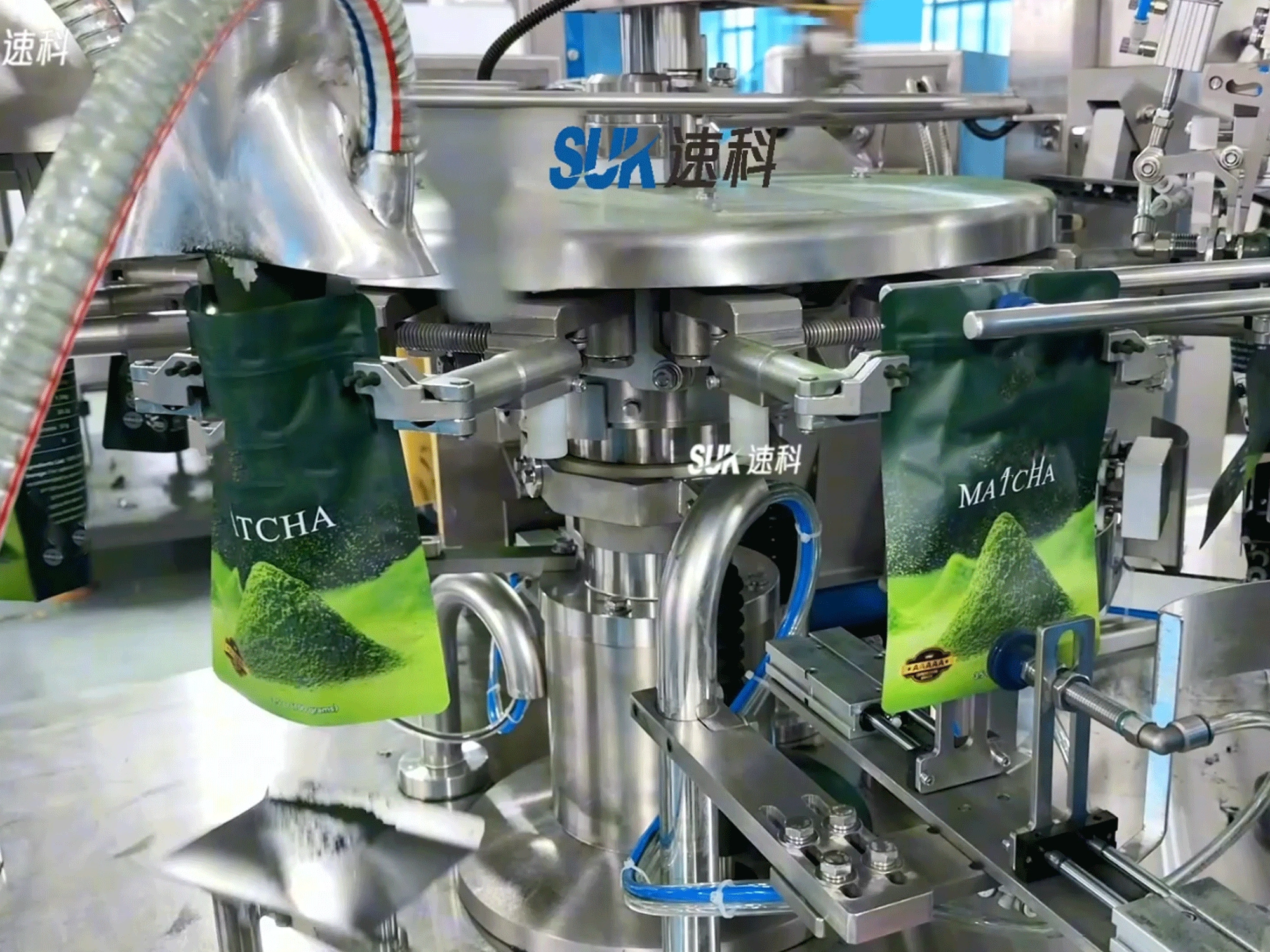
At the filling station, the pouch is held in position while the powder is dispensed into it. The feeding arrangement, the filling access and the way the pouch is supported all need to suit the powder and the pack size.
For film-based bags, review a powder packing VFFS machine as part of this step.
5. Plan Sealing, Coding and Inspection
Sealing closes the pack and protects the powder afterwards. Matcha is sensitive to air and moisture, so the seal quality and the film structure deserve attention at this point in the review.
Consider where the date or batch code is printed or applied, and how the finished pack is inspected before it leaves the line.
6. Check Line Connections and Factory Layout
Review the upstream feeding equipment, the packaging machine itself and the downstream handling that follows it. Available floor space, access for cleaning and the position of existing equipment all shape the final layout.
Where the factory packs more than one pouch at a time, a multi-lane powder packaging machine is worth reviewing alongside a single-lane layout.
7. Prepare Samples and Review the Configuration
Finally, prepare matcha powder samples, pouch samples or packaging drawings and share the current workflow. With that information, the configuration review can focus on the real product and package instead of general assumptions.
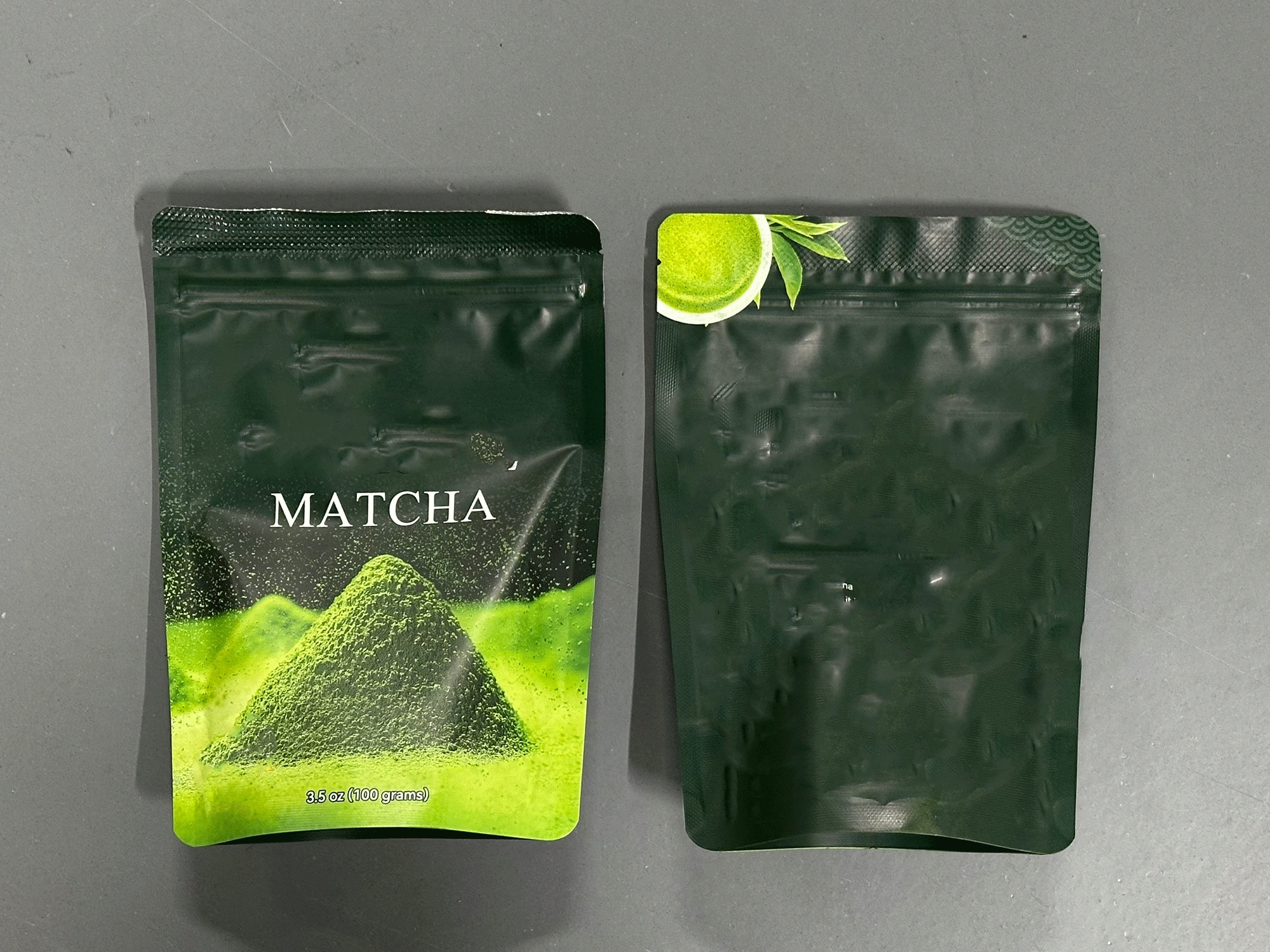
The Matcha Powder Packaging Machine page sets out the equipment direction for this project, and the SUK team can then discuss the configuration with you directly.