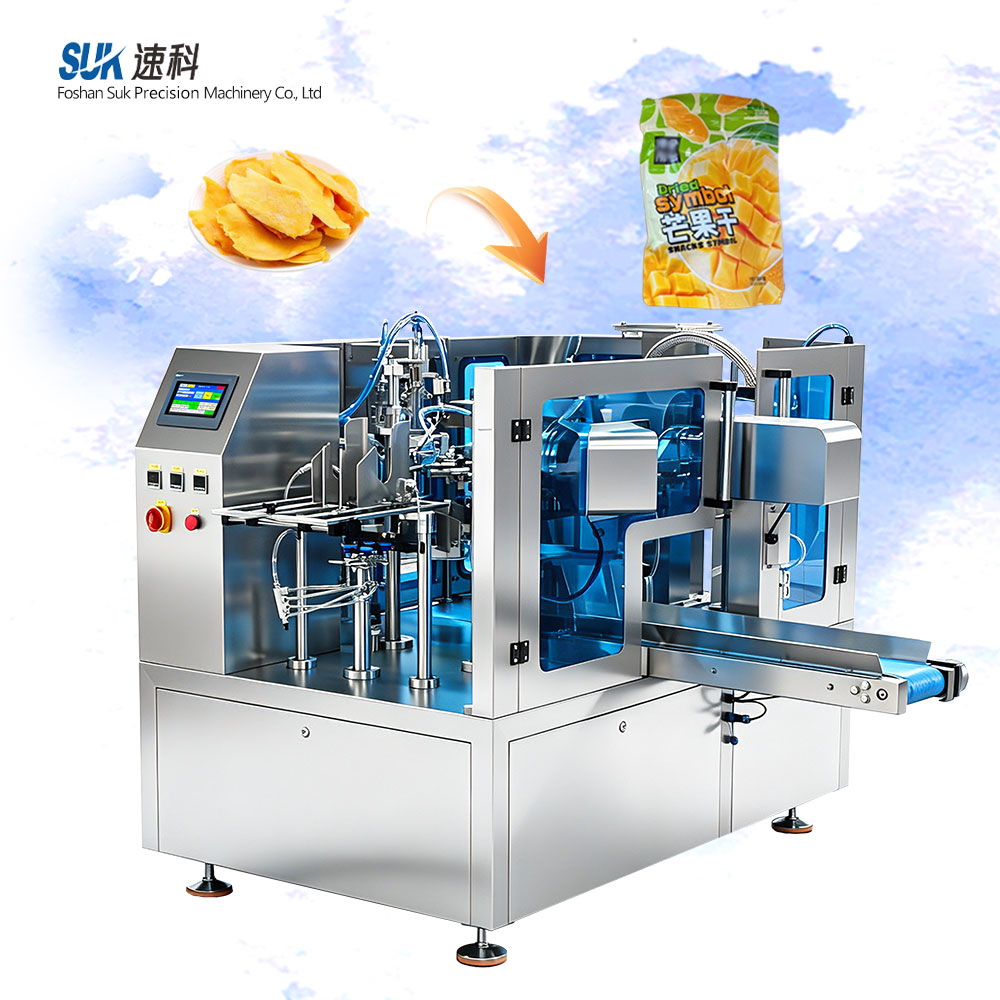
Chili powder is a fine, dusty powder, and that is what shapes a chili powder packing machine project. It aerates when it is moved, it settles unevenly in a hopper, and a thin film of powder finds its way onto the surfaces around the filling and sealing area. None of that is unusual in a food factory, but it does mean the machine should be chosen around the powder rather than around a general-purpose specification. The seven steps below are the sequence SUK uses when a factory asks for help reviewing a chili powder packing machine project.
Start With the Chili Powder Itself
Chili powder is not one single material. Ground chili, chili blends that include salt, garlic or other spices, and coarser flakes all flow differently through a hopper and settle differently in a bag. Two powders that look similar on a bench can behave quite differently once they are sitting in a production hopper.
Write down exactly what will be packed: the ingredient list, whether the powder is a single ingredient or a blend, how fine it is, and whether it tends to cake or to hold air. If more than one recipe will run on the same machine, list all of them, because the machine has to cope with the least cooperative product rather than the easiest one.

Confirm the Fill Range and Pack Sizes
Fill range is the smallest and the largest amount that will go into a single pack, and it is the number that most often decides which machine family makes sense. Chili powder is sold in retail bags, food-service bags, catering pouches and single-serve sachets, and those are very different filling tasks.
Write the range down using the pack sizes you actually sell, then decide how tight the fill tolerance needs to be for each one. Changing only the bag size later is straightforward; changing the filling principle later is not.
Choose the Bag, Pouch or Sachet Format
The pack format decides how the powder is contained, how the pack looks on the shelf, and how the film or pouch runs through the machine. Chili powder is commonly packed in pillow bags, gusseted bags, stand-up pouches and stick sachets, and each format brings its own film structure and sealing behaviour.
Choose the format from the market first and from the machine second. If you expect to run more than one format over the life of the machine, say so at the start, because a format change can mean a different forming set, different seals and sometimes a different machine.

Compare Vertical, Premade Pouch and Stick Pack Systems
A film-based vertical machine forms the bag from a flat roll, fills it through a vertical tube and seals it in one continuous motion. It is the usual choice for retail and food-service powder bags, and the powder packing machine options on this site are built around powder feeding, filling and bag-format requirements rather than around one fixed product.
A premade pouch machine starts from pouches that are already printed and formed, which suits branded retail packs and short runs of different designs. A multi-lane powder packaging machine works differently again: it forms several narrow packs in parallel from the same film roll, which suits single-serve portions and sample packs. Because each pack holds a small amount of powder, filling consistency across the lanes and clean sealing on narrow seals are the points to examine.
For most powder projects the decision comes down to pack size, pack count and how much flexibility you want to keep. A chili powder packaging machine configured for one format is not automatically the right answer for another, so compare the options against your own pack list rather than against a general specification.
Match Feeding and Filling to a Fine Powder
The feeding and filling side is where a fine powder project is usually won or lost. An auger or screw feeder moves powder from the hopper to the filling point in a controlled way, and the hopper, agitator and filling tube are chosen around how the powder actually flows rather than around a nominal machine size.

Ask how the powder behaves when the hopper is nearly empty, how often the filling side needs cleaning between recipes, and how the powder path is closed while the machine runs. Those answers shape the configuration more than a headline specification does.
Plan Sealing, Coding and Line Connections
A packing machine is rarely the whole line. Ask how the filled pack leaves the machine and what happens next: checkweighing, metal detection, cartoning, case packing or hand packing. Each of those steps adds a transfer point, and every transfer point is somewhere powder can escape or a pack can be handled badly.
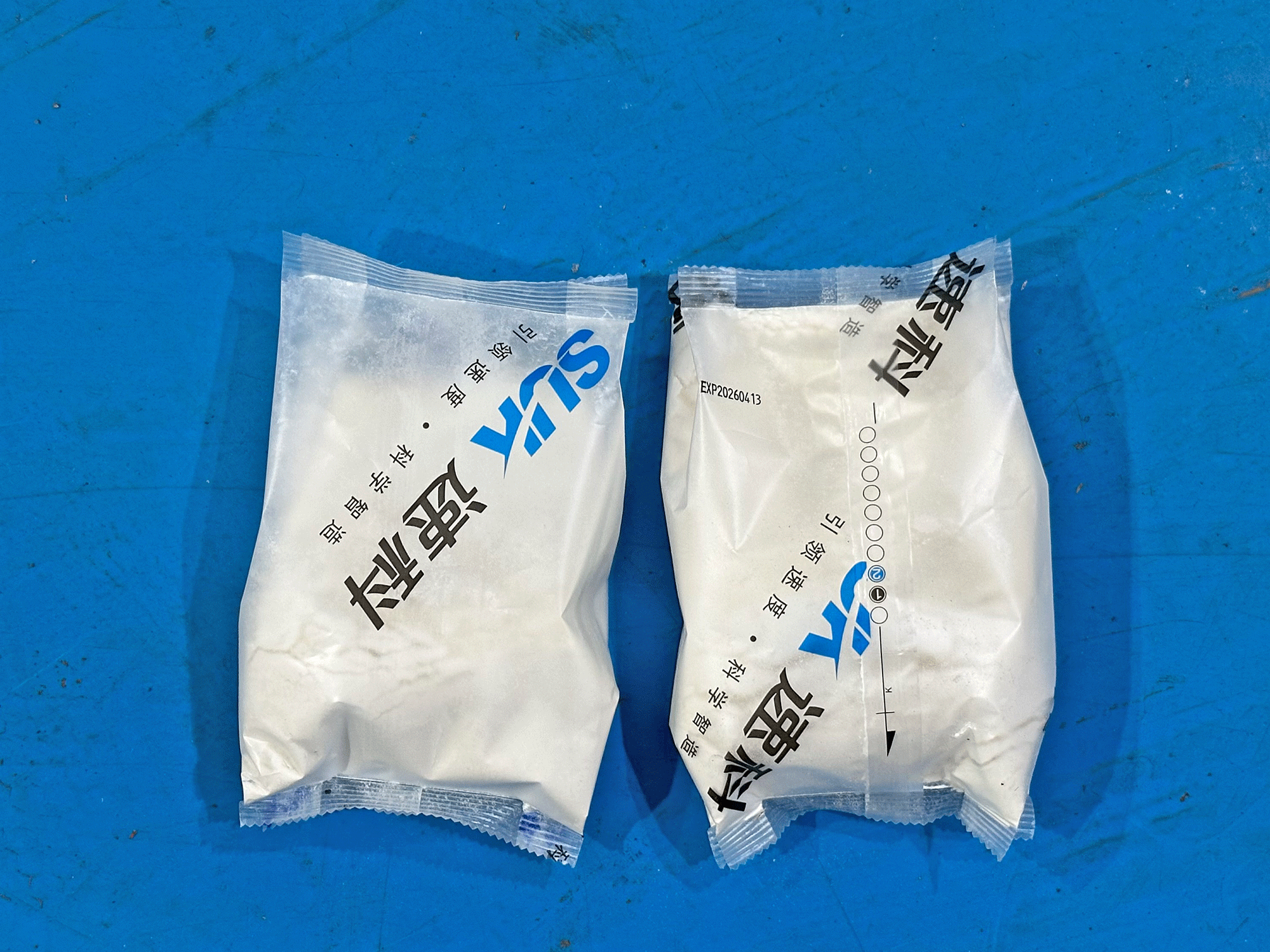
Sealing deserves its own review on a dry powder. Powder sitting in the seal area can interrupt a seal, so how the film or pouch is supported, cleaned and closed before sealing is part of the selection. Coding, print position and the way packs are counted into cases come next.
Prepare Samples and Request a Configuration Review
Descriptions are useful; samples are better. A powder sample, a finished pouch or sachet, and a packaging drawing let the feeding, filling and sealing behaviour be checked against something real instead of an estimate.
Send enough powder to run a meaningful trial, include the film or pouch structure if you have it, and add a simple line drawing or photo showing where the machine will stand. If the project involves a blend, send the blend rather than the individual ingredients. When the product, the fill range, the pack format, the machine family and the line connections are clear, the remaining questions are configuration questions, and you can start through the contact page.