product
Plan packaging for dry beverage blends with a machine configuration matched to your powder, serving weight and finished bag. SUK can evaluate stick packs, multi-lane sachets and alternative flexible bag routes according to the project specification. Review feeding behavior, dosing, dust around the seal area, film performance and downstream connections before selecting the line. Powder mass must be validated with the actual blend; liquid capacities and volumetric powder ranges do not establish gram capability. Provide samples, film details, bag drawings and accepted output targets for a defined quotation and trial plan.
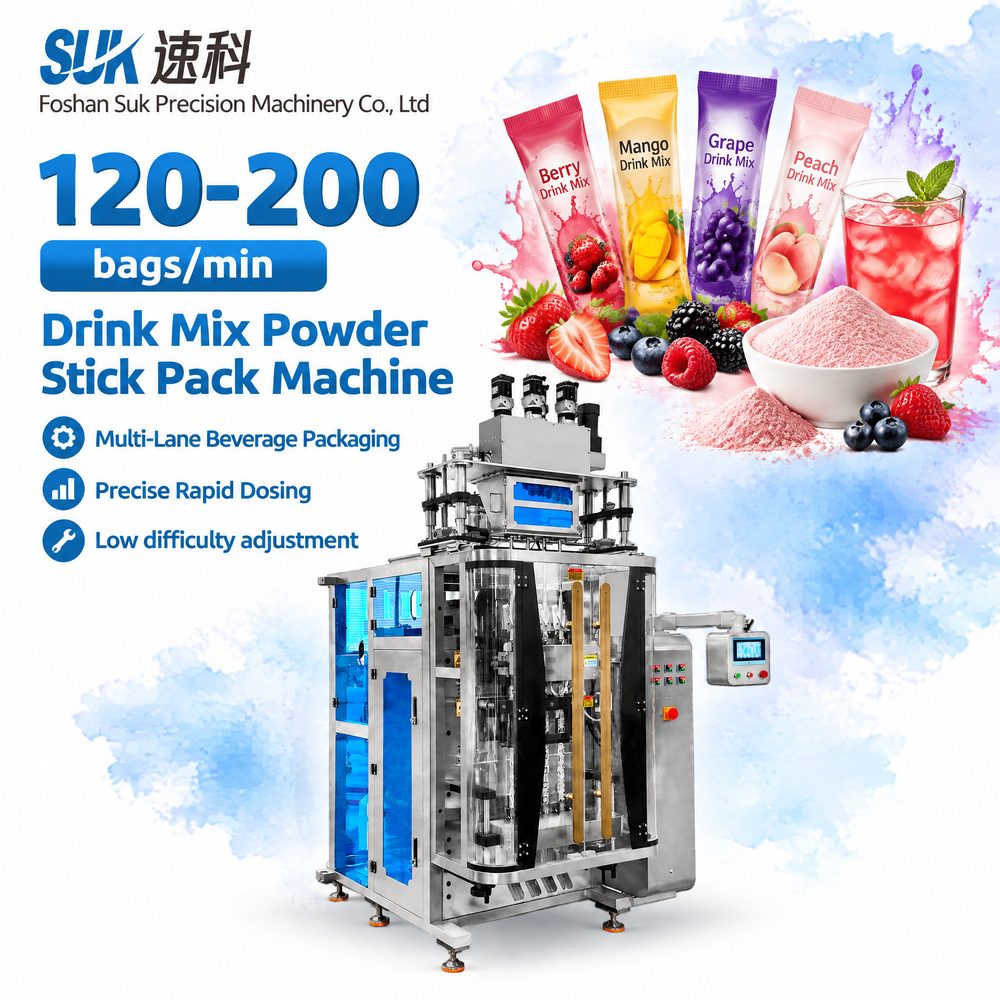
Cover artwork shows a SUK promotional configuration with illustrative packaging samples, not a completed customer production case. Speeds shown are configuration references; actual output depends on the material, pack dimensions and agreed configuration, and is confirmed through sample trials.
A drink mix powder packaging machine combines powder dosing with a package that suits the serving size, filling behavior and sales format. SUK can evaluate equipment for dry beverage blends supplied in single-serve sticks, sachets or other flexible bags. The project begins with the actual powder, target weight in grams, bag dimensions and required accepted output.
This page concerns dry powder mixed with water or another liquid after opening. Ready-to-drink beverages, syrups and liquid concentrates require a separate liquid filling evaluation. Liquid machine capacities in milliliters do not establish a powder fill range in grams.
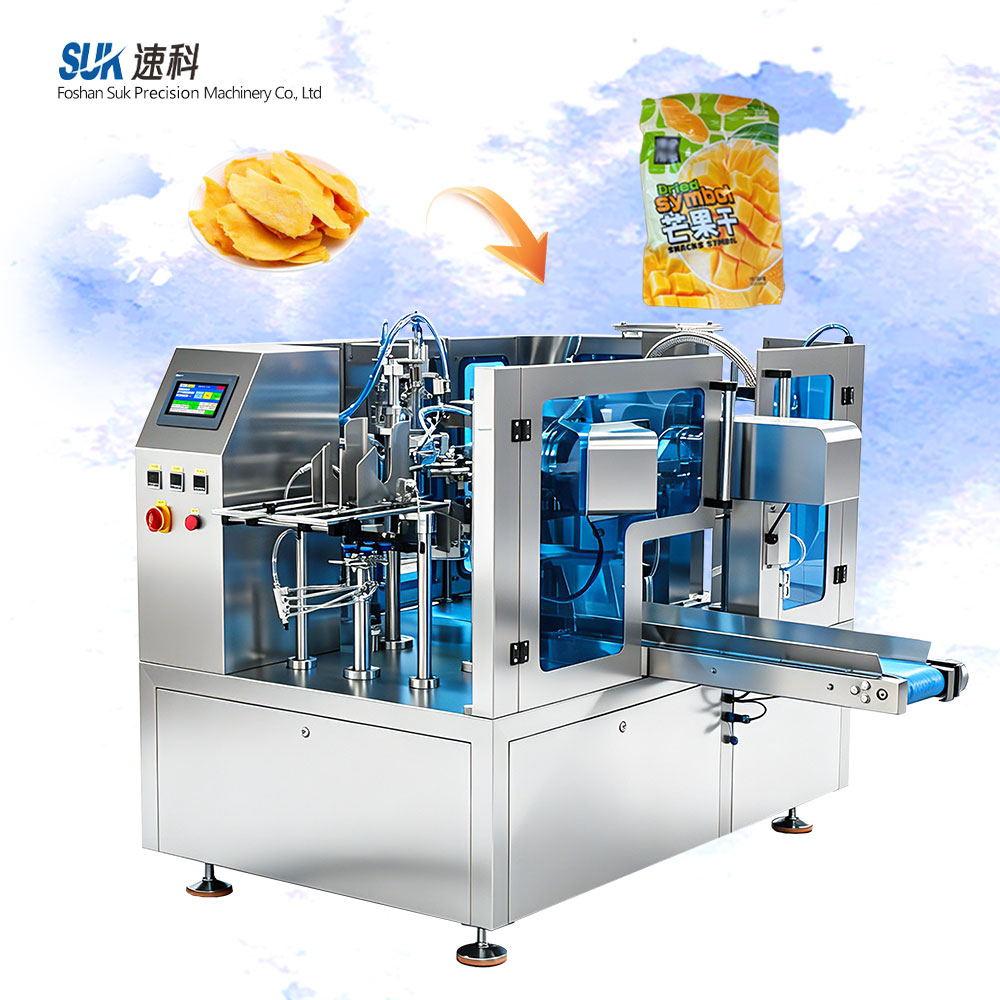
For a narrow portion pack intended to pour into a bottle or cup, evaluate the stick packing machine family. The useful internal volume must accommodate the powder while leaving space for clean sealing. Opening width, tear position and the powder's ability to leave the pack should be considered alongside the printed dimensions.
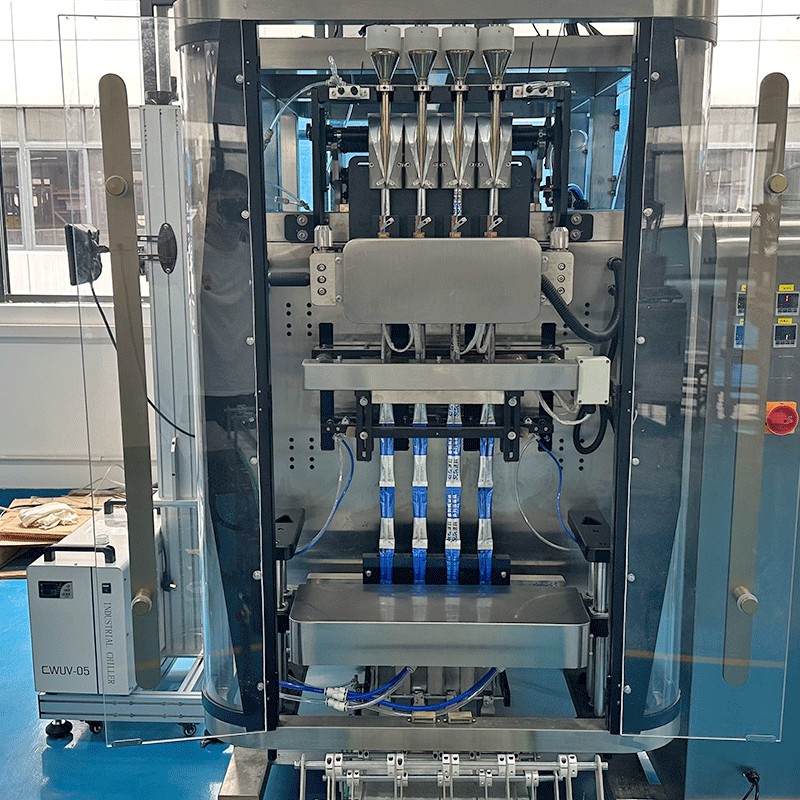
Where the output plan supports parallel production, a multi-lane powder sachet packaging machine is a candidate. A stick pack can also be produced in a multi-lane arrangement. The selected lane count depends on the bag geometry, filling configuration, powder behavior and required downstream flow.
A wider roll-film bag may be worth evaluating when a larger serving or a bulky blend makes a narrow stick impractical. A premade pouch is another route when the business needs a particular purchased pouch shape or closure. Each alternative needs its own bag and dosing review; changing the package can change the entire line layout.
The dosing proposal should reflect bulk density, particle size distribution, flow behavior and the tendency to bridge or form lumps. Different flavors of the same beverage range may need different settings or change parts. Discuss whether an auger or another metering arrangement is appropriate, and confirm the hopper, agitation and replenishment requirements through sample evaluation.
Specify target mass and permissible variation independently of any volumetric machine description. The DLA-400F is a powder machine candidate for evaluation, but its listed 5–20 ml range is volumetric and does not define a 5–20 g capability. The intended dose must be verified with the actual formulation and proposed tooling.
The filling outlet, powder fall distance and sealing sequence should be reviewed together. Powder carried into the sealing area can create an unreliable pack. Discuss localized dust control and access for cleaning as configuration requirements, including how any extraction arrangement affects powder delivery and the surrounding workspace.
Film selection should follow the beverage formula's storage needs and the packaging supplier's evidence. The machine assessment must then confirm forming, seal formation, print registration and cutting with that film. A particular laminate, gas-flushing arrangement or shelf-life result should not be assumed from the machine family name.
Define accepted finished packs per minute at the intended weight and size. For multi-lane equipment, request the lane count and per-lane operating basis as well as the total. Maximum catalog speed and maximum fill are not a combined operating promise. Film changes, replenishment and rejects also affect shift output.
Include coding, inspection, reject removal, sachet counting and carton transfer in the scope where needed. Confirm discharge orientation, conveyor height, accumulation requirements and stop signals. These interfaces should be assigned to a responsible supplier rather than left as an assumption between separate machines.
Provide representative powder samples, a film specification, finished pack drawing, weight targets and a production schedule covering all flavors. State cleaning expectations, available utilities and whether the quotation includes upstream feeding and downstream handling. Use the drink mix powder selection guide to prepare trials, then request a SUK quotation based on a defined configuration and agreed acceptance conditions.