Why food factories use a sauce sachet packing machine
A sauce sachet packing machine is designed to portion liquid or semi-liquid food products into sealed single-use packs. For a food factory, the right system must do more than fill a pouch. It must match the product’s flow behavior, target fill volume, package format, film structure, sealing requirements and production workflow. A suitable configuration can help a factory move from manual filling to a repeatable automatic process while keeping the package format consistent.
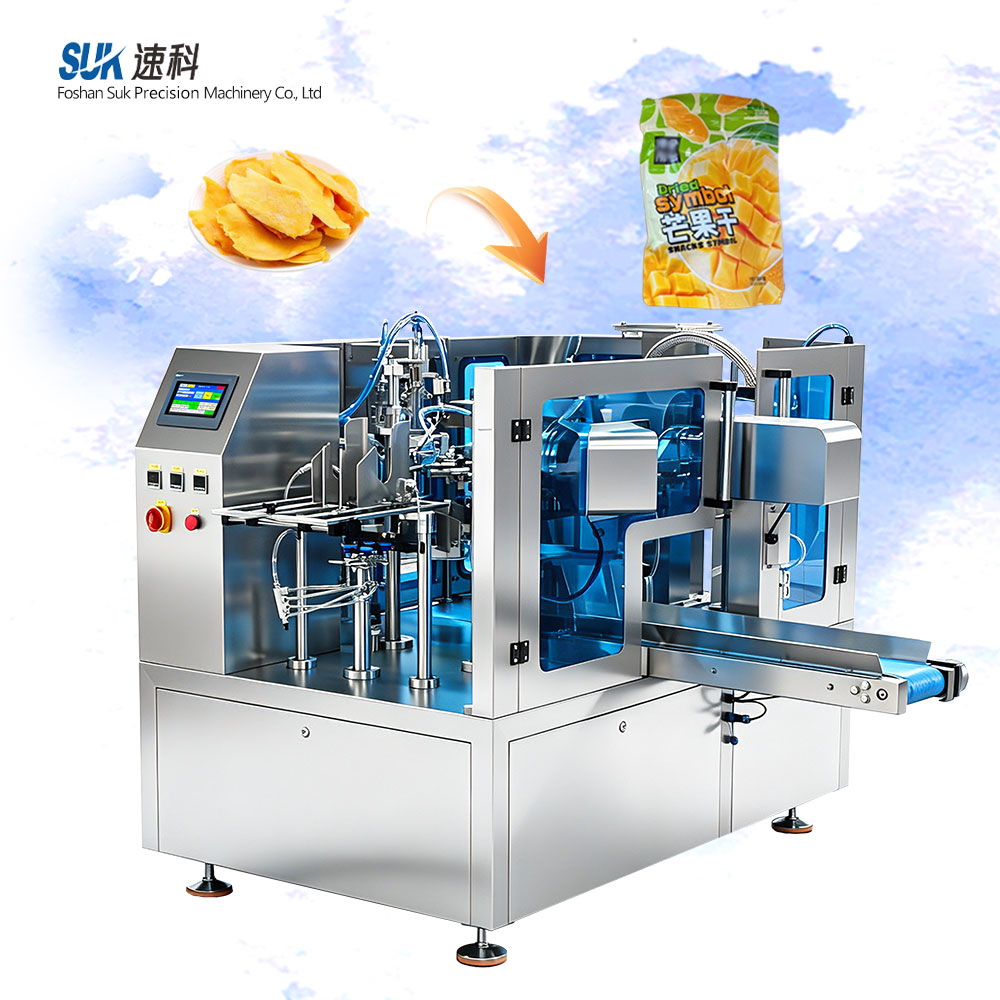
SUK develops automatic packaging machines and integrated packaging solutions for food and other production lines. Its packaging range includes stick packing machines, vertical form fill seal equipment, premade pouch machines and cartoning equipment. For sauce projects, the practical starting point is a product review: what sauce is being packed, how much goes into each sachet, which package shape is required and what output the factory expects. These details determine whether a liquid stick pack, sachet, premade pouch or another format is appropriate.
This guide explains the main selection questions for ketchup, chili sauce, honey, dressings, condiments and similar products. It is intended for food manufacturers preparing a new packaging line, replacing manual work or expanding an existing production system.
What products can be packed in sauce sachets?
Liquid and semi-liquid products behave differently during filling. A free-flowing sauce may require a different filling arrangement from a thick paste, a product with visible particles or a product that changes viscosity with temperature. The product category should therefore be described precisely before a machine model is selected.
Common applications for a sauce packing machine include ketchup, chili sauce, hot sauce, mayonnaise, salad dressing, soy sauce, vinegar, fruit sauce, honey, jam, curry paste and other condiments. SUK’s existing stick packing machine page also describes applications for liquids, semi-liquids and gels, while its premade pouch page covers liquid and paste products such as soy sauce, juice, ketchup, peanut butter, jam and chili sauce.
For an initial configuration review, prepare the product name, a product sample or clear product video, the target fill weight or volume, the expected temperature during filling, whether the product contains particles, and the preferred pack format. A sauce with particles may require a different feeding and filling approach from a smooth sauce. A viscous product may also need a different pump or hopper arrangement. These are engineering decisions and should be confirmed through product testing rather than selected from a generic machine name.
Choosing between stick packs, sachets and premade pouches
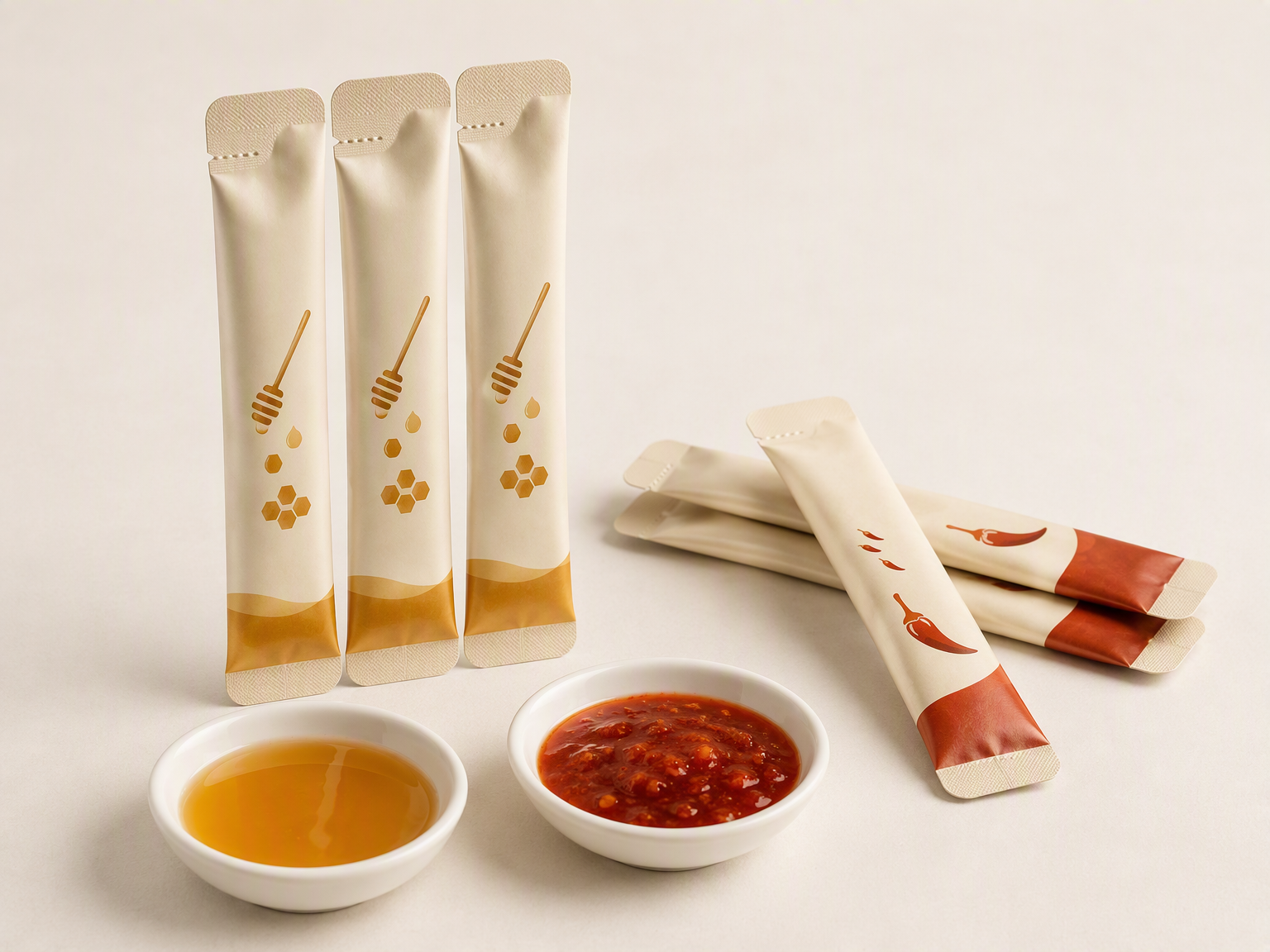
The package format affects equipment layout, film consumption, production flow and the way the finished product is used. A stick pack is a narrow single-serve package that can suit honey, sauces, gels and liquid supplements. A flat sachet can provide a different opening and presentation format. A premade pouch is useful when the project requires a stand-up pouch, zipper pouch, four-side-seal bag or another ready-made bag format.
SUK’s stick packing machine page lists stick/bag sealing options and several cutting choices, including straight, tooth, round and irregular cuts for suitable stick widths. Its premade pouch machine completes bag feeding, opening, filling, sealing, pouch shaping and discharge in sequence. This distinction is important when preparing a quotation: the customer should not simply ask for a “sauce machine” but should identify the package dimensions, seal style and opening experience required by the market.
For high-volume food production, the best option is normally the format that matches the customer’s existing film or pouch supply, downstream packing process and desired pack size. If the finished sachets will be packed into cartons, the line may also need an infeed and cartoning stage. If the product is sold as a standalone condiment serving, the filling and sealing section may be the main focus. A packaging line review should consider the complete route from product tank to finished pack.
How the main packaging formats differ
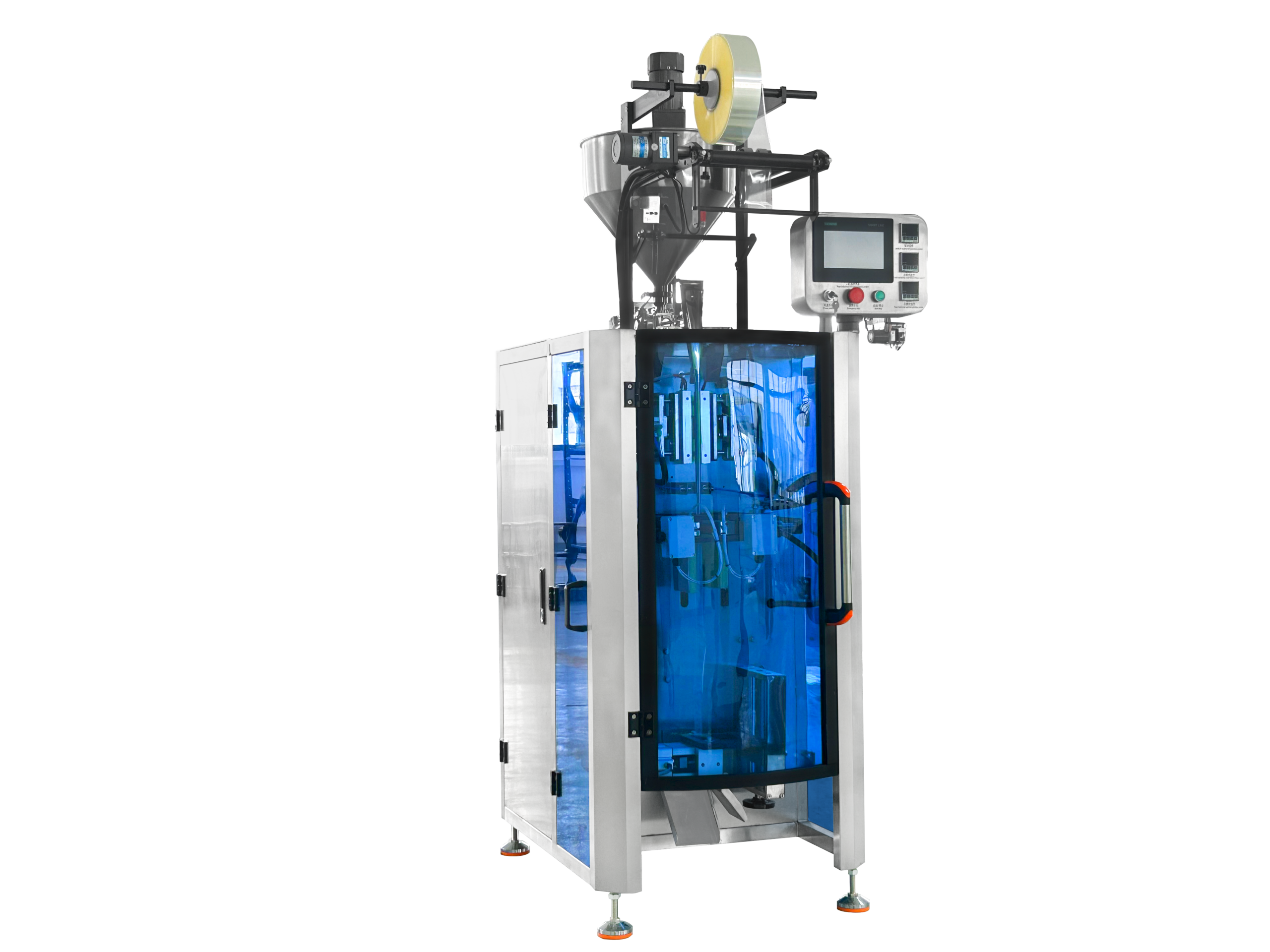
The finished package should be named clearly because different machine families create different bag formats. A vertical VFFS machine uses roll film to form, fill and seal a bag vertically; the result is commonly a pillow bag, gusset bag or another roll-film format. A premade pouch machine, also called a given-bag or bag-feeding machine, does not form the pouch from roll film. It takes a ready-made stand-up pouch, zipper pouch or other premade bag, opens it, fills it and seals it. A multi-lane sachet or stick-pack machine forms several narrow sachets or stick packs in parallel, which is useful when the food factory needs many small single-serve packs from one production system.
For sauce projects, a liquid stick-pack machine is usually discussed when the required output is a narrow single-serve stick pack. A premade pouch machine is more appropriate when the customer already has a printed stand-up or zipper pouch. A vertical VFFS machine may be considered when the project uses roll film and needs a formed bag. These formats should not be presented as interchangeable. The correct choice depends on the finished package, film or pouch supply, fill range, downstream packing method and customer handling requirements. The schematic format drawings in this article are illustrative only; the machine photographs show real SUK equipment.
Filling and sealing considerations for sauces
Filling accuracy and seal integrity are central to sauce packaging. The filling system must deliver the required quantity without excessive dripping, splashing or product on the seal area. The sealing section must close the package consistently while remaining compatible with the selected laminated film. For a factory, this directly affects product appearance, leakage risk, cleaning requirements and material waste.
The product review should include viscosity, temperature, density, particle size if relevant and the target fill range. The film review should include film structure, thickness, sealant layer and the required package dimensions. The machine configuration should then be tested with the actual sauce and packaging material. A machine that performs well with a thin sauce may need different settings for honey or a thick chili paste.
The operating environment also matters. Food factories need practical access for cleaning, inspection and changeover. Product-contact areas, pumps, hoses, filling nozzles and the surrounding frame should be considered as one hygienic workflow. Operators should be able to monitor the machine, adjust the filling setup and identify abnormal conditions without interrupting the entire line unnecessarily. These details should be documented in the technical discussion before a purchase decision.
How to evaluate a sauce packaging line for a factory
A factory evaluation should start with the required output, not with a model number. Define the target bags per minute, working hours, number of shifts, pack size range and the number of sauce products that will run on the same line. Then identify the upstream product supply and downstream handling requirements. A packaging line may include a product tank, pump, filling machine, film system, date coding, conveyor, checkweigher, cartoner or case-packing equipment depending on the project.
The next step is to review the changeover process. If a factory packs several sauces, it should understand which parts need cleaning or replacement between products and how the package size is adjusted. The project team should also review available floor space, electrical standards, compressed air requirements and the required operator workflow. The final equipment arrangement should fit the plant rather than forcing the factory to redesign production after delivery.
A useful request for quotation includes product information, pack dimensions, fill volume, film or pouch details, target speed, destination country, factory layout and any downstream packaging requirement. SUK’s website invites customers to share product and packaging requirements for model selection, and its wider solution range includes cartoning and material-handling lines. These inputs allow the engineering team to recommend a configuration instead of offering a generic machine.
Where SUK fits in a sauce sachet project
SUK is a Foshan-based packaging equipment manufacturer with products covering powder, granule, liquid and solid applications. The company’s public product range includes stick packing machines, vertical packaging machines, premade pouch packing machines, pillow packaging machines and automatic cartoning machines. This gives a food factory more than one route for a sauce project: a single machine can be reviewed first, or a larger packaging workflow can be planned around filling, conveying and cartoning.
The most useful project discussion is specific. Send the sauce type, a product description or sample, target fill quantity, package dimensions, preferred film or pouch style, expected output and whether the sachets will be packed into boxes. The same information helps determine whether a liquid stick pack, flat sachet, premade pouch or integrated line is the right direction.
SUK also presents product videos, factory information and overseas service capabilities on its website. These materials can support an initial technical review, but the final configuration should be confirmed against the customer’s real product and packaging material. A product test is especially important for thick sauces, products with particles and applications where seal cleanliness is critical.
Request a sauce sachet packaging review
A sauce sachet packing machine should be selected from the product, package and factory workflow together. Start with the sauce properties and target fill, then compare stick packs, sachets and premade pouches. Confirm the film, filling method, seal requirements, changeover process and downstream equipment before selecting a final model.
To discuss a sauce, honey, ketchup, chili or dressing project with SUK, prepare:
- Product name and product form
- Product sample, photo or video
- Target fill weight or volume
- Sachet, stick pack or pouch dimensions
- Film or premade pouch information
- Target bags per minute
- Required downstream equipment
- Factory country, electrical standard and available space
Contact SUK Precision Machinery for a packaging configuration review. You can also compare the existing Stick Packing Machine, Premade Pouch Packing Machine and Vertical Packaging Machine pages before sending your project details.
Frequently asked questions
What sauces can be packed in a sachet machine?
SUK’s published application examples include ketchup, chili sauce, soy sauce, vinegar, fruit juice, curry paste, peanut butter and jam. The correct configuration depends on viscosity, particles, fill volume, package format and sealing requirements, so the product should be reviewed before a model is selected.
Can a sauce machine pack honey or liquid stick packs?
SUK publishes a stick packing machine for liquid, semi-liquid and gel products, and its catalog shows liquid and paste packaging applications. Honey and similar products should be tested with the intended film, fill range and package dimensions before final configuration.
Can sauce sachets be connected to a cartoning line?
Yes. SUK’s product and solution range includes automatic cartoning machines and packaging line solutions. The required infeed, counting, cartoning and case-packing configuration depends on the sachet format and the carton or case specification.
What information should I send for a quotation?
Send the product name, product sample or photo, target fill weight or volume, package dimensions, film or pouch details, target speed, destination country, electrical standard and any required downstream equipment. A factory layout is also useful for an integrated line review.