product
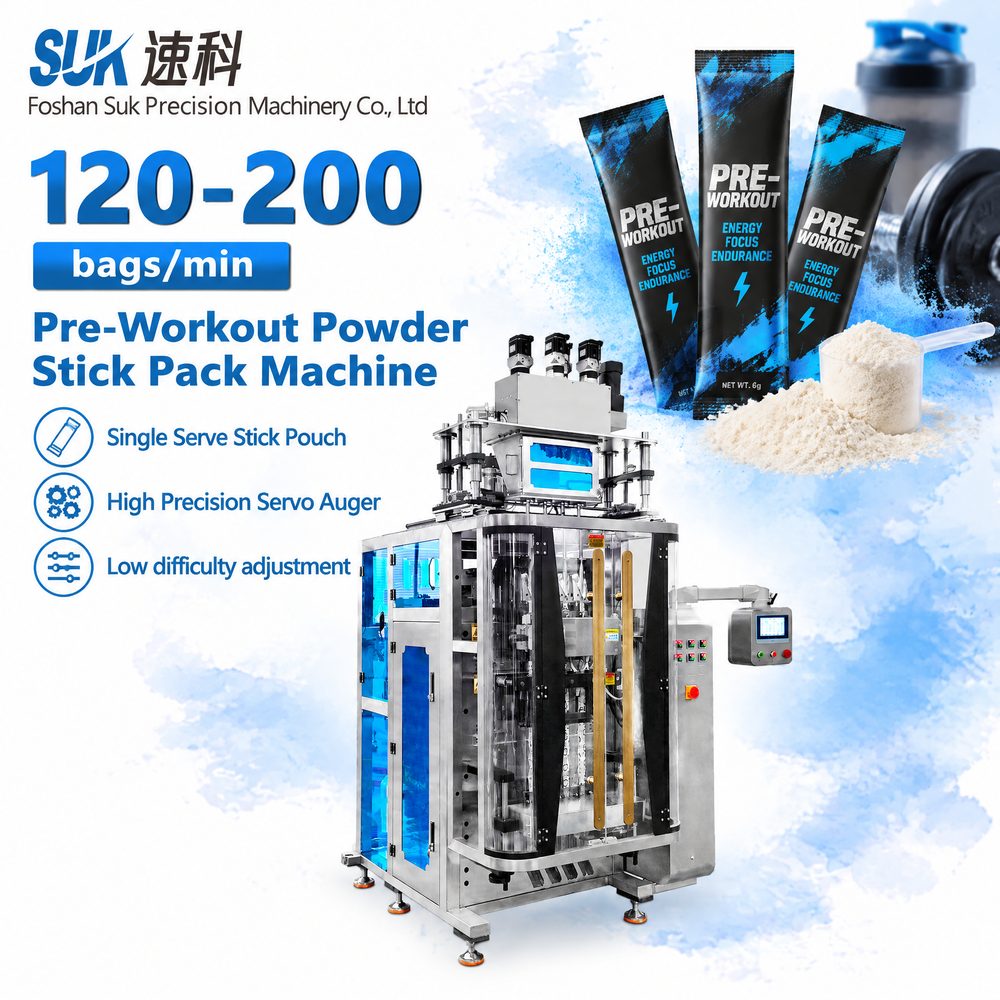
Evaluate single-serve pre-workout powder packaging with a line matched to the finished blend, portion weight and selected pack. SUK can review stick or wider sachet formats, powder dosing, multi-lane production and downstream cartoning interfaces. The project specification should address bulk density, blend feeding, seal clearance, recipe changes and cleaning access. Individual pack weights and ingredient uniformity require separate acceptance evidence. Supply representative recipes, a bag drawing, laminate details and production targets so the proposed configuration, options and trial conditions can be assessed before purchase.
Cover artwork shows a SUK promotional configuration with illustrative packaging samples, not a completed customer production case. Speeds shown are configuration references; actual output depends on the material, pack dimensions and agreed configuration, and is confirmed through sample trials.
A pre-workout powder packaging machine should be specified around the finished blend, portion weight and single-serve pack. SUK can evaluate powder dosing and flexible packaging configurations for manufacturers planning individual sticks or sachets. Selection starts with representative samples and a package drawing, followed by confirmation of feeding behavior, seal quality and accepted output.
The equipment scope concerns packaging the blend supplied to the machine. Product formulation, ingredient claims and the required quality release procedures belong in the manufacturer's specification. A repeatable total pack weight alone does not demonstrate uniform distribution of individual ingredients.
A narrow stick is a candidate when the serving volume, opening and powder delivery path fit the pack. Evaluate the stick packing machine family against filled samples, rather than selecting a machine from the target weight alone. Blends with the same nominal weight can occupy different volumes and may need different bag dimensions.
A wider sachet may provide a more practical route where a narrow filling tube or limited internal space restricts the proposed serving. Seal geometry, tear position and print layout should be reviewed together. If a larger purchased pouch is required for a separate product format, it needs its own equipment assessment rather than an assumed extension of the single-serve line.
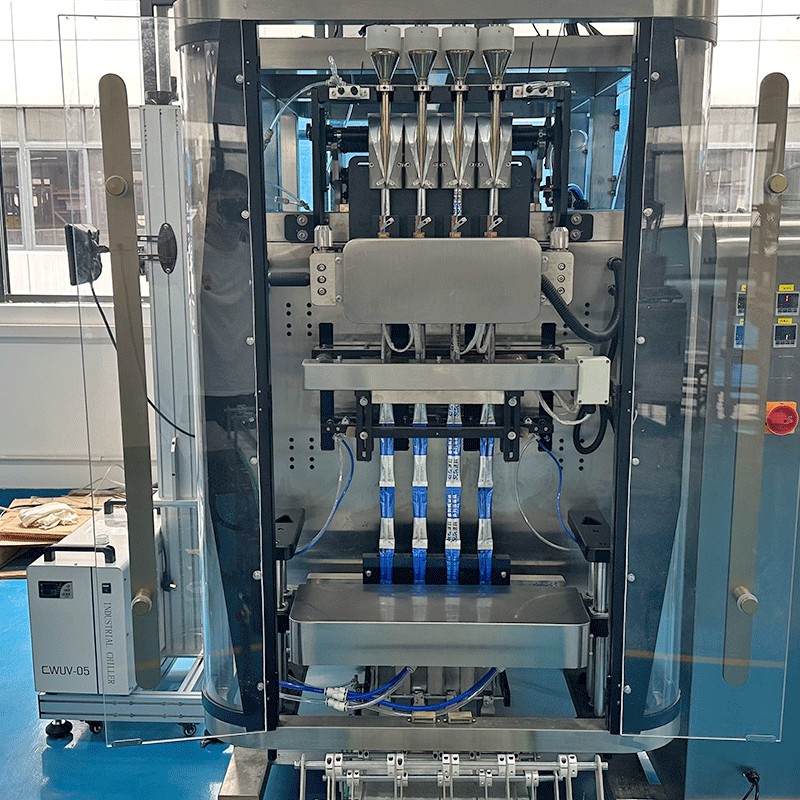
A multi-lane powder sachet packaging machine is an evaluation candidate where the production plan justifies parallel packing. Stick format and multi-lane configuration can overlap. The proposed lane count should account for bag dimensions, filler arrangement, material supply and the rate that the downstream system can accept.
The dosing system must be assessed with the finished blend, including its bulk density, fines, flow behavior and tendency to separate during transfer. Discuss auger tooling or other metering options, hopper geometry, agitation and replenishment as a coordinated system. No gram range should be inferred from a powder machine specification expressed in milliliters.
A production schedule with multiple flavors or formulations needs a clear changeover scope. Identify removable product contact components, access to the hopper and filling path, and the proposed procedure for clearing residual powder. Ask which parts are shared across recipes and which require dedicated or replacement tooling.
Where recipes contain caffeine, allergens or strongly colored ingredients, provide the factory's handling and carryover requirements. Any proposed dust collection arrangement should be evaluated for containment, cleaning access and its effect on filling. Cleaning effectiveness and ingredient carryover must be assessed against the buyer's defined methods; they are not automatic properties of a machine category.
The selected laminate must run through forming, filling, sealing and cutting at the agreed pack dimensions. Discuss seal clearance, powder contamination at the jaws, print registration and opening features. Film barrier performance and product shelf life require separate packaging evidence, while machine trials establish whether the proposed film can be processed acceptably in the selected configuration.
Specify coding, inspection and rejection where required. If single servings will be counted into retail cartons, assess the multi-column cartoning solution alongside the sachet discharge layout. Counting logic, sachet orientation, accumulation, conveyor levels and stop signals need to be included in the interface specification.
Provide each planned recipe, target weight, allowable fill variation, bag drawing, film structure and accepted packs per minute. Include expected batch sizes, cleaning requirements, utilities and downstream pack counts. Ask for the quoted configuration, options, change parts, documentation and acceptance conditions to be listed separately.
Operating speed must be confirmed for the actual blend, bag and configuration. Maximum fill and maximum speed should not be treated as simultaneous promises. Use the pre-workout single-serve selection guide to prepare the sampling plan and factory acceptance requirements before requesting a project proposal from SUK.