product
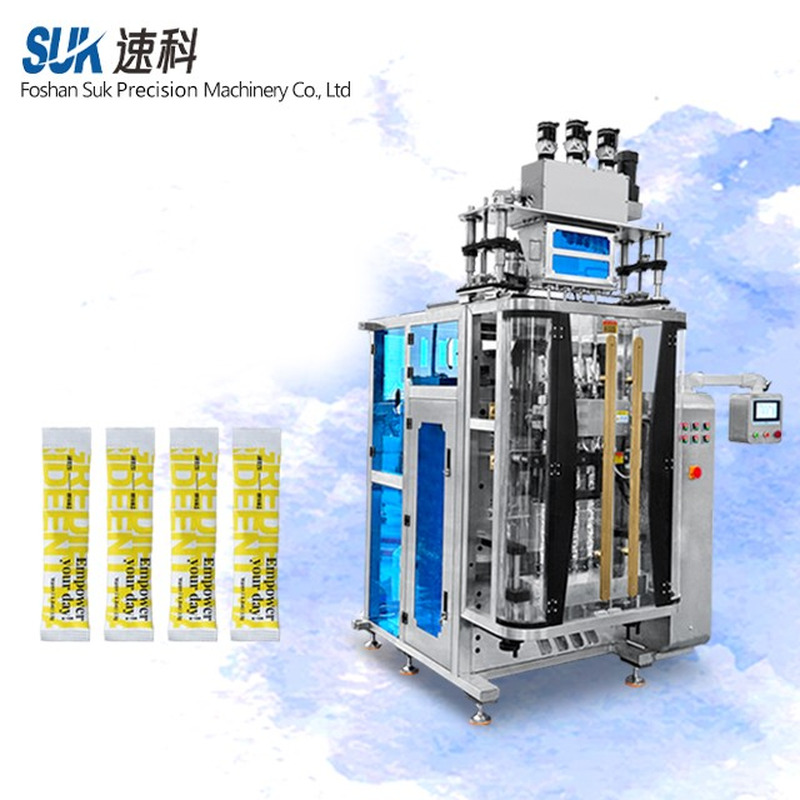
SUK DLA-400F multi-row powder packaging platform for vitamin powder sachet projects. Catalog reference: 30–60 bags/min/line; bag length 40–170 mm, width 20–50 mm; measurement range 5–20 ml; film thickness 0.08–0.12 mm; 2000 W; size L 1000 × W 890 × H 1820 mm; weight 200 kg. Final powder suitability, net mass, lane arrangement, seals and speed require project tests. Counting, cartoning and case packing are separately configured downstream modules.
A vitamin powder packaging machine for single-serve products must do more than make a narrow bag. It must dose the actual powder, form a consistent pack from roll film, seal reliably and deliver sachets in a form that the next station can count. SUK offers its DLA-400F multi-row powder packaging platform as a candidate configuration for vitamin powder sachets and stick packs. Suitability is not claimed for every vitamin formulation: a project review must check powder behavior, target mass, film and pack geometry.
Read the vitamin powder stick packaging guide for integration planning.
Factories selling drink mixes, powdered supplement blends or portioned nutrition ingredients can specify one finished pack, several stick packs per retail carton, or a connected secondary-packing process. This page describes the primary powder packer and the possible interface to downstream equipment. It does not describe a pharmaceutical filling certification or a completed vitamin customer installation.
Ask SUK to review your powder, pack drawing and line target.
The roll-film web is guided through parallel forming lanes. A powder metering arrangement delivers each portion, then the machine seals and cuts individual narrow packs. Multi-lane production means several sachets can be formed in parallel; the catalogue speed is per line, not a promise of total throughput. Final lane count, filling hardware, film feed and cutting arrangement must be specified for a particular project.
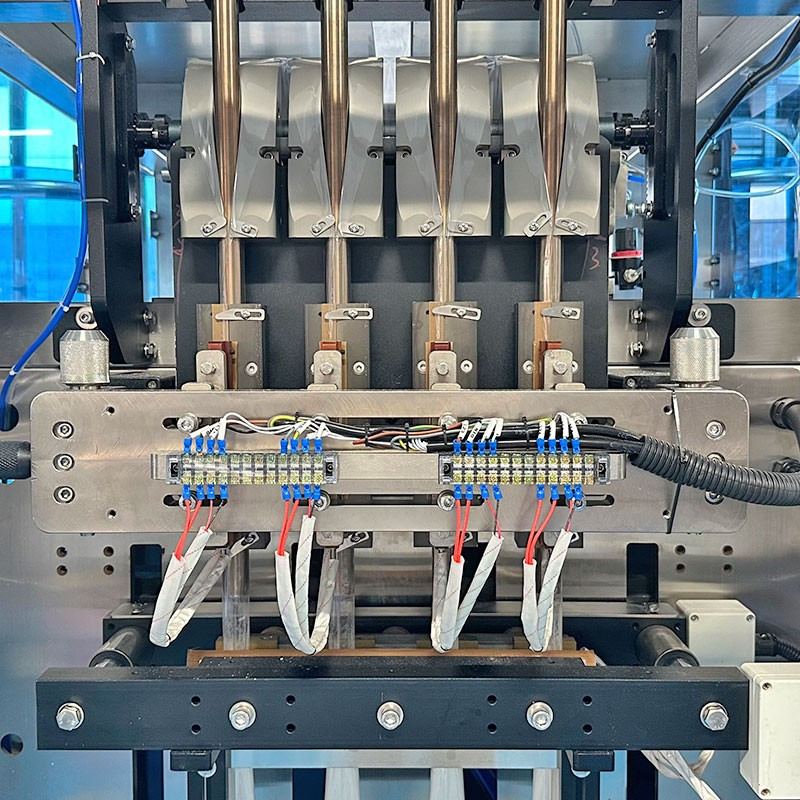
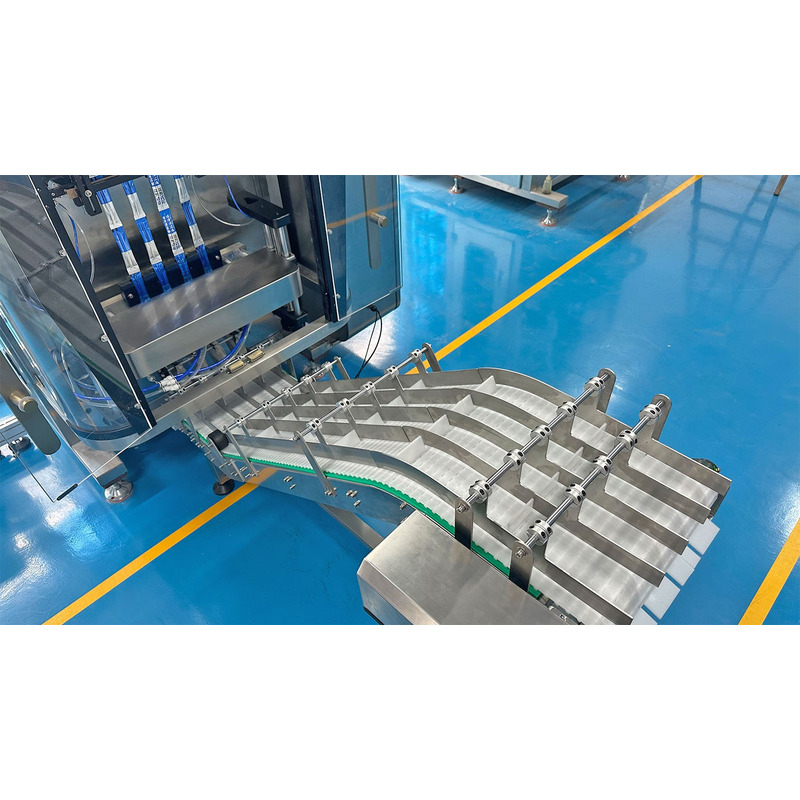
The supplied close-up photo shows the actual machine's parallel dosing and forming region. The supplied conveyor photo shows sachets leaving the machine and being organized on an outfeed. It does not show a downstream cartoning machine, so a cartoning stage should be treated as an optional integration requiring a separate layout review.
Vitamin blends may differ in particle size, flow, bulk density and sensitivity to moisture. These characteristics affect feeding, dosing and how much filled powder is actually in a pack. The DLA-400F catalog quotes a 5–20 ml measurement range. This is a volumetric specification; it must not be presented as 5–20 grams of vitamin powder. Establish the intended net mass with the actual powder and a fill test.
| Parameter | Catalog reference |
|---|---|
| Model | DLA-400F multi-row powder packaging machine |
| Packing speed | 30–60 bags/min/line |
| Bag length × width | 40–170 mm × 20–50 mm |
| Measurement range | 5–20 ml; not a guaranteed mass |
| Applicable film thickness | 0.08–0.12 mm |
| Maximum roll diameter | 320 mm |
| Electrical power | 2000 W; confirm voltage for the destination market |
| Noise | ≤80 dB (catalog value) |
| Machine dimensions | L 1000 × W 890 × H 1820 mm |
| Machine weight | 200 kg |
Source: user-provided 2026 SUK catalog, PDF page 21 (printed pages 37–38). Listed figures describe the machine platform; output, seal integrity, film selection and fill mass must be validated for each vitamin powder project. The catalog table does not give a voltage for this model, so no voltage is asserted here.
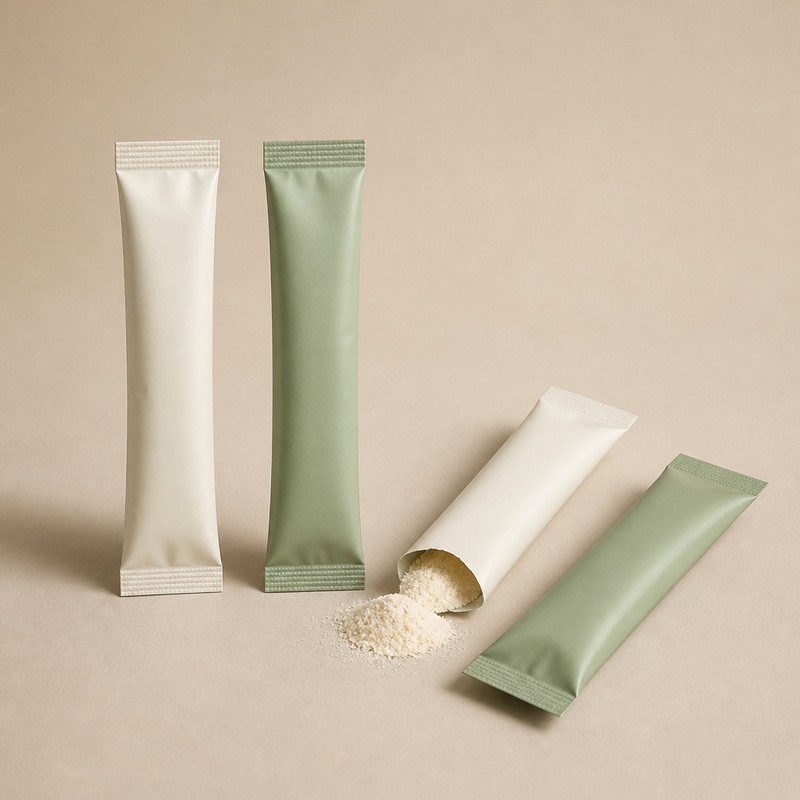
The DLA-400F is intended for small, narrow sachets or stick packs formed from compatible roll film, not premade stand-up zipper pouches. Send your required bag length, width, artwork safe area and film structure. The catalog lists composite film examples; a factory still needs to check that its selected film forms and seals with its powder and intended storage conditions. A conceptual illustration of plain stick sachets may help discuss pack format, but it is not customer artwork, a validated fill sample or evidence of finished product quality.
Check powder residue near the seal, cut position, tear-opening requirement and the way the pack leaves the machine. These details matter when retail cartons need a tidy count and orientation. Do not assume sealing performance or moisture barrier from the machine model alone; the film and finished pack require validation.
If the buyer needs counted retail cartons, SUK can review a separately configured collection, orientation, counting and cartoning route. The supplied outfeed photo illustrates a collection conveyor, not a tested connection from this specific vitamin line into a cartoner. A complete proposal must match actual sachet discharge, bags per carton, accepted orientation, carton dimensions and the speed of each station. A line may need a buffer or reject arrangement when the packer and cartoner do not run at the same pace.
See the existing counting and arranged infeed cartoning machine for downstream equipment, and the multi-lane powder sachet packaging machine for the general DLA-400F platform. For an overview of integration decisions, see the vitamin powder stick packaging guide.
Tell SUK what vitamin powder formulation or dry blend you plan to fill, the intended net weight, representative density or a powder sample, film sample or structure, target pack size, preferred number of lanes and required operating output. If you also need cartons, add the number of sachets per carton, carton drawing and target cartons per minute. State the destination country's power supply and any required downstream inspection and case-packing steps. The engineering team can then assess a configuration and determine what needs a production trial.
Request a vitamin powder packaging machine review.
A vitamin powder stick pack contains a complete blend that may include carriers, flavourings and other ingredients alongside active components. The machine enquiry should state the total blend weight per finished stick. That weight is separate from the amount of each active ingredient: controlling pack weight alone does not establish ingredient content or blend uniformity.
Provide the particle size distribution, bulk density and handling history of the finished blend. Differences between ingredients can make segregation during transfer a concern, so ask how the proposed feeding arrangement will be evaluated with representative powder. Stick describes the pack format; multiple lanes describe the production configuration. They can be combined, with the lane arrangement selected around the pack and project requirements.
List flavour variants, ingredients requiring separation, batch sizes and the cleaning process used at your facility. Ask about powder retention points, removal of contact parts and access for inspection. Cleaning effectiveness and changeover procedures need assessment with your own blends and quality criteria.
For a quotation, supply finished stick dimensions, total fill weight, film samples, expected accepted output and the number of sticks per carton. The vitamin powder dosing-to-cartoning guide explains how to structure testing. Review the multi-column cartoning solution when defining retail presentation, then contact SUK with your blend and packaging requirements for configuration review.