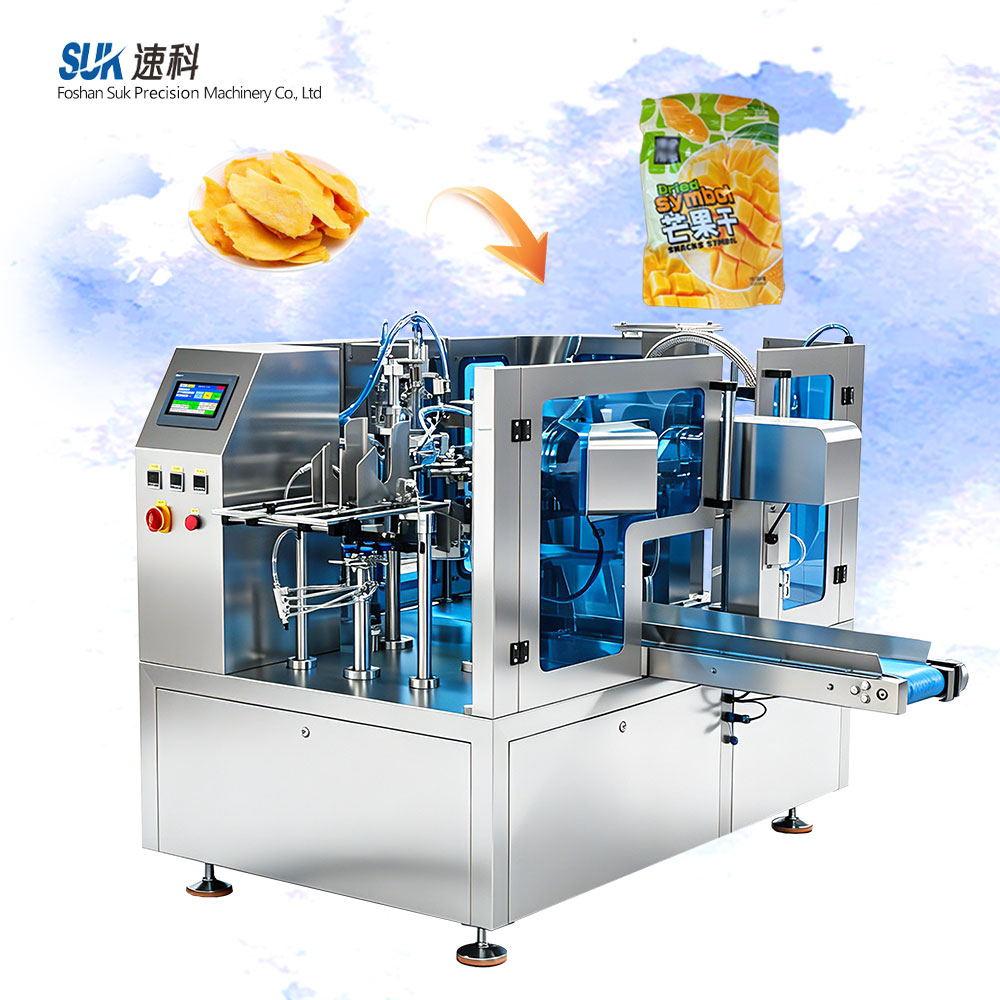
Vitamin Powder Stick Packaging: From Dosing to Cartoning
A factory buying a vitamin powder stick packaging line must solve two connected tasks: make a stable single-serve powder pack and prepare each finished pack for the next process. Multi-lane equipment can form and fill several narrow sticks in parallel. Yet the right configuration depends on the actual powder, the required net mass, a tested film structure and the number of sticks per carton. The guide below helps production, engineering and procurement teams build a useful machine brief without assuming that one catalog model works for every vitamin blend.
Start with the powder and the finished serving
"Vitamin powder" may mean a fine dry blend, a granular drink mix or a combination of powders that behaves differently once it is poured into a hopper. Before evaluating speed, define whether the formula flows consistently, becomes airborne near the filling point, contains particles of different sizes or picks up moisture during production. Those observations tell an engineer what feeding and dosing test is worth running. This guide does not claim that a particular blend has already passed a SUK machine trial.
The finished portion is equally important. A buyer may ask for a compact stick used in one serving, a broader flat sachet, or a specified number of units arranged in a retail carton. Record the target net mass in grams separately from the machine's volumetric measuring range in millilitres. Different blends occupy different volumes at the same mass. A written specification should include a sample pouch or drawing, film structure, desired opening method, label information and any applicable local requirements. Packaging-equipment selection alone does not establish nutrition, medicine or hygiene certification.
Use the same product sample, bag brief and test criteria when comparing vendors. Otherwise one proposal might assume a readily flowing powder while another assumes a more demanding blend, making price and throughput comparisons misleading.
Evaluate multi-lane dosing and bag formation
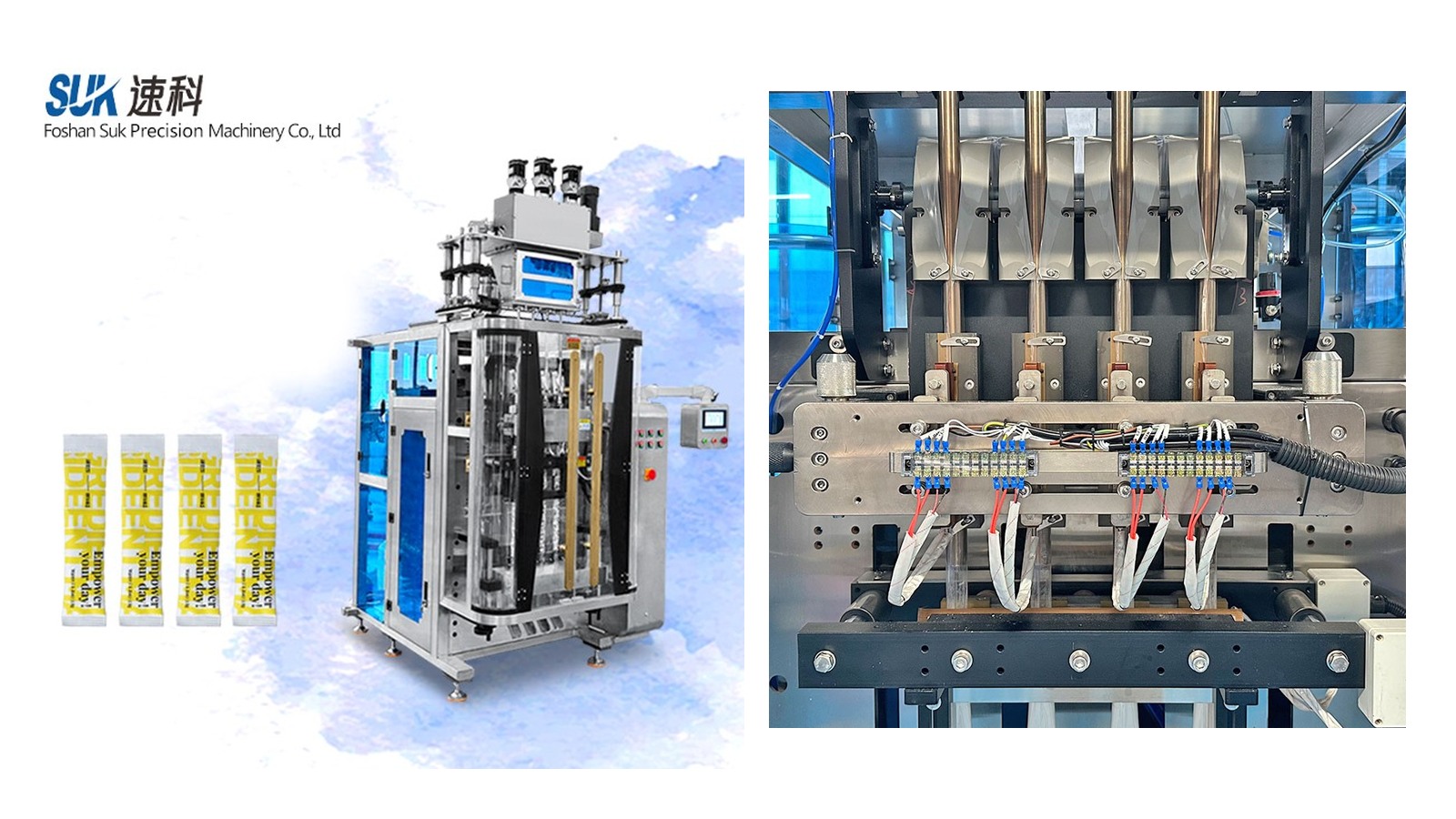
SUK's DLA-400F multi-lane powder sachet packaging platform is a catalog example for narrow powder packs. According to the user-supplied 2026 catalog, the model's reference speed is 30–60 bags per minute per line, its bag length is 40–170 mm, bag width 20–50 mm, and listed measurement range 5–20 ml. These are equipment reference figures, not an untested promise of vitamin fill mass or a whole-line output figure. The final choice of lane arrangement and dosing system must be reviewed with the formula and format.
Each lane must receive a suitable portion while roll film forms a bag, the sides and ends are sealed, and finished sticks are cut and discharged. Stable operation requires that the powder reaches the filling point without an uncontrolled build-up in the seal area. Ask the engineering team to observe feed consistency, powder residue, finished net-weight variation and the condition of the seal during a product-and-film trial. The actual voltage and electrical arrangements should also be confirmed for the destination market; they are not stated in the catalog's DLA-400F specification table.
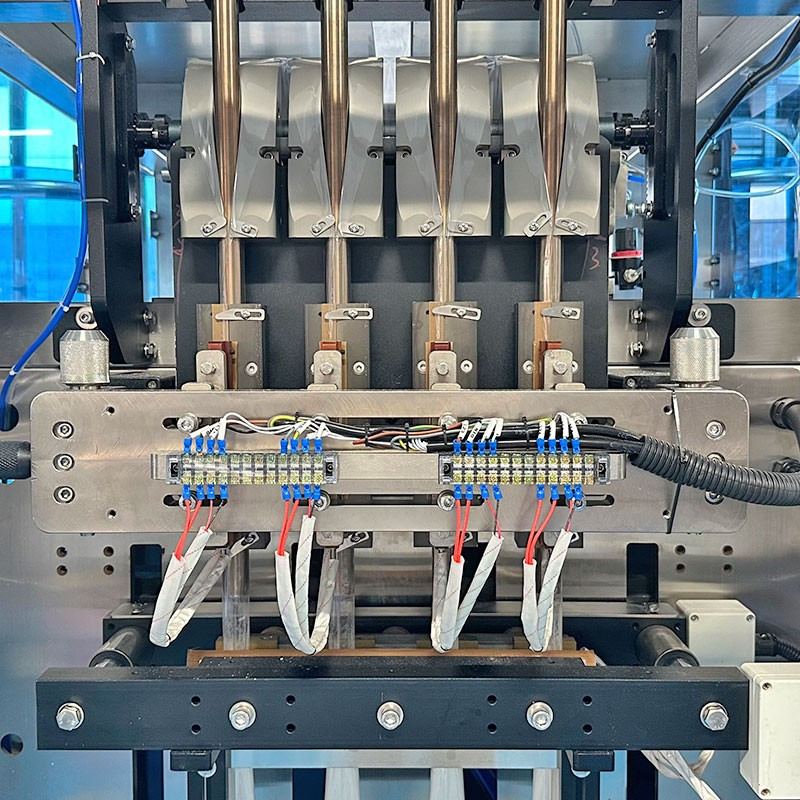
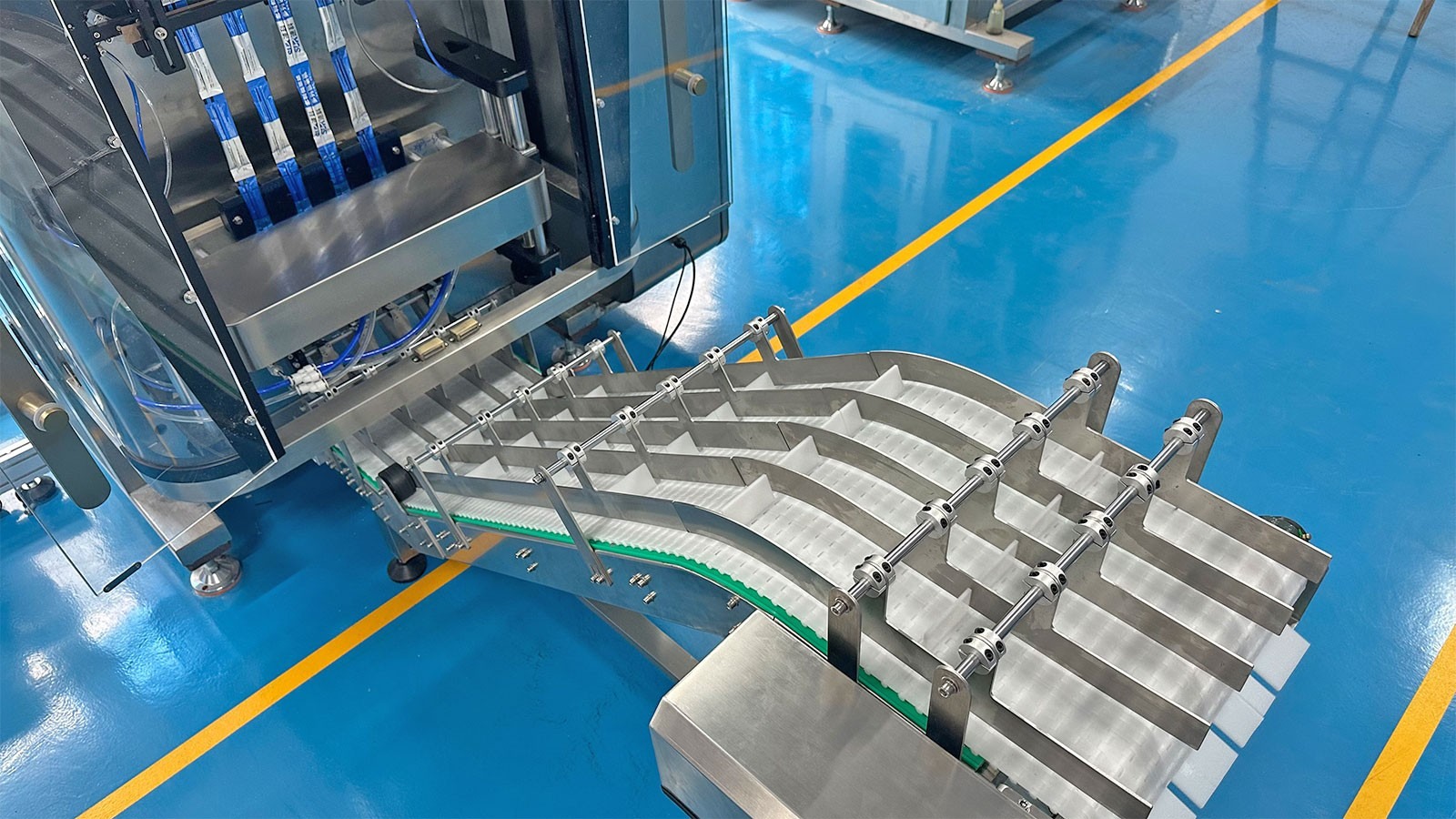
The photo above is the user's actual multi-lane equipment. It documents machine construction, not a validated run of the vitamin formula in your project.
Confirm roll film, pack geometry and opening format
A narrow stick pack needs film that forms consistently on the selected width and produces the intended seal. The DLA-400F catalog lists 0.08–0.12 mm applicable film thickness and a 320 mm maximum roll diameter. Film names alone cannot prove barrier or sealing performance for a specific vitamin formulation. Provide a sample roll or full specification, not only a marketing description of the film.
Decide whether the pack needs a straight cut, a notch, an easy-opening edge or a different finish, then check whether that request is available on the quoted machine configuration. A larger preformed pouch is a separate packaging route and should not be described as a DLA-400F stick-pack output.
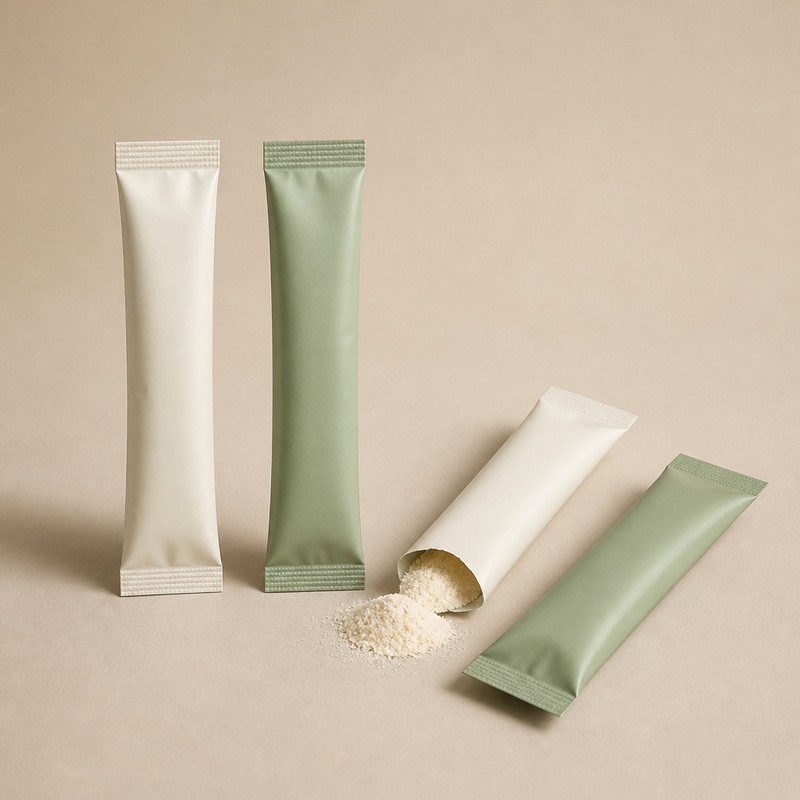
The image above is an AI concept of plain stick sachets. It has no customer branding and is not a SUK production sample or an assurance of material and seal performance.
Design a counting and cartoning handoff
The user's real outfeed image shows narrow packs leaving a multi-lane machine toward an organizing conveyor. It does not show a completed carton infeed or an installed cartoner. If finished packs must enter retail boxes, the integrator has to decide how to separate lane outputs, align sachets, count an exact number and present the group to an appropriate infeed.
Start with the target number of sticks in one retail carton. Next confirm whether they should lie flat, overlap in rows or be grouped in a specified order. Then match the carton size, infeed direction and cartoner cycle rate to the multi-lane output. The relevant equipment may include SUK's counting and arranged infeed cartoning machine, but the interface and feasible line speed require separate engineering review. Do not multiply per-lane catalog speed by an assumed lane count and claim a guaranteed number of complete cartons per minute.
For factories also requesting case packing, sealing or palletizing, specify those as further downstream modules. The product packer, retail cartoner and transport-case equipment are not one machine.
Build an RFQ that can be tested
An effective request for quotation starts with real samples and a measurable target. Send the powder formula description or a representative sample, target net mass, expected dose variation, intended bag dimensions, roll-film specification, estimated packs per minute and operating schedule. State if your carton will contain a fixed number of units and attach its drawing. Add available floor space, power supply, cleaning/changeover needs and any inspection stations that must sit on the line.
Ask for an evaluation that makes the uncertainty visible. Which powder characteristics affect dosing? What will be checked during an actual product-and-film trial? Which options are essential to the quoted line, and which are downstream additions? A clear answer should separate catalog values from project-verified output.
Quick buyer checklist and next step
- Product: What vitamin powder or dry blend will actually be packed, and how does it flow?
- Portion: What is the net mass per stick? Has it been trial-filled rather than inferred from 5–20 ml?
- Bag: What length, width, film thickness and opening style are required?
- Output: How many acceptable finished sticks and cartons are needed in a shift?
- Secondary pack: How many sticks per carton, and how will they be counted and arranged?
- Scope: Is this a powder packer or a project including collection, cartoning and case-packing modules?
- Evidence: What will be verified with the real powder, film and final carton?
For a specific equipment overview, see the vitamin powder packaging machine product page. Send the product sample or material description, pack drawing and carton brief to SUK Precision Machinery for a configuration review. This article is a selection guide, not a substitute for a production trial or a performance guarantee.
Test Blend Consistency, Changeover and Carton Contents Separately
A vitamin blend packaging trial needs separate evidence for pack weight, blend composition and finished carton contents. Agree on responsibilities before the run: the equipment trial can record filling behaviour, while ingredient content requires an appropriate sampling and analytical plan managed by the buyer's quality team or appointed laboratory.
Build a Sampling Plan Around Material Movement
- Identify the blend batch, mixing history, storage conditions and transfer route. Use representative production powder rather than a substitute chosen only for easy flow.
- Define sampling points before feeding and at the finished sticks. Include startup, stable operation, hopper refill and restart after a pause.
- Label samples by time and lane. Preserve enough material for the agreed ingredient analysis as well as net-weight checks.
Compare individual stick weights across the run and between lanes against agreed limits. Separately evaluate composition results to investigate whether transfer, vibration or changing hopper level is associated with segregation. A consistent total blend weight cannot substitute for an active ingredient assay. Record observations without treating the packaging trial as proof of product efficacy.
Challenge the Changeover Procedure
Choose a realistic change between blends, including relevant flavour or ingredient differences. Document remaining powder in the feed path, the parts removed, cleaning steps and inspection access. Define residue sampling locations and acceptance criteria with the buyer's quality team. Record elapsed cleaning time alongside the verification results; a fast changeover is useful only when the agreed cleaning outcome is achieved.
Check the Finished Retail Unit
- Inspect seals, cuts and print registration using the intended film. Confirm that batch information remains readable after handling.
- Reconcile accepted sticks, rejects and the number placed in each sampled carton. Check orientation and pack damage during transfer.
- Where detection or rejection functions are included, agree on challenge tests and verify their recorded outcomes.
- Retain labelled samples, trial settings and a list of outstanding actions for the acceptance review.
Apply this checklist when assessing a vitamin powder packaging machine for multi-lane sachets and its proposed cartoning connection. Discuss a sample trial with SUK to define the equipment scope and the evidence needed for your acceptance decision.