Which Materials Can a Stick Pack Machine Package?
A stick pack machine produces a narrow package for a defined portion. The word “stick” describes the finished pack, not necessarily a solid, stick-shaped product. Food powders, small free-flowing granules, liquids and pastes need metering and product-transfer arrangements selected for their actual properties.
Use the material and package together to shortlist a stick-pack configuration. Then decide whether a single-lane or multi-lane layout fits the required output.
Powder Stick Pack Machines
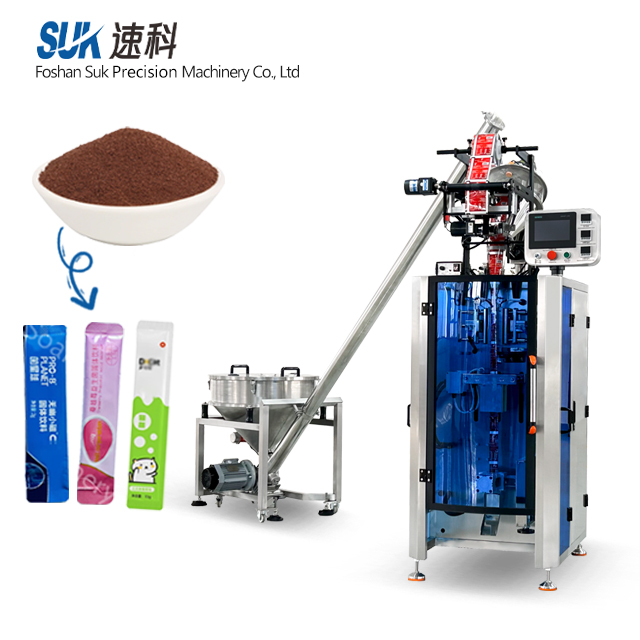
Coffee premix, drink powders, milk ingredients and nutrition blends can be reviewed as powder applications. Provide the full recipe, flow and bulk-density information, target net fill and tolerance. Check powder feed stability and settlement as well as the dose. A powder capacity printed in millilitres cannot be relabelled in grams without material-specific evidence.
For parallel portion production, compare multi-lane powder sachet and stick equipment. A protein powder application and a coffee premix application may require separate powder trials and cleaning procedures.
Granules and Sugar Portions
Send the actual particle grade and describe clumping, moisture condition and flow. Review the dosing arrangement with the intended opening and target portion. White sugar, brown sugar and a seasoning blend should not be treated as interchangeable trial materials. Compare the 5g brown sugar sachet application when the requirement is a small sugar portion.
Liquid Stick Pack Machines
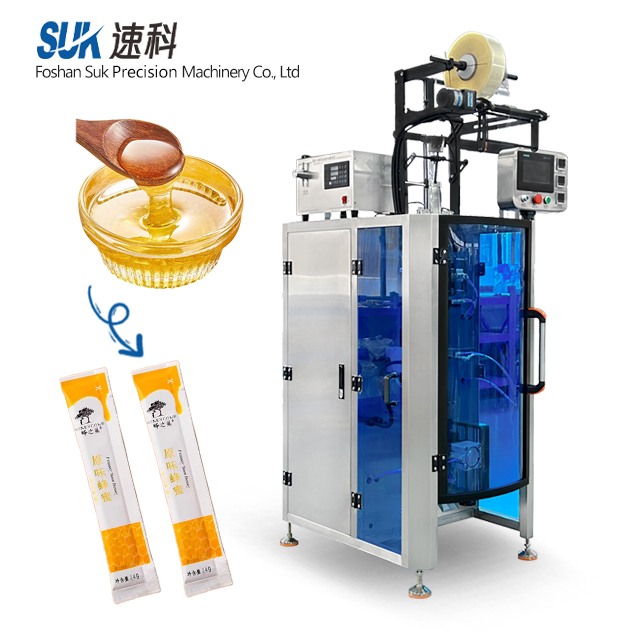
Describe viscosity at the intended filling temperature, particles, foaming and the target mass or volume. Check the product transfer path, portion release, shut-off behaviour and the seal area with the actual recipe. Compare multi-lane liquid stick-pack equipment or rounded-corner liquid sticks where the selected format requires it.
Pack Format, Lane Count and Equipment Family
| Requirement | What it means for selection |
|---|---|
| Narrow stick pack | Define the finished dimensions, seam and end seals from a drawing or sample. |
| Flat three- or four-side-seal sachet | Review a different forming and sealing arrangement for the specified flat pack. |
| More packs in parallel | Assess a multi-lane configuration with a model-specific layout and output review. |
| Ready-made zipper or stand-up pouch | Compare premade pouch equipment because the bag is supplied already formed. |
| A wrapped solid food item | Identify its actual wrapping and feeding requirements; a narrow product shape alone does not define a portion-stick machine. |
A heat-sealed stick end is not automatically a resealable zipper. Ask for the required opening and sealing design using a real pack sample. Cutting and seal tooling must be confirmed for that design.
What to Measure in the Trial
- Identify the recipe, product batch, film and finished pack dimensions.
- Check dose samples and record the agreed weight or volume unit.
- Examine the seal area, finished seam and cut position.
- Count accepted packs and rejects over the agreed operating period.
- Include replenishment, restart and relevant recipe changeovers.
- For cartons, check the correct count, orientation and loading of the filled sticks.
The agreed operating conditions and product determine the acceptance result. A machine name or an equipment photograph does not establish a universal seal improvement, filling accuracy or food certification.
Existing Stick-Packing Demonstration
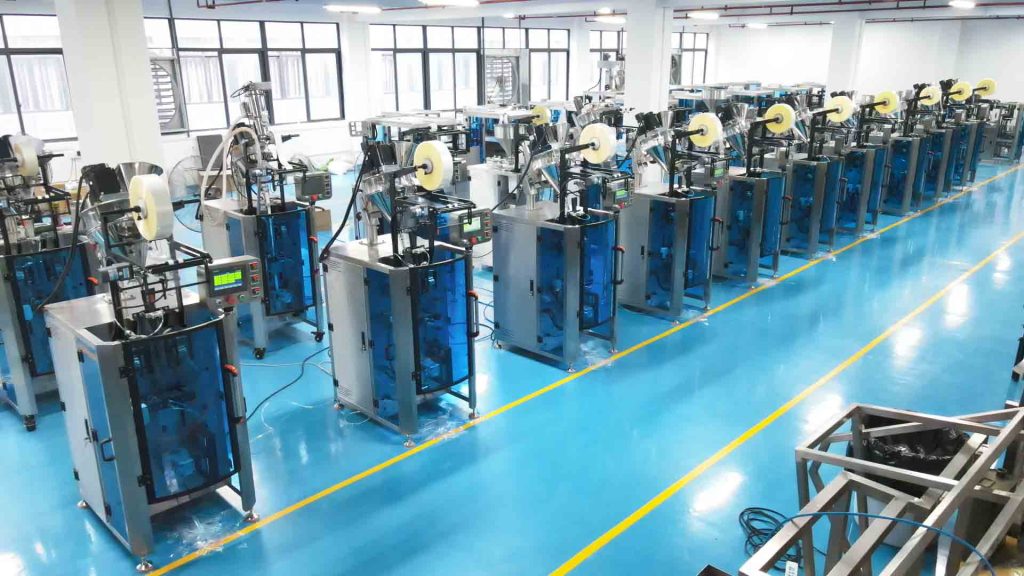
Existing SUK equipment demonstration, retained as an equipment reference. Confirm suitability with your product, film and the proposed configuration.
Prepare a Stick-Pack Inquiry
Send the actual product and recipe, target dose and tolerance, finished stick drawing, film, required total accepted packs/minute and cleaning needs. If retail cartons are required, add sticks per carton, the carton drawing and accepted cartons/minute. The stick pack machine product page provides the configuration entry point.