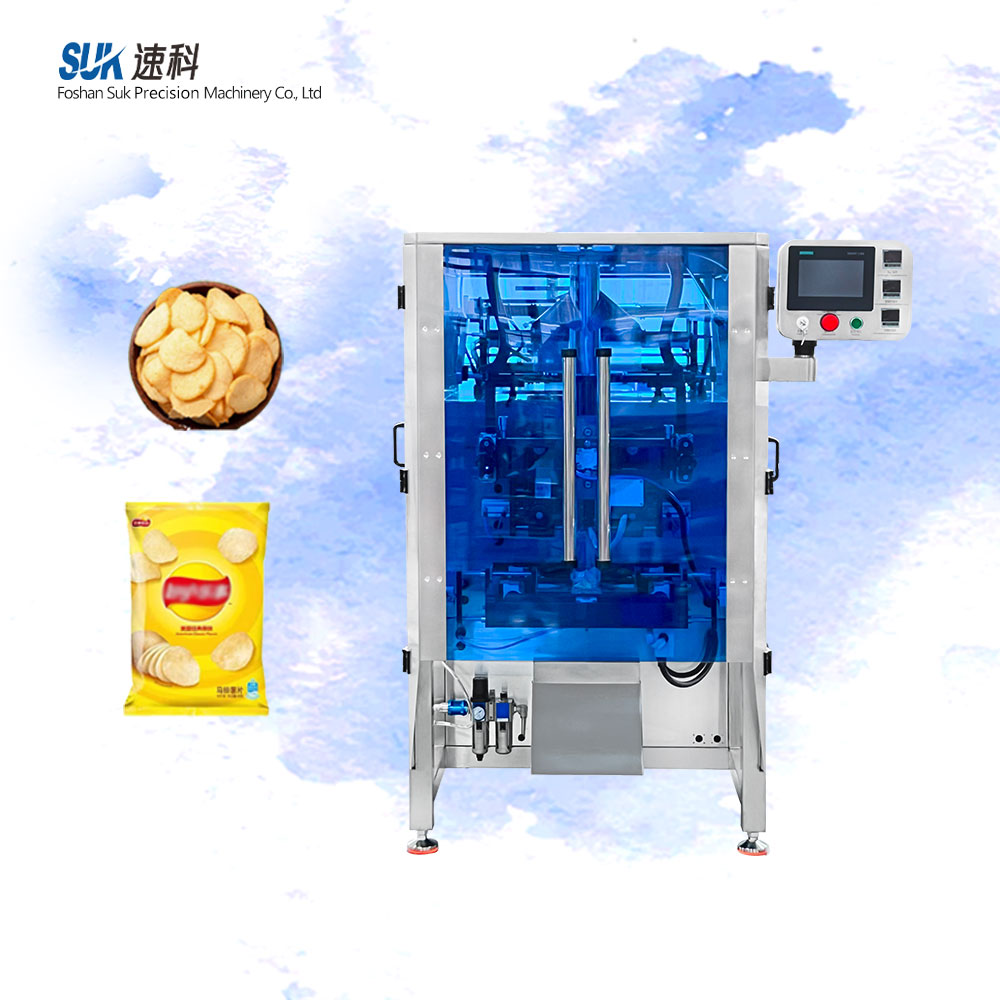
Vertical Packing Machine: VFFS Selection for Food Factories
A vertical packing machine, also called a vertical form-fill-seal (VFFS) machine, forms a bag from roll film, receives a measured product dose and seals the filled pack. For a food factory, the right configuration depends on the food, target fill, finished bag, film and required output—not the machine speed alone.
Planning a factory packing line? Compare SUK VFFS machine configurations or send your product, target fill and bag drawing for review.
Which packaging route fits your food pack?
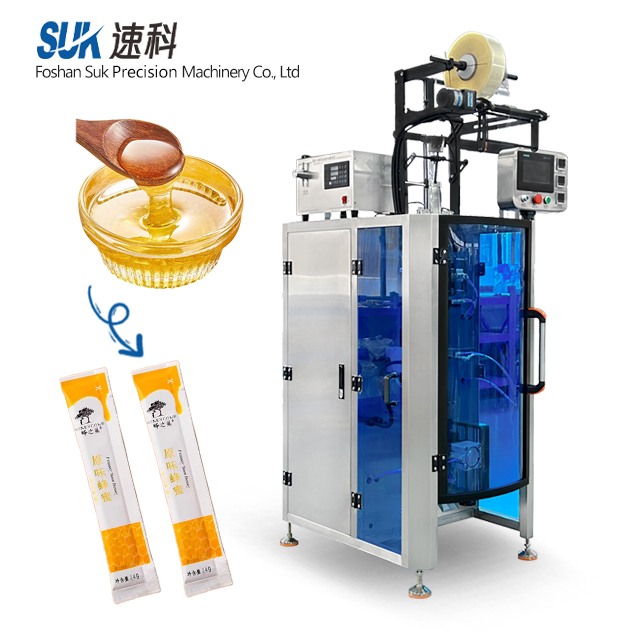
Roll-film bags: review a VFFS configuration. Ready-made zipper or stand-up pouches: review a premade pouch machine. Small sticks with higher total output: compare the multi-lane powder route. Stick format and multi-lane configuration can overlap.
Match Your Food to a VFFS Configuration
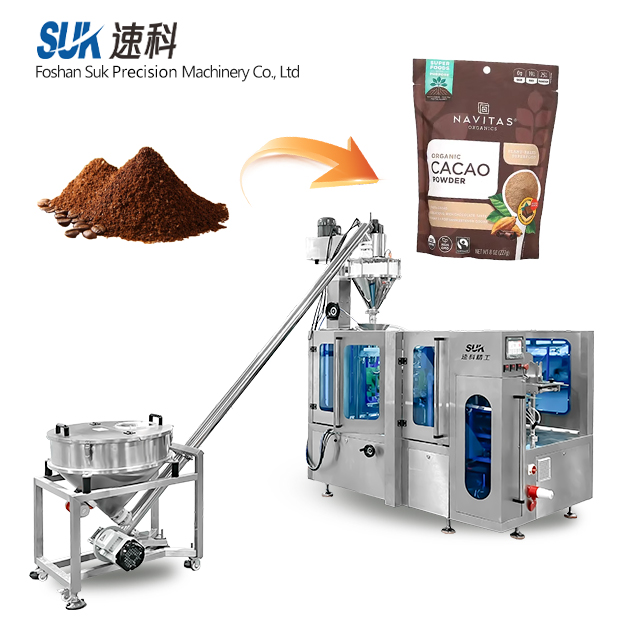
- Food powders: compare powder packaging configurations. Specify bulk density, flow behaviour and the required net fill before selecting the dosing system.
- Snacks and nuts: review the bulk snack VFFS route with the product's fragility, bag size and weighing requirements.
- Rice: use the rice packaging application to discuss feeding, weighing and the finished roll-film bag.
- Ice cubes: review the ice cube VFFS application separately, including the actual cube condition, cold product handling and bag requirements.
These are application routes, not a promise that one unchanged machine handles every product. For small single-serve sticks, also compare the stick-pack machine family. Include counting and cartoning if the finished packs need to be boxed.
How a VFFS machine forms, fills and seals bags
VFFS uses roll film rather than picking up a ready-made pouch. Its bag-making unit is combined with a feeding and dosing arrangement chosen for the product. A powder project may need an auger dosing system; granules may use a suitable weighing or volumetric system; liquids need a compatible metering arrangement. Coding, gas flushing, inspection and other options must be confirmed for the proposed configuration.

View SUK VFFS machine configurations
Vertical packaging machine workflow:
1.Roll film bag making

Provide the proposed roll-film structure, thickness, roll dimensions and printed registration details for review. Heat-seal compatibility alone does not establish that every film will run on every configuration. Film threading, forming, sealing settings, commissioning and operator training need to be planned for the actual material and factory utilities.
2.Bag maker structure

The forming assembly shapes the flat web around a forming tube. It must match the intended bag format and product feed. A change of finished bag width can require different forming parts; confirm the changeover scope when one line will run several SKUs.
3.Middle sealing structure

The longitudinal sealing assembly closes the film tube along its length. Finished bag width and flat roll-film width are different measurements: film allowance depends on the bag geometry, longitudinal seal and any gussets. Send a dimensioned bag drawing and film specification for review. Do not select a roll width by simply adding a fixed allowance to the bag width.
4.Horizontal sealing structure

The transverse jaws make the top and bottom seals, while the cutting arrangement separates packs as configured. Seal time, film, product contamination near the seal and bag length can limit output. Specify cut shape or linked packs as project requirements rather than assuming every option is standard.
Vertical Packaging Machine Application Scope:
VFFS is a route to review for food factories that want to form packs from roll film. Product suitability and achievable filling performance depend on the selected dosing and bag-making configuration.
Food examples for sample review include snacks, nuts, rice and coffee beans with appropriate feeding and weighing; flour or seasoning powders with suitable powder dosing; and liquid foods with a compatible metering system. One machine configuration should not be assumed to handle all these foods without changes.
For non-food products, assess the required contact materials, cleaning and production segregation separately. A food-product demonstration does not establish suitability for other materials.
Keep hardware counting and specialist non-food configurations separate from food dosing specifications, even when similar bag-making principles are used.

Vertical packaging machine of different machine models:
Compare the selected model against finished bag dimensions, required roll width, usable filling volume and actual product. Do not assume that a model number is a verified finished-bag width. The original model illustration below is a reference; confirm its dimension definitions before selecting equipment.

Select the dosing system from the product behaviour and accuracy requirement, not only from a broad material category. Catalog ml ranges describe volume and must not be relabelled as grams.
Powders: review bulk density, flow, dust, bridging and target net weight before choosing the auger and upstream feeding system. Confirm cleaning and product-changeover requirements.
Liquids and pastes: provide viscosity, temperature, foaming and particle information so the metering arrangement and seal protection can be assessed.
Granules: compare suitable weighing or volumetric arrangements using product size, flow, fragility, fill weight and accuracy. Confirm the feeding path and usable bag capacity with samples.


Bag styles:
Back-seal pillow bags and other roll-film formats are reviewed against the specific forming and sealing arrangement. Gussets, three- or four-side seals and narrow sticks are not universal options on every VFFS model. Ready-made zipper or stand-up pouches require a separate premade-pouch route.

How to choose the right packaging machine for you?
Start with the product sample, target net weight or volume, required accuracy and a finished bag drawing. Then review the film, required output, cleaning, changeovers and downstream equipment together.
Product information: food type, bulk density or viscosity, temperature, fragility, dust or moisture, and any cleaning constraints.
Pack information: minimum and maximum net fill per SKU, finished width and length, gusset and seal details, film structure and the appearance required by your customer.
Factory information: target accepted bags/minute, operating hours, SKU changeovers, inspection or coding needs, available space, destination electrical supply and any counting or cartoning connection.
Video
Review the SUK vertical form-fill-seal machine configuration and send your food packaging requirements for a project review.
VFFS output and factory line planning
Compare the output of accepted finished bags under the actual fill and film conditions. A maximum catalog speed is not a promise at the maximum fill. For a sachet-to-carton project, define bags/carton and target cartons/minute separately; transfer, rejects, buffers and changeovers affect the sustained output. Review the powder VFFS and cartoning line if secondary packaging is required.
Questions before selecting a vertical packing machine
Can one VFFS machine pack powder, granules and liquids? The bag-making principle may be similar, but dosing, feeding and cleaning arrangements differ. Confirm the product-specific configuration rather than assuming interchangeability.
Does a volume range in ml establish a weight range in g? No. Product density, settling and feeding behaviour affect the relationship. Use measured product data and sample testing.
What should a food factory send for a quotation? Product/sample, target fill and accuracy, bag drawing, film details, output, cleaning/changeover needs, line layout and utilities. Send these requirements to SUK.