product


Chili powder is a fine, dusty powder, so a chili powder packaging project usually starts with the powder itself rather than with a machine model. Dust around the filling point, the way the powder settles in the hopper, and the bag format you actually sell decide most of the configuration. SUK reviews chili powder packaging projects across film-based vertical bags, premade pouches and small sachets.
For food factory projects, specify the required product-contact materials, cleaning access, powder containment and changeover needs. A powder packing configuration should be assessed with the actual chili powder and packaging sample.
Select by the finished bag: use a vertical form fill seal configuration for roll-film back-seal bags; a premade pouch configuration for ready-made stand-up or zipper bags; or assess multi-lane powder sachet equipment for small portions produced in parallel. A stick pack format can also be produced on a multi-lane configuration; bag format and lane count are not mutually exclusive categories.
Need a fixed number of seasoning sachets in each retail carton? Review the counting and cartoning line and provide packs per carton, carton dimensions and the target carton output.

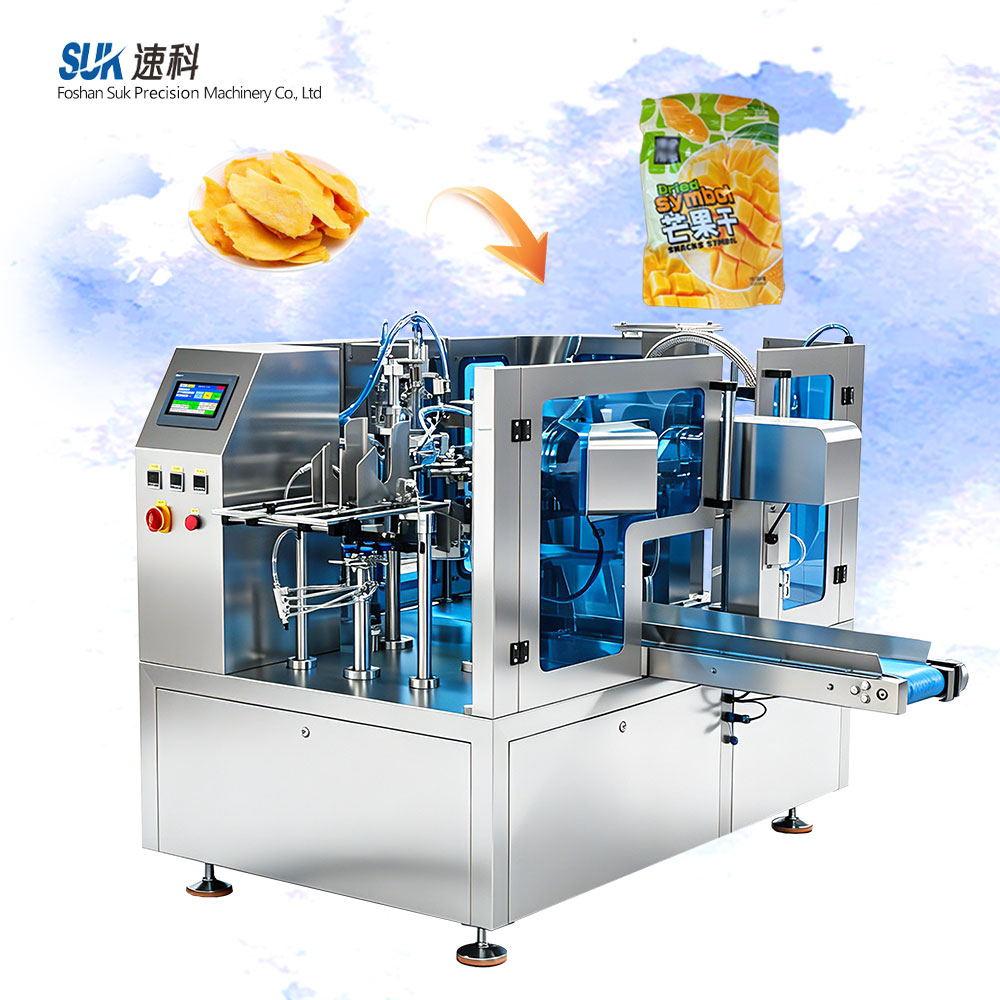
A vertical form fill seal machine forms the bag from a flat film roll, fills it through a vertical tube and seals it through an automated production sequence, which suits retail and food-service powder bags. A premade pouch machine works from pouches that are already printed and formed, and fills them through an open top. Both are film-based, but they ask different things of the powder.
Which one fits depends on the pouch you sell, the print quality you need and how many pack sizes you plan to run. Configuration for either family depends on bag format, material flow and the way the filled pouch is handled downstream.

For a fine powder the feeding and filling side usually decides whether the line runs smoothly. An auger or screw feeder moves the powder from the hopper to the filling point in a controlled way, and the hopper, agitator and filling tube are chosen around how the powder actually flows. Dust around the filling and sealing area, and how the powder behaves when the hopper is nearly empty, are worth reviewing before a configuration is proposed.

The condition of the seal area matters just as much with a dry powder. Powder left on the seal surface can interrupt a seal, so how the film or pouch is supported and cleaned before closing is part of the review.

Stick packs and narrow sachets suit single-serve powder portions and sample packs. A multi-lane powder packaging machine forms several narrow packs at the same time from one film roll, which changes how the powder has to reach each filling point. Because each pack holds a small amount, consistent filling across the lanes and clean sealing on narrow seals are the points to examine.
Deciding early whether stick packs are a permanent part of your range or a trial affects how the rest of the line is laid out and how much flexibility you keep for future bag formats.

A configuration review works from your own product and your own pack. Sending a powder sample, a finished pouch or sachet, and a packaging drawing lets the feeding, filling and sealing side be checked against something concrete instead of a written description.
It also helps to share the pack sizes you sell, the film or pouch structure you plan to use, and how the machine will fit into the existing line. Send those details through the contact page and we will come back with the machine families that fit the project and the points that still need to be confirmed.

For a chili powder packaging quotation: send your actual powder or product description, target grams per pack, bag type, bag width and length, film or pouch sample, required finished packs per minute and installation country. Include cleaning and inspection requirements. Powder volume in ml cannot be treated as fill weight in grams, and maximum speed is not guaranteed at every fill amount.