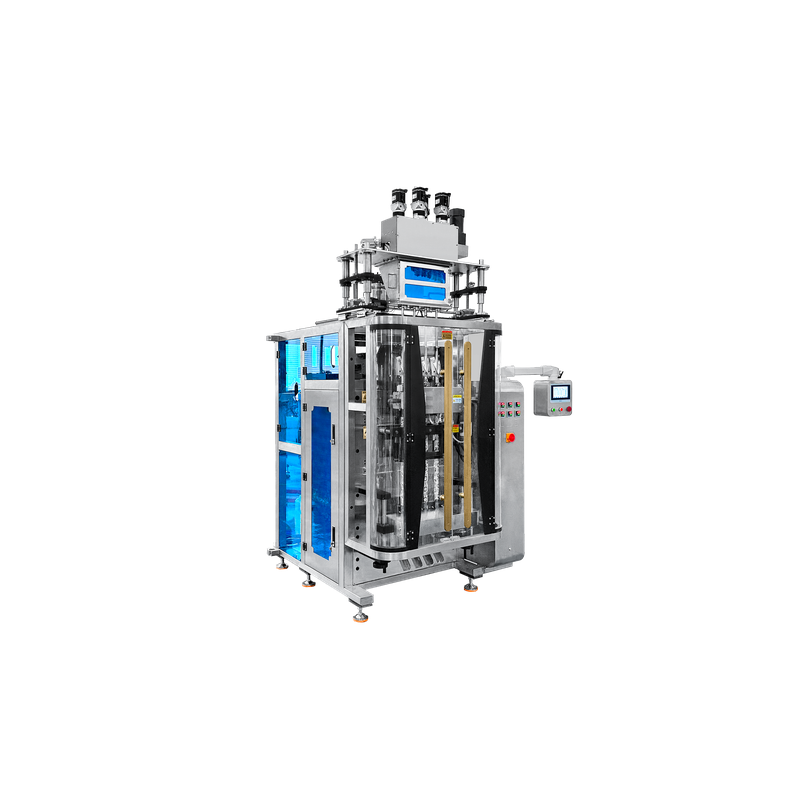
A multi-lane powder sachet packaging machine produces several narrow single-serve powder packs in parallel. It is used when a factory needs small sachets or stick packs rather than large bags, and when the product, pack size and production workflow make parallel packaging appropriate. Typical projects include beverage powder, nutrition products, seasoning powder, pharmaceutical powder, chemical powder and cosmetic powder.
The first selection decision is not the machine model. It is the finished package. A factory should define whether it needs a narrow stick pack, a flat sachet or another small single-serve format, then confirm the target fill quantity, sachet dimensions, film specification and expected production rhythm. These details affect the machine configuration, powder dosing arrangement and downstream handling.
SUK’s Multi-Lane Powder Sachet Packaging Machine page is the product-level starting point for this type of project. The model documented there is the DLA-400F, a multi-row powder packaging machine described in the 2026 SUK catalog, page 21. The page covers its specifications, relevant videos and the factory information needed for a technical review. This guide explains the selection process that should happen before a final quotation.
Start with the powder, not the packaging machine name
Powder behavior determines the difficulty of a sachet project. Two products that look similar in a container can fill very differently. Some powders flow freely; others bridge in a hopper, create dust, absorb moisture, form lumps or require more controlled feeding. A factory should provide a representative product sample, because product behavior cannot be confirmed from a generic product name alone.
The key product information includes bulk density, particle size, flow behavior, moisture sensitivity, oil content, ingredient variation and target fill quantity. A protein powder, for example, may behave differently from coffee powder, milk powder or a seasoning blend. The machine’s powder dosing system must be evaluated against that specific material, not just the industry label.
Powder dosing suitability must be matched to the actual product. Auger dosing can be appropriate for powder applications, but the final configuration should be reviewed with the actual powder and pack requirement. The customer should also specify whether product contact surfaces need a particular cleaning workflow or whether several products will share one packaging line.
Define the correct single-serve package format
A multi-lane machine is associated with narrow sachets or stick packs. It is not the same as a premade pouch machine. A premade pouch system takes a ready-made stand-up pouch, zipper pouch or another supplied bag, opens it, fills it and seals it. By contrast, a multi-lane machine forms multiple narrow packs from the selected packaging film as part of the production process.
The factory should prepare a packaging drawing, market sample or clear reference image for the desired finished pack. Important details include pack width, pack length, seal area, tear feature, orientation, bundle requirement and how the sachets will be placed into cartons. It is also useful to identify whether the customer needs one stick pack at a time, a set of connected sachets, or individual sachets for downstream counting and cartoning.
A good production brief does not assume that every multi-lane machine uses the same lane count or total output. The final number of lanes and total production rate depend on the confirmed machine configuration, sachet dimensions, powder behavior, target fill and operating conditions. These values should be confirmed by the engineering team rather than copied from another project.

Review powder dosage and pack dimensions together
Fill quantity and sachet dimensions are closely connected. A narrow sachet with a low powder quantity requires a different balance of dosing, film width and sealing geometry from a larger single-serve pack. The customer should provide the target powder quantity and an acceptable filling tolerance, then review whether the selected sachet size gives the desired retail appearance and practical opening experience.
The 2026 SUK catalog, page 21, gives the DLA-400F a bag length range of 40–170 mm, a bag width range of 20–50 mm and an applicable film thickness of 0.08–0.12 mm. These are useful starting points for a discussion, but they are not a substitute for a project-specific confirmation. The final package must be evaluated with the selected film, powder and required production process.
The same catalog entry also gives the DLA-400F a maximum roll-film diameter of 320 mm, a power of 2000 W, a noise level of ≤80 dB and a measurement range of 5–20 ml, with a machine dimension of 1000 × 890 × 1820 mm and a machine weight of 200 kg. Packaging material examples for the DLA-400F include BOPP/PE, PET/PE and PET/AL.
Avoid specifying a universal fill-weight range without testing. The 2026 SUK catalog, page 21, gives the DLA-400F a measurement range of 5–20 ml, but the suitable fill for a specific powder and sachet still has to be confirmed in a product trial. A video title mentioning a 2 g powder sachet demonstrates one example only; it does not define the full capability of the machine. The final recommendation should be based on a complete product and package review.
Understand output as bags per minute per line
For multi-row equipment, output should be discussed carefully. The 2026 SUK catalog, page 21, states 30–60 bags per minute per line for the DLA-400F. That is not the same as a confirmed total output for every project. Total line output depends on the selected row and line configuration, powder properties, target fill quantity, sachet dimensions, film, sealing process and production conditions.
A customer evaluating capacity should share the required units per shift or per day, number of working hours, expected changeovers and planned product range. The engineering team can then review whether the packaging system, product feeding method and downstream equipment are appropriate. This is more useful than choosing a machine based only on a headline speed.
The same rule applies to the number of rows and lanes. The catalog describes the DLA-400F as a multi-row powder packaging machine, but the final row and line arrangement must be confirmed for each project. Do not use a picture or a generic sales graphic to make a production guarantee. Confirm the row and lane arrangement, the line definition, the total output and the pack dimensions together with the final project configuration.
Plan the packaging line around the sachet machine
A sachet machine is one part of a factory workflow. Powder must be supplied to the dosing area, packaged sachets must leave the machine cleanly, and finished packs may need to be inspected, counted, cartoned, case packed or palletized. The larger the production target, the more important it is to review these steps as one line.
SUK’s product range includes Automatic Cartoning Machines, packaging solutions and other equipment that can support downstream handling. For a powder sachet project, the factory should explain whether the finished sachets will be sold as individual units, bundled, placed in retail cartons or packed into shipping cases. This determines the need for infeed, counting and cartoning equipment.
The project review should also include factory layout, electrical standard, compressed air, cleaning access and operator workflow. The 2026 SUK catalog, page 21, lists a power of 2000 W, a machine dimension of 1000 × 890 × 1820 mm and a machine weight of 200 kg for the DLA-400F. Engineering should verify these values, the local electrical standard and the full utility requirement before an order is confirmed.
Compare multi-lane sachets with other SUK packaging routes
A factory may choose different equipment depending on the desired finished package. The following distinction prevents packaging formats from being mixed together:
- A Multi-Lane Powder Sachet Packaging Machine is for narrow, single-serve sachets or stick packs formed in parallel.
- A Vertical Packaging Machine uses roll film to form larger pillow bags, gusset bags or other VFFS bag formats.
- A Premade Pouch Packing Machine feeds and fills ready-made stand-up pouches, zipper pouches and other premade bags.
- A Stick Packing Machine is another relevant route for single-serve powder, liquid, paste or granule projects, depending on the required pack format and configuration.
The right equipment is the one that matches the powder, package, retail format and factory workflow. A finished pack sample is often more useful than a broad request for a “powder machine.”
Questions to ask before requesting a quotation
A productive quotation request includes clear technical information. Before contacting a supplier, prepare the following:
- Powder name, product photo and product sample where possible
- Bulk density, flow behavior and moisture condition
- Target fill quantity and acceptable tolerance
- Sachet or stick-pack width and length
- Film sample, film structure or packaging drawing
- Required packs per minute, hours per shift and daily production plan
- Required cartoning, checkweighing, case-packing or palletizing process
- Destination country and electrical standard
- Available factory space and preferred line layout
This information makes it possible to discuss a suitable machine configuration instead of comparing unrelated models. It also gives the supplier a basis for reviewing the real powder and package before making a technical recommendation.
If the project is replacing an existing line, include the current production rate, the main loss or bottleneck, and photos of the present pack. If a retail carton is required, provide a carton drawing or sample as well. These details help determine whether the sachets can move directly to a cartoning system or need an intermediate conveyor, counting or accumulation step. A clear technical brief reduces revisions during layout, test planning and quotation review.
Request a multi-lane powder sachet packaging review
A multi-lane powder sachet packaging machine should be selected through a product-and-package review. Confirm the powder behavior, target fill quantity, sachet dimensions, film, lane arrangement and downstream workflow before treating any model or speed as a final commitment.
The 2026 SUK catalog, page 21, provides the DLA-400F starting point for model discussion. To continue, send your powder sample, target pack quantity, sachet dimensions, required output and factory requirements to SUK Precision Machinery. The team can review the project and recommend a packaging configuration that fits the real production task.
For an efficient first discussion, include the target market, local electrical standard, expected installation space and whether the project requires on-site commissioning, operator training or later expansion. If you have a current sachet sample, film roll or carton, attach clear photos with a ruler or dimensional drawing. The aim is to validate the packaging route before finalizing the equipment layout, rather than forcing the powder and finished pack into a generic configuration.
Frequently asked questions
What powders are suitable for multi-lane sachet packaging?
SUK’s existing product information lists food powders, nutritional supplements, pharmaceutical powders, chemical powders and cosmetic powders. Final suitability depends on the powder’s density, flow behavior, moisture condition, target fill and sachet requirement.
Is a multi-lane sachet machine the same as a premade pouch machine?
No. A multi-lane machine forms narrow single-serve packs from packaging film. A premade pouch machine uses ready-made pouches, such as stand-up or zipper pouches, and fills and seals them.
How can I calculate total sachet output?
The 2026 SUK catalog, page 21, states 30–60 bags per minute per line for the DLA-400F. The line definition and the final total output require a confirmed row and line configuration and depend on the powder, fill quantity, sachet size, film and operating conditions. They should be confirmed during the engineering review.
Can finished sachets be packed into cartons?
Yes. The downstream process can include conveying, counting and automatic cartoning depending on the sachet format and carton requirement. Provide the desired retail carton dimensions and target output when discussing the line.
What should I send to SUK before requesting a quote?
Send the powder name, product sample or photo, target fill quantity, sachet dimensions, film information, target production requirement, destination country, electrical standard and any downstream packaging needs.