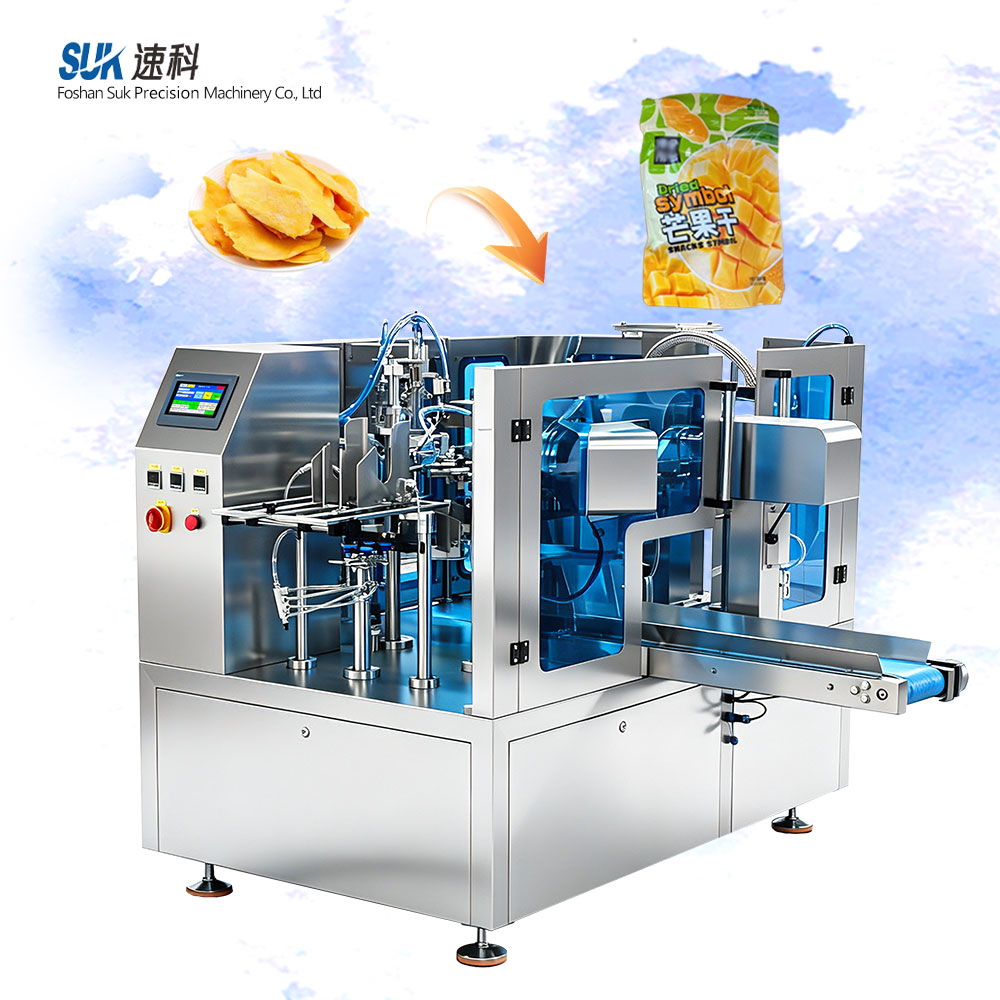
Instant coffee premix powder is a blended dry mix, and the pack it is sold in decides far more about a project than the powder itself does. This article works through the choice of an instant coffee premix powder packaging machine as a bag-format decision: sachet and strip-pack, roll-film vertical, or premade pouch. Each route is described at configuration level, and each decision point is explained in the order a project normally meets it.
Start With the Pack, Not the Machine
Most premix projects begin with a format the market already accepts: a single-serve sachet for food service, a strip of joined packs for vending, or a retail pouch on a shelf. That format decides which of the three configuration routes deserves the first discussion.
A project that begins from the pack avoids two common mistakes: planning a route that the format cannot use, and choosing a route that has to be replaced when the brand adds a second format. Beans and ground coffee follow a different path, described in the SUK guide to coffee bean and ground coffee packing.
Three Routes to Compare
There are three configuration routes for the bag formats usually sold in this category. A multi-lane sachet and strip-pack configuration covers narrow single-serve packs. A vertical roll-film configuration forms the bag from roll film on the machine. A premade pouch configuration fills pouches that arrive ready-made, printed and prepared by a supplier.
They are alternatives rather than stages, and a project rarely needs all three. The comparison below stays at configuration / category level, so the bag format is the subject rather than a named machine. The three routes are collected on the SUK instant coffee premix powder packaging machine page as well.
Route A: Multi-Lane Sachet and Strip-Pack Configuration
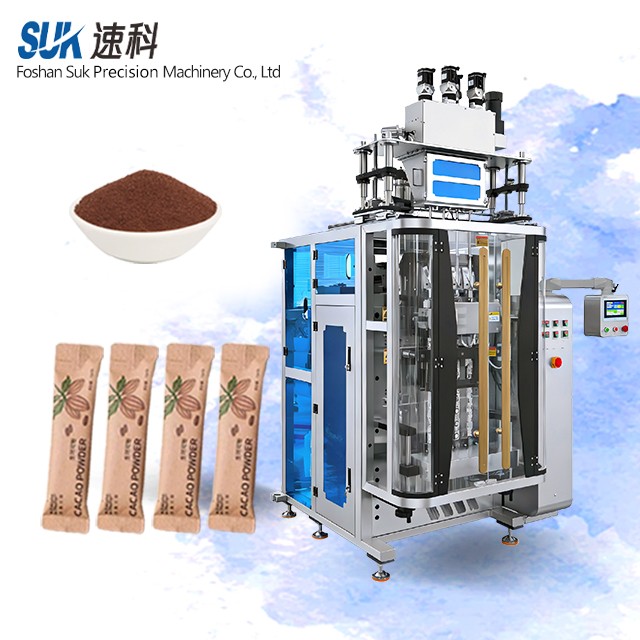
This route is referenced here as a multi-lane sachet / strip-pack configuration reference. It suits products consumed in small single servings and bought in strips or boxes, where the individual pack, rather than the outer carton, is the unit the buyer recognises and asks for by name.
When the route is reviewed, the useful inputs are the sachet you currently sell, a strip of joined packs, or a drawing of the finished pack. Those inputs describe the pack; they do not describe a machine, and no claim about lane count or about any other format is made here.
A sachet programme is usually judged by the pack the buyer opens, so the review concentrates on the sachet itself: how it is presented, how it is grouped into a strip, and how the strip is packed for shipping. None of those questions has to be settled before the format is confirmed.
Reference image: the machine shown represents the configuration / category referenced on this page. Any packaging sample or product pouch visible is a category illustration, and is not a customer project, not a delivered case, and not a production site of SUK.
Route B: Vertical Roll-Film Configuration
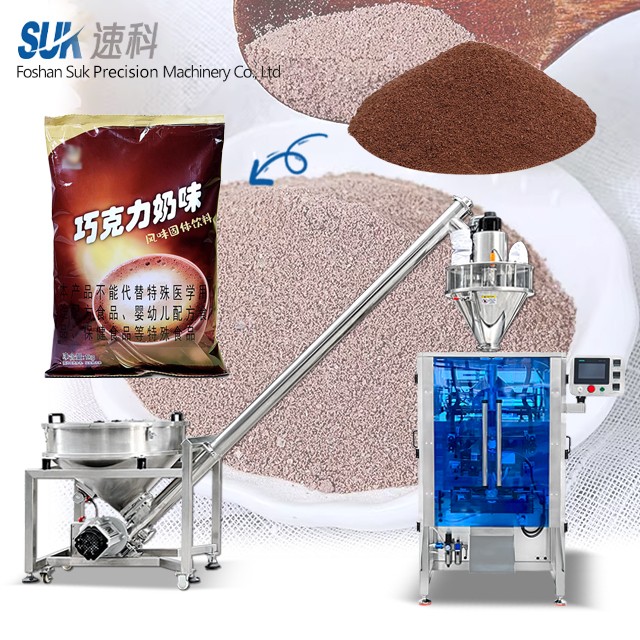
This route is referenced here as a vertical roll-film configuration reference. The bag is formed from roll film during the run, so the film, rather than a pre-made pouch, is the packaging material the project buys and stores; that single difference changes how a line is stocked and planned.
Because the bag is formed on the line, the bag format is confirmed together with the project. No specific bag type is attributed to this route on this page, and the pouch visible in the reference image is a category illustration only, not evidence of what this route produces.
Reference image: the machine shown represents the configuration / category referenced on this page. Any packaging sample or product pouch visible is a category illustration, and is not a customer project, not a delivered case, and not a production site of SUK.
Route C: Premade Pouch Configuration
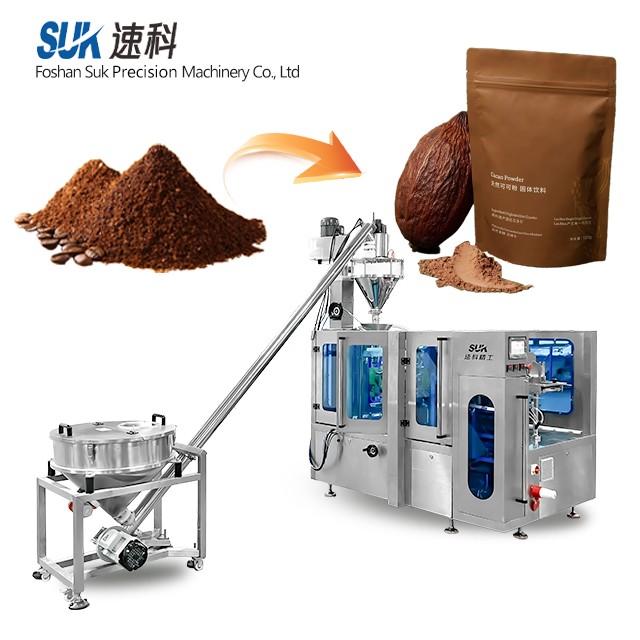
This route is referenced here as a premade pouch configuration reference. Pouches are supplied ready-made, so the format is settled with the pouch supplier and the machine opens, fills and closes them. Stand-up pouch formats belong to this route, where the pouch shape is the supplier’s responsibility.
This is usually the route for a retail look, for pre-printed pouches already in stock, or for projects that run several pouch formats on one line. A related example of the same route is described on the SUK coffee bean premade pouch packaging page.
Premade pouches also give a brand the option of changing artwork without touching the line, because the printed surface is supplied with the pouch. That is often the deciding argument when a retail range is refreshed more often than the equipment is replaced.
Reference image: the machine shown represents the configuration / category referenced on this page. Any packaging sample or product pouch visible is a category illustration, and is not a customer project, not a delivered case, and not a production site of SUK.
How the Three Routes Differ in Daily Use
The practical difference between the routes is where the pack comes from. On the sachet route the pack is a narrow single-serve unit; on the roll-film route the pack is formed from film on the machine; on the premade route the pack arrives finished. Everything else follows from that difference.
For a brand that expects to add formats later, the useful question is which route can be extended without changing the way the product is presented to the buyer. A route that can absorb a second format usually causes less disruption than adding a second line, and that is settled in a configuration review.
What to Prepare Before a Configuration Review
It is worth comparing the three routes on the same terms: the pack the buyer receives, the material the project has to buy, and the point at which the format is fixed. Once those are written down side by side, the route usually selects itself, and what remains is how the project is prepared.
A review moves fastest with three things: a sample of the pack you sell, a sample or description of the powder, and a note of the way the product reaches the buyer. Photographs of a competitor pack are useful too, as long as they are labelled as references.
Nothing in this comparison depends on a named machine or on a figure agreed in advance, because the bag format selects the route and the route decides everything else. A project that arrives with a pack sample and a clear picture of the buyer is ready for a configuration review.
With those inputs the route and the bag format can be settled in one pass, and the discussion stays on the pack rather than drifting into comparisons of unrelated equipment. To arrange that discussion, contact SUK and describe the pack; the configuration for your instant coffee premix powder packaging machine then follows from the format.