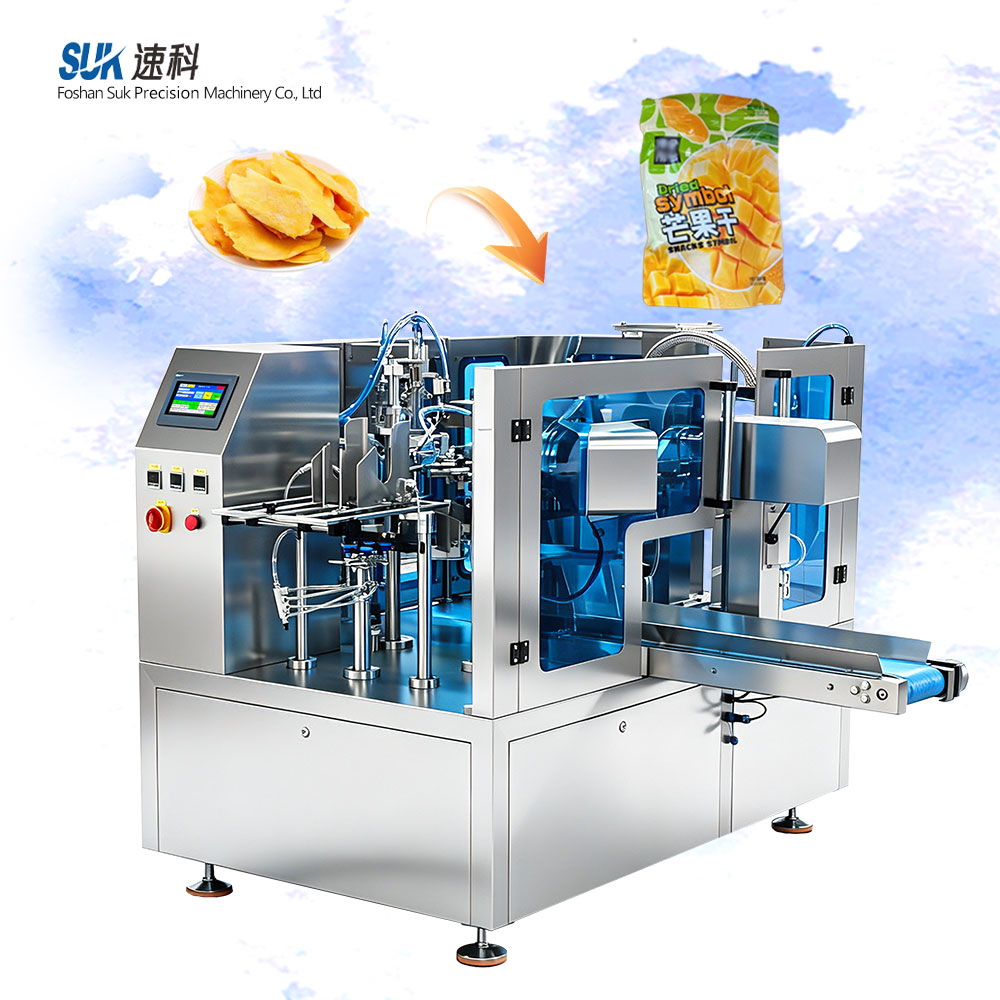
Laundry detergent powder is dense, free-flowing and dusty, and those three properties are what make the bag-to-machine decision matter more than any machine label. Two routes are covered here: a bag formed from film on the machine, and a pouch that arrives already made. This guide works through both, then sets out the points that have to be confirmed with your own powder, pouch and pack sizes before a quotation is useful.
Start With the Bag Format
Before any machine is discussed, write down the pack you sell. Leaving aside tubs and drums, laundry detergent powder normally leaves a factory as a bag formed on the machine from a film roll, or as a pouch that arrives ready-made and is filled through an open top. Each of those is a different filling task, and the machine family follows the format rather than the other way round.
It also helps to separate two kinds of information at this stage. One is what SUK actually lists: the 2026 catalog names washing powder among the samples for its powder vertical category and its powder premade-bag category. The other is what your project needs, which is the bag shape, the bag dimensions, the dose and the way the powder behaves in your own hopper. The first is evidence; the second has to be confirmed.
The existing powder packing machine range is a reasonable place to start comparing platforms before the format is locked in.
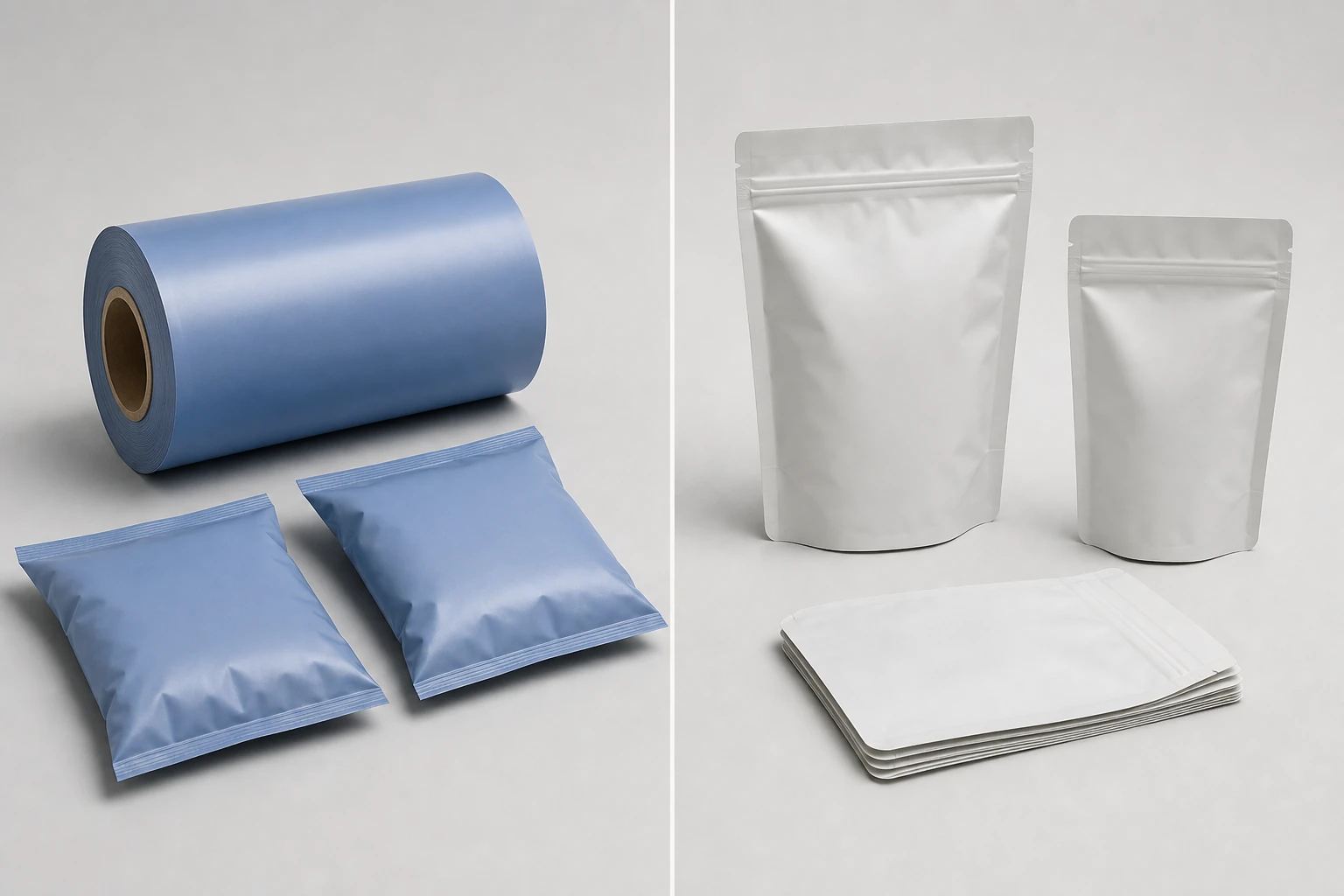
AI-generated illustrative comparison of generic roll-film bags and premade pouches; not a machine image or customer packaging.
Where a factory expects to run more than one format over the life of the machine, list them all now. Changing a bag width later is routine; changing the filling principle later is not.
When a Roll-Film Vertical Configuration Fits
The roll-film vertical route forms the bag on the machine from a roll of film, then fills and seals it in the same cycle. It suits a factory that wants the bag formed on site, from film it buys itself, and a single consistent pack shape running down the line. SUK’s 2026 catalog lists washing powder among the samples for its powder vertical category, which is why this route is offered for laundry detergent powder at all.
The catalog does not state which bag shape or which fill weight applies, and neither is asserted here.
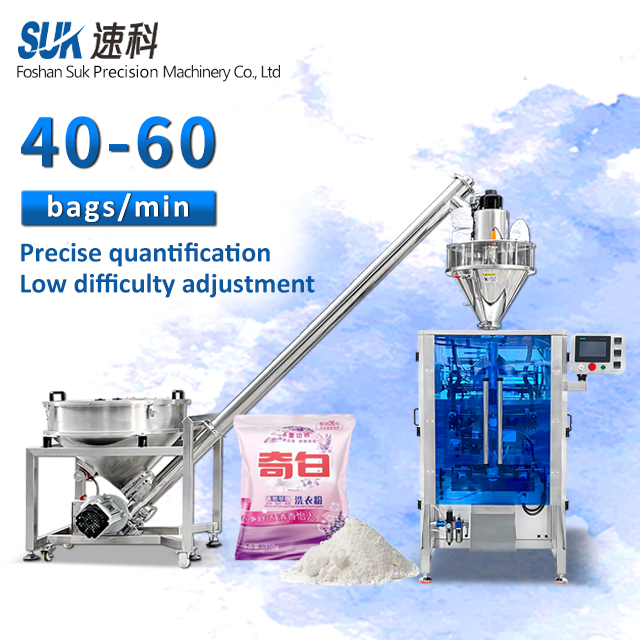
Real SUK equipment photo shown as a configuration reference; not a customer laundry-detergent project.
The questions that decide whether this route really fits are practical ones. Detergent powder is dense and free-flowing, so how it leaves the hopper without compacting matters. It also dusts, so how much fine powder settles around the filling and sealing area matters. A fine detergent film sitting in the seal area can interrupt a seal, so how the film is supported and closed before sealing is part of the review rather than a footnote.
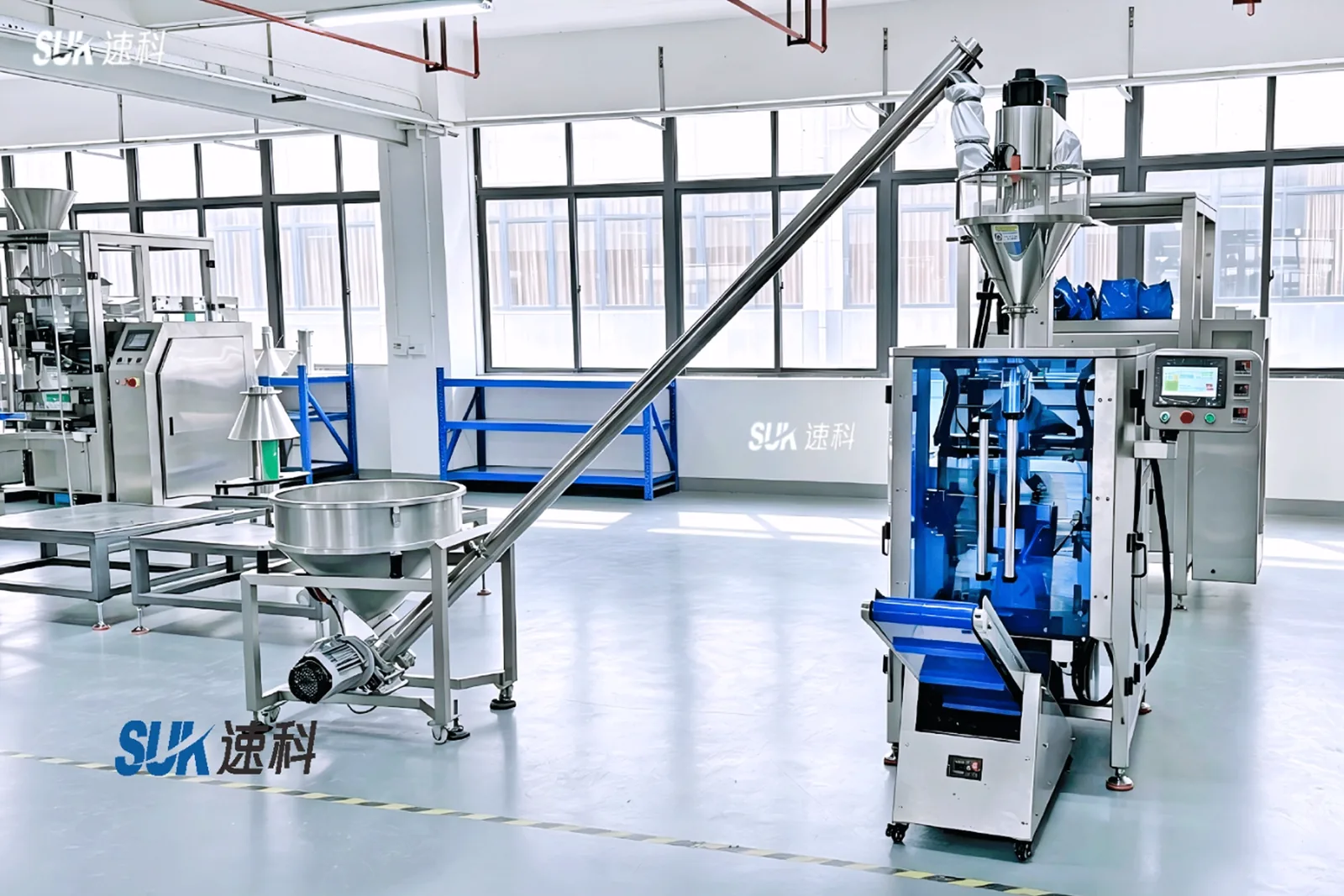
Real SUK equipment photo shown as a configuration reference; not a customer laundry-detergent project.
When a Premade-Pouch Configuration Fits
A premade-pouch configuration takes a pouch that has already been made and runs it through opening, filling and sealing stations. It suits a factory that buys finished pouches, printed and laminated, and that wants the pack appearance fixed before the pouch reaches the line.
The premade-bag series is also where the catalog pouch vocabulary lives. Flat bags, zipper bags, tote bags and stand-up bags all appear against the premade-bag series, which is why the pouch route is the one to look at when the pack has to be more than a formed bag. Those styles are named here only as catalog-series references for the premade-pouch category, not as a claim about any particular detergent pouch, pouch dimension or fill weight. The premade bag packing machine range covers the powder side of that route.
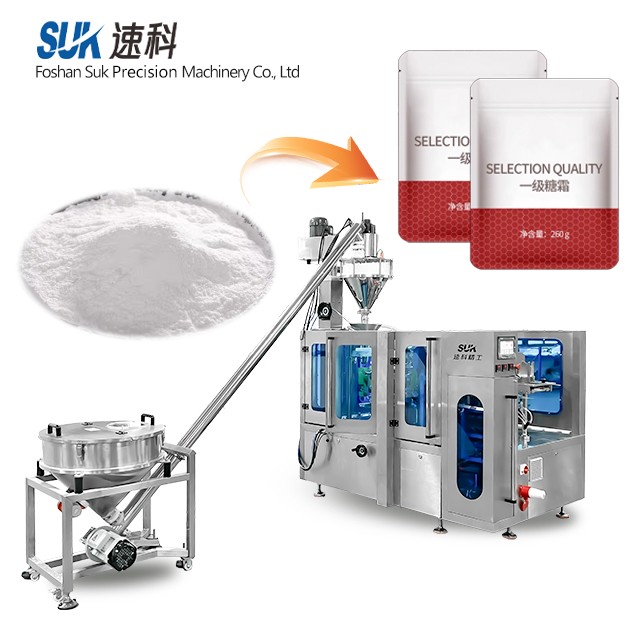
Real SUK equipment photo shown as a configuration reference; not a customer laundry-detergent project.
The filled pouch visible in the photo is a sample from another powder application. It is not a laundry-detergent pouch, and no claim is made here about pouch material or pouch structure for a detergent pack.
Real SUK equipment running photo shown as a premade-pouch configuration reference. The visible pouches belong to another powder application, not a laundry-detergent project.
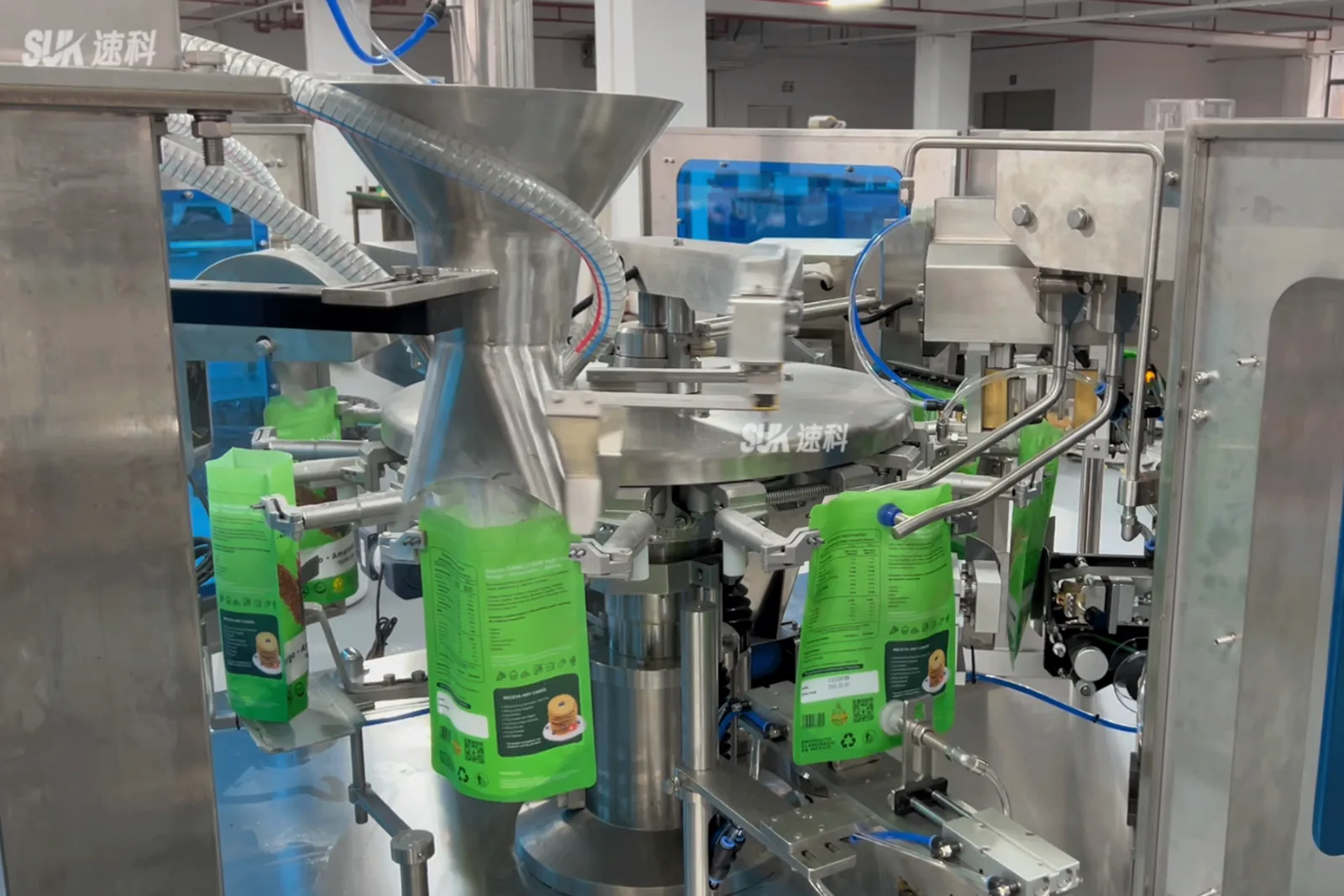
From a powder-handling point of view the premade route changes the problem rather than removing it. Because the pouch is already open and presented, the filling and sealing sides can be checked against a real pouch, and the powder still has to be dosed without dusting the seal area.
Why Stand-Up Pouches Need a Premade-Pouch Route
A stand-up pouch is a made pouch with a shaped bottom that lets it stand on a shelf. That single fact decides the route: in the SUK catalog, stand-up pouches are named against the premade-bag series, and they are not named against the roll-film vertical family at all.
So a stand-up pouch needs a premade-pouch configuration. A roll-film vertical machine forms its own bag from flat film, which is a different construction, and a stand-up pouch should not be planned against that route.
There is a second reason to treat this route carefully. The catalog shows a premade-bag powder category, but it does not pin down which pouch type or which pouch dimensions go with a laundry detergent powder pack, and no detergent stand-up pouch from a SUK machine has been confirmed for this application. That means: premade-pouch configuration required; confirm the actual machine and pouch in a project review.
Send the finished pouch you intend to use. A real pouch is what allows the opening, filling and sealing stations to be checked against something concrete instead of a description.
How to Review Powder Handling and Sealing
Powder handling and sealing are the two sides of the project that no product page can settle on its own, so treat what follows as a checklist rather than as a specification. Each point has to be answered with your own powder, on the configuration you have chosen.
On the powder side, look at how the material leaves the hopper when the hopper is nearly empty as well as when it is full, because the last part of a batch is usually where flow becomes uneven. Look at how much fine dust appears around the filling point, where that dust settles, and how often the feeding side has to be cleaned between recipes. If the powder is a blend rather than a single formula, look at whether the components stay together as the pack is filled.
On the sealing side, look at what happens to the closing area when a thin film of powder is present, whether the formed bag or the presented pouch is held steady while it closes, and how an incomplete pack is detected and removed. Those are the points to test with a real pouch or a real film roll before a configuration is fixed.
Nothing in this section is a performance figure. It is the list of questions a project review has to answer against your own material, and the answers are what the configuration is built from.
What to Confirm With Your Packaging Project
SUK’s 2026 catalog lists washing powder among samples for its powder vertical and powder premade-bag categories. The final machine model, bag dimensions, dose and powder-handling configuration need project confirmation.
In practice that means assembling a short list before any quotation is useful: the detergent powder you will actually run, including whether it is a single formula or a blend; the bag or pouch you intend to sell; the pack sizes you sell most of; the film or pouch structure you plan to use; and how the filled pack leaves the machine. Checkweighing, metal detection, cartoning and case packing each add a transfer point, and every transfer point is somewhere powder can escape or a pack can be handled badly.
Powder handling deserves its own line on that list. How the powder behaves when the hopper is nearly empty, how often the feeding side needs cleaning between recipes, and how dust is kept away from the seal area are the questions that decide whether a configuration works in production rather than on paper. No performance figure is asserted on this page, because none of it can be stated before those questions are answered.
Compare the Two Routes Before You Send Samples
Put the two routes side by side against your own pack. If the pack is a formed bag, look at the roll-film vertical configuration. If the pack is a printed pouch, or a stand-up pouch, look at the premade-pouch configuration, and remember that a stand-up pouch only belongs on that route. Then compare the two against the powder you actually run rather than against a description of it.
This is also the order in which a laundry detergent powder packaging machine project is normally reviewed: format first, then the feeding, dosing and sealing side, then the line around it. Descriptions are useful; samples are better, so send enough powder to run a meaningful trial, include the film or pouch structure if you have it, and add a simple line drawing or photo showing where the machine will stand.
Send those details through the contact page and we will come back with the machine families that fit the project and the points that still need confirmation.